

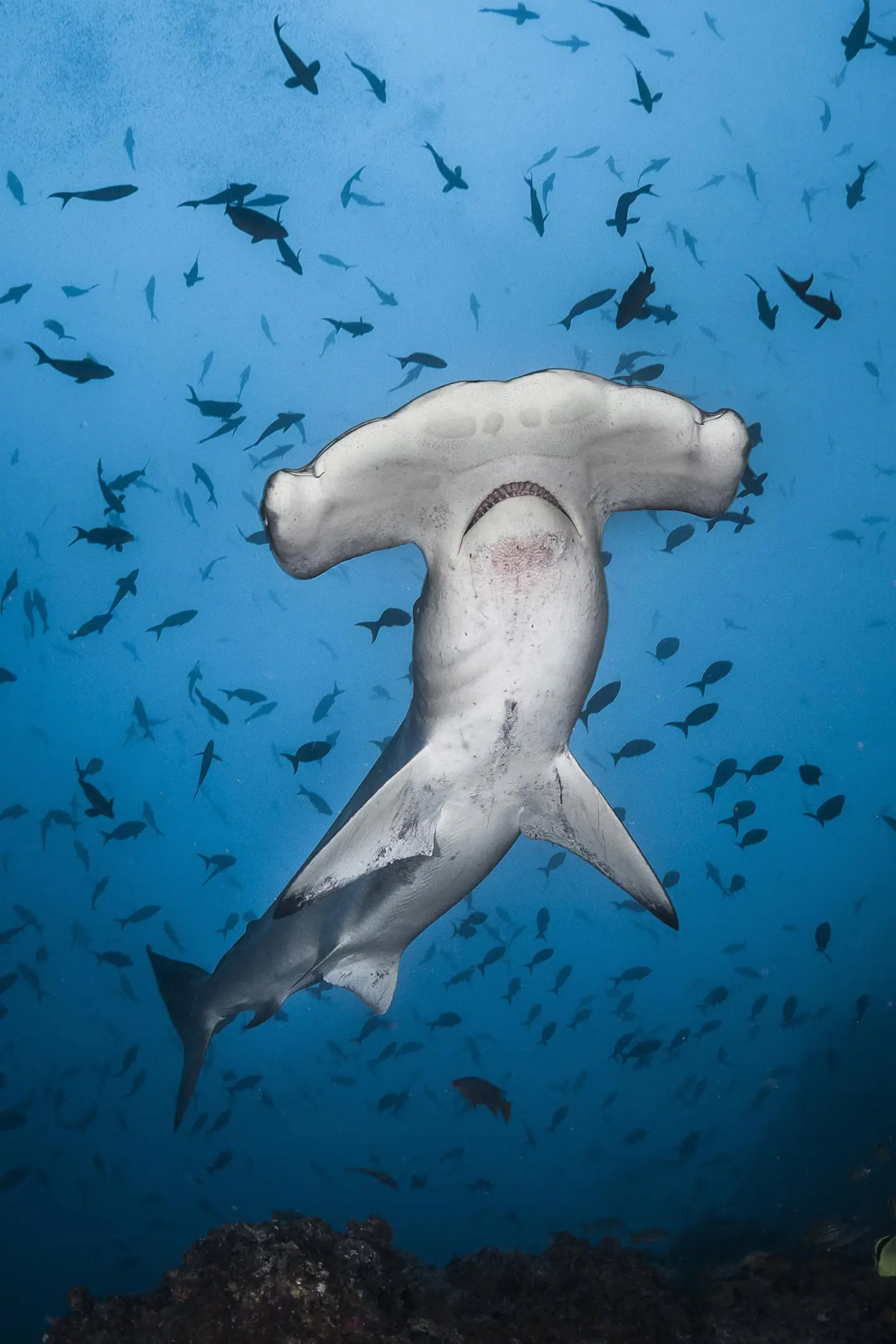
Off the coast of Mexico, National Geographic Explorer Bertie Gregory made a heartbreaking discovery while filming Hammerheads Up Close. Suspended from a fishing line was a lifeless hammerhead shark, a stark reminder of the many threats these remarkable animals face today.
The documentary follows Gregory as he searches the Pacific Ocean for hammerhead sharks and investigates why their populations have declined so dramatically.
Why Hammerhead Sharks Are in Trouble
There are more than nine species of hammerhead sharks, and many are now listed as critically endangered.
According to marine biologists, the biggest threats include:
- Overfishing
- Bycatch (being accidentally caught in fishing gear)
- The shark fin trade
- Habitat destruction
- Marine pollution
Although shark finning receives much attention, scientists emphasize that overfishing is the greatest overall threat.
Hammerhead sharks are especially vulnerable because:
- They grow slowly.
- They don’t reproduce until later in life.
- Females produce relatively few pups.
As a result, populations recover very slowly after heavy fishing pressure.
Scientists estimate that between 73 and 100 million sharks are killed every year worldwide, and since the 1970s, up to 75% of oceanic shark populations—including hammerheads—may have disappeared.
Their Famous Fins Make Them Targets
Hammerheads have unusually large dorsal fins, making them highly valuable in the international shark fin trade.
As Gregory explains:
“It’s like swimming around with an enormous dollar sign on your back.”
The global shark fin market is estimated to be worth up to $550 million annually.
Even Catch-and-Release Can Be Deadly
Unlike many other sharks, hammerheads are extremely sensitive to stress.
Scientists warn that:
- Long fights on fishing lines
- Being lifted out of the water
- Taking photos before release
can all dramatically reduce their chances of survival.
Even if a shark swims away, it may die shortly afterward from stress or oxygen deprivation.
Conservation Solution 1: Marine Protected Areas
One of the most effective conservation strategies is establishing Marine Protected Areas (MPAs) where fishing is restricted or prohibited.
These protected areas safeguard:
- Nursery grounds
- Feeding areas
- Breeding sites
- Migration corridors
A successful example is Cabo Pulmo in Mexico.
After creating a no-fishing zone in 1995 and shifting toward ecotourism, marine life rebounded dramatically.
Within about 14 years, marine biomass increased by an astonishing 463%.
Another encouraging development came in May 2026, when Papua New Guinea established a 200,000 km² marine protected area, benefiting numerous shark species, including hammerheads.
Conservation Solution 2: Tracking Their Epic Migrations
Hammerheads are remarkable long-distance travelers.
Researchers use several techniques to understand where they go, including:
- Satellite tracking tags
- Drone observations
- Environmental DNA (eDNA)
One tagged pregnant scalloped hammerhead amazed scientists by swimming:
- Between the Galápagos Islands
- The coast of Panama
- An offshore region more than 1,100 miles (1,770 km) away
Researchers believe this was the first documented birthing migration ever recorded for this endangered species.
Environmental DNA is also helping scientists detect rare hammerhead species simply by analyzing tiny traces of DNA left behind in seawater.
Conservation Solution 3: International Cooperation
Because hammerhead sharks migrate across international waters, protecting them requires cooperation between many countries.
Recently:
- Scalloped hammerheads
- Great hammerheads
were added to Appendix I of the Convention on Migratory Species, giving them the highest level of protection under the international treaty.
Scientists stress, however, that legal protection alone isn’t enough—countries must actively enforce conservation measures.
Why Hammerheads Matter
Hammerheads are apex predators, meaning they sit near the top of the food chain.
They help:
- Keep fish populations balanced.
- Maintain healthy marine ecosystems.
- Support biodiversity throughout the ocean.
Removing apex predators can trigger cascading ecological effects that scientists are still working to fully understand.
How People Can Help
Experts say everyone can contribute to shark conservation by:
- Choosing sustainably caught seafood.
- Supporting fisheries with low bycatch.
- Eating less seafood from unsustainable industrial fisheries.
- Supporting marine protected areas.
- Learning more about sharks instead of fearing them.
Scientists note that movies like Jaws created widespread fear of sharks, making conservation efforts more difficult for decades.
A Reason for Hope
Although hammerhead populations remain under severe pressure, conservation efforts are beginning to make a difference.
Protected marine reserves, international agreements, improved tracking technologies, and growing public awareness are all helping scientists better understand—and protect—these extraordinary animals.
As Bertie Gregory concludes, humans have pushed hammerhead sharks to the edge of extinction, but we still have time to change their future.