

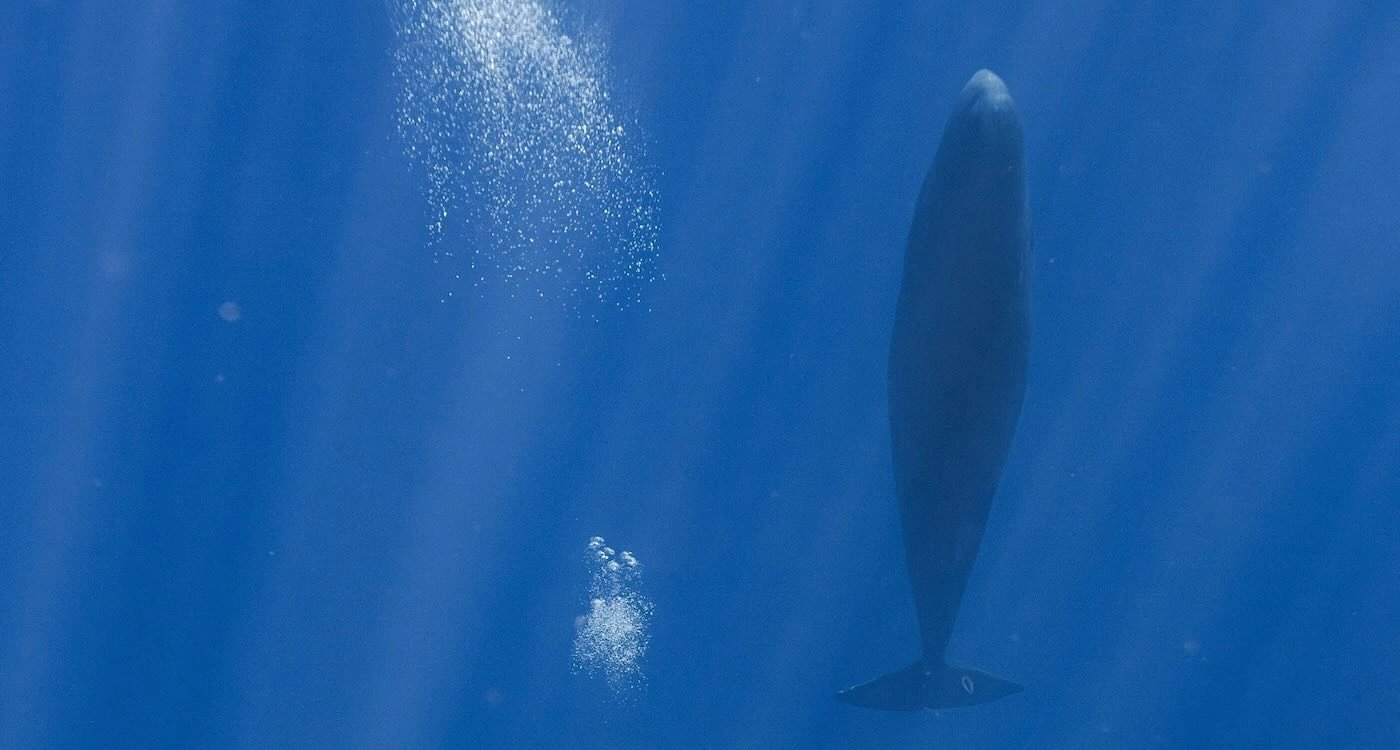
Far below the ocean’s restless surface, sperm whales have developed an unusual way to enjoy a peaceful nap.
New research suggests that these enormous marine mammals release bubbles while resting, helping them control their buoyancy and remain safely suspended underwater instead of floating upward.
Although scientists still have much to learn about sperm whale sleep, observations indicate that the animals rest for brief periods of around 10 to 15 minutes. During these underwater naps, they often position themselves vertically, with their heads pointing toward the surface.
This allows them to avoid rough waves while remaining close enough to breathe when necessary.
A Surprisingly Buoyant Head
For years, one question puzzled researchers.
A sperm whale’s enormous head makes up nearly one-third of its body and contains large amounts of oil, wax and air. Since these materials naturally create buoyancy, scientists wondered how the whales managed to remain underwater while sleeping.
Without some way to control their upward movement, a resting whale might gradually rise toward the surface like a cork.
The answer appears to lie in the bubbles quietly escaping from its blowhole.
Listening to Sleeping Whales
To investigate, researchers from the University of St Andrews in Scotland and the University of Neuchâtel in Switzerland studied sperm whales near Norway’s Lofoten Islands.
They temporarily attached specialized recording devices to 42 whales using suction cups.
The instruments measured the animals’ depth, body position and movement. They also captured the sound of bubbles being released, allowing scientists to compare bubble activity with different resting behaviors.
Once the devices detached, the researchers recovered them and examined the collected data.
Three Ways to Rest
The recordings revealed that sperm whales can rest in several different positions.
Some point their heads downward and descend slightly before the natural buoyancy of their bodies slowly turns them upward.
Others sink gently tail-first to a depth of around eight meters.
A third group rests while gradually rising from dives deeper than 200 meters.
Each method creates different buoyancy conditions, meaning the whales must adjust how much air they release.
Bubbles Act Like a Buoyancy Control
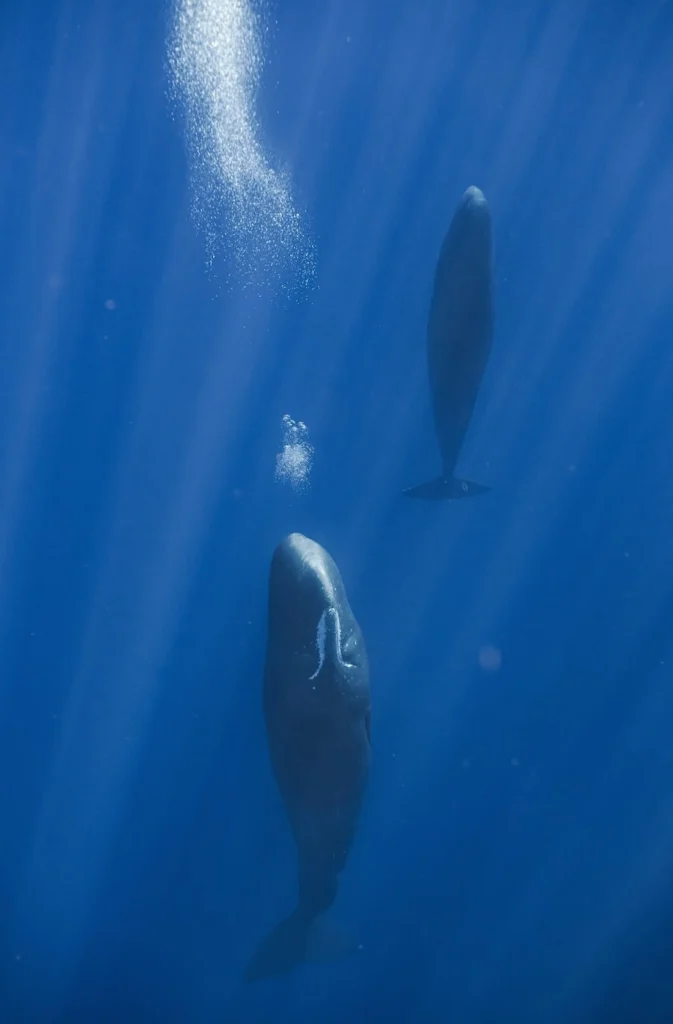
Whales resting near the surface released bubbles much more frequently—around 11 times during a single nap.
By contrast, whales slowly ascending from deep water produced bubbles only three or four times.
The difference is caused by water pressure.
During deep dives, intense pressure compresses the air inside a whale’s lungs, naturally reducing buoyancy. Because the animal is less likely to rise too quickly, it does not need to release as much air.
Closer to the surface, pressure decreases and the air in the lungs expands. This causes the whale to become more buoyant.
By blowing bubbles, the animal releases some of that air, making it easier to remain submerged.
Are the Whales Truly Asleep?
One mystery remains: scientists do not yet know whether bubble release is a conscious action.
Sperm whales may sleep in a way similar to humans, becoming fully unconscious for short periods. Alternatively, they may rest like dolphins, allowing one half of the brain to sleep while the other remains alert.
Releasing air at the right moment may require the whale to sense its depth and recognize when it is drifting too close to the surface.
That could mean part of the brain remains awake and continues monitoring the animal’s surroundings.
A Peaceful Solution From the Deep
Whether sperm whales are fully asleep or only partially resting, their bubble-blowing behavior appears to be an ingenious adaptation.
With a few carefully released breaths, they can control their position, avoid the turbulent surface and enjoy a quiet moment of rest beneath the waves.
Even in sleep, these mysterious ocean giants seem perfectly adapted to life in the deep.