

A new clip from the upcoming “Prehistoric Planet: Ice Age” series highlights how well-known Ice Age animals had to adjust as their frozen world warmed and glaciers shrank.
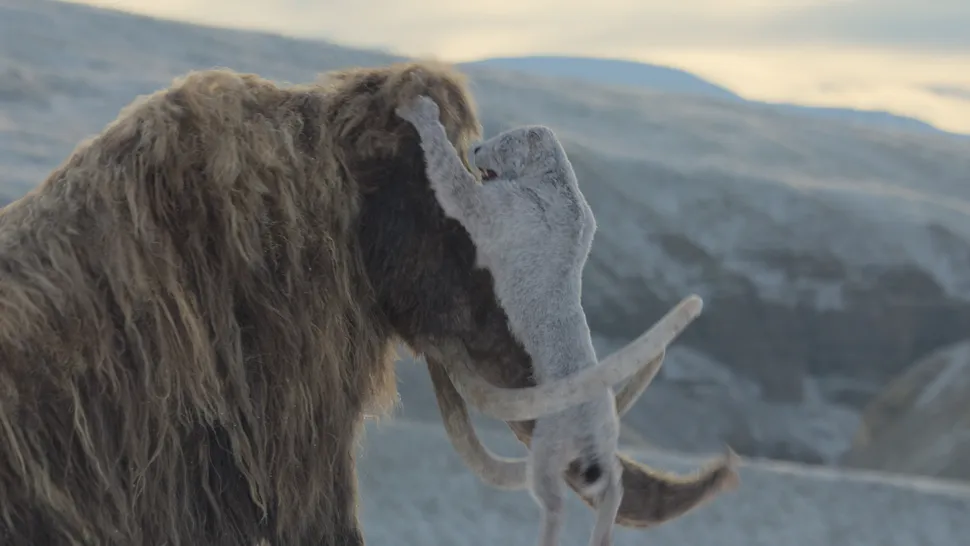
The scene takes viewers to the far north of North America, near the end of the last Ice Age. In this dramatic moment, a group of scimitar-toothed cats (Homotherium serum) attempts to ambush a traveling herd of woolly mammoths (Mammuthus primigenius), which includes a protective adult male and a young calf. These famous Ice Age species were highly specialized for cold environments — but warming climates forced them into unfamiliar territory.
“It’s really a story about two powerful species facing a rapidly changing world,” explained Mike Gunton, executive producer of the series and creative director at BBC Studios’ Natural History Unit.
As the Ice Age faded away roughly 11,500 years ago, the retreating ice reshaped ecosystems. Some prey species became scarce — partly due to environmental changes and partly due to early human hunting — leaving predators like scimitar-toothed cats with fewer opportunities to feed. In the clip, the cats see the mammoth herd as a rare chance.
The mammoths, also struggling with shifting landscapes, take a risky path across open ground in search of new food sources. This exposes them to attack, and the male mammoth steps up to defend the group. After a tense standoff, he manages to drive the cats away, allowing the females and calf to stay safe.
Researchers think mammoth herds were usually led by females, while males wandered and joined only when ready to mate. Gunton noted that adult males often approached herds during musth — a mating period when they produce strong pheromones.
Although the mammoths win this time, the series later shows the cats using a different technique, leaping from higher ground to bring down a large mammoth. This hunting approach mirrors what modern big cats — like leopards — do when surprising prey from above.
Bringing these extinct animals to life on screen wasn’t easy. The production team had to accurately animate dynamic fur, snowy environments, and complex interactions between large animals — pushing visual effects to an impressive level.