

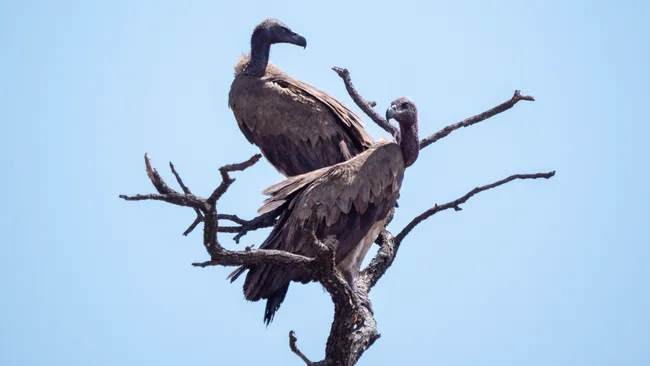
Seeing vultures circling overhead doesn’t mean they’re waiting for something to die — and in fact, experts say spotting them is a good sign for the environment.
While often shown in movies as ominous symbols of doom, vultures aren’t hovering in anticipation of a dying animal below, said Chris McClure of The Peregrine Fund, which runs the Global Raptor Impact Network.
“I’ve never heard of vultures circling a dying person,” McClure explained. “They’re simply not out there waiting for humans.”
Instead, these birds take advantage of thermals — columns of warm, rising air caused by uneven heating of the ground. Because warm air is lighter than cool air, it rises and creates natural updrafts. Vultures circle within these air currents to gain height without much effort.
A 2017 study found these thermals are narrower close to the ground and expand higher up, meaning vultures spiral in small loops when low and glide in wide circles as they climb. Other large birds, like eagles and buzzards, use this same strategy to travel long distances efficiently.
So if you see vultures circling, they are likely conserving energy while scanning or smelling for carrion — dead animals — rather than stalking anything alive. Some species, such as turkey vultures, have a strong sense of smell and can detect gases released as an animal begins to decay even in thick forests.
Once they locate a potential meal, vultures may continue to circle to make sure the coast is clear and that another animal has already opened the carcass, making it easier for them to feed.
McClure said the biggest myth about vultures is that they spread disease. In reality, they prevent it. Their stomach acid is incredibly strong, destroying dangerous pathogens like rabies, anthrax, salmonella, and cholera. By removing decaying animals from the landscape, they stop disease from spreading — earning them the nickname “nature’s cleanup crew.”
The value of vultures became strikingly clear in India when their numbers plummeted in the 1990s. Diclofenac, a pain medication given to cattle, poisoned vultures that fed on livestock carcasses. Their decline left dead animals to rot in the environment, helping diseases — including rabies — spread more easily. Between 2000 and 2005, this contributed to an estimated half a million human deaths.
Vultures also help conservationists. Many birds carry GPS trackers, and when large groups gather at a carcass in remote regions, it can alert teams to possible wildlife poaching.
“There are thousands of these GPS-tagged vultures out there,” McClure said. “If they suddenly cluster somewhere, it can lead authorities right to an illegal kill.”