

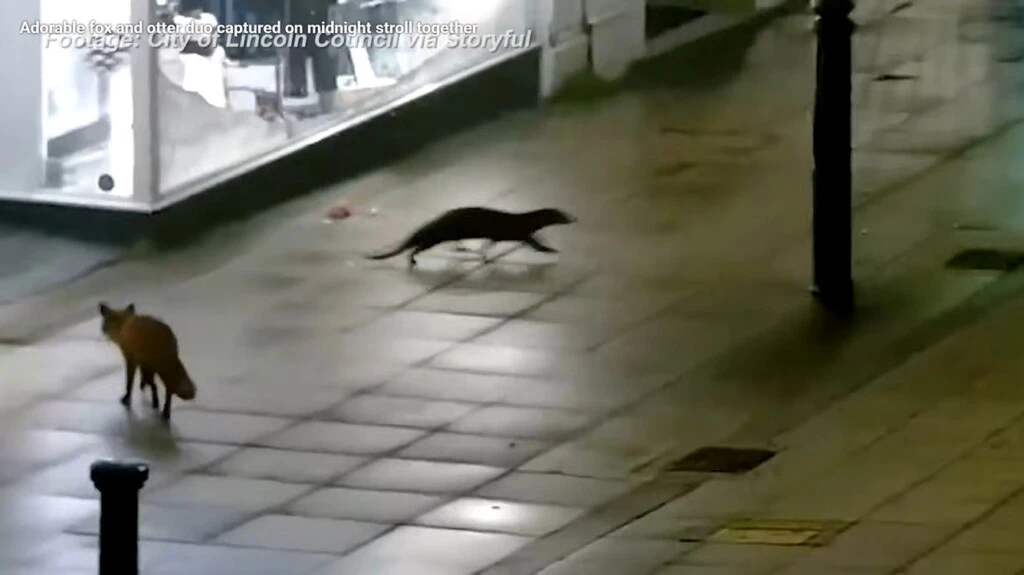
In Lincoln’s picturesque old town, where Tudor and Victorian façades are dressed up for the holidays, an unexpected scene played out one November evening — and it was all caught on CCTV.
A red fox and a river otter were spotted trotting through the city streets together, a moment so unusual it seemed lifted straight from a children’s storybook or an animated film.
As The Guardian’s Patrick Greenfield reported, no one knows exactly how many river otters live in England today. But footage like this suggests something remarkable: unlike two decades ago, otters are no longer a rare sight.
The Nottinghamshire Wildlife Trust has described the species’ return to Britain’s waterways as nothing short of extraordinary.
“Twenty years ago, otters were almost completely absent,” said Janice Bradley, the Trust’s head of nature recovery. “We began seeing them move up the River Trent from other regions, and now they’ve been recorded in nearly every river and stream in the county. It’s astonishing.”
A century after wildlife populations collapsed across much of the industrialized world, the reasons behind species declines often sound familiar. For river otters, the main culprits were polluted waterways from industrial waste and intense hunting for their fur.
With both pressures largely reduced — and aided by targeted reintroduction efforts in eastern England — estimates suggest there could now be as many as 11,000 river otters nationwide. Scientists acknowledge that figure is uncertain, as tracking the animals reliably remains difficult.
Although large-scale industrial dumping is far less common than it once was, modern threats persist. Contaminants such as PFAS “forever chemicals” and microplastics accumulate in rivers, pass into fish, and ultimately build up in otters themselves.
Because of these risks — and because of their growing presence — conservationists say otters have become an ideal ambassador for clean rivers and healthy waterways.
Simply put, an otter’s expressive face inspires far more public concern than a fish ever could. Moments like the Lincoln video generate enthusiasm and support for environmental protection in a way that statistics or trophy catches rarely can, making the otter a powerful symbol for water quality and conservation efforts.