

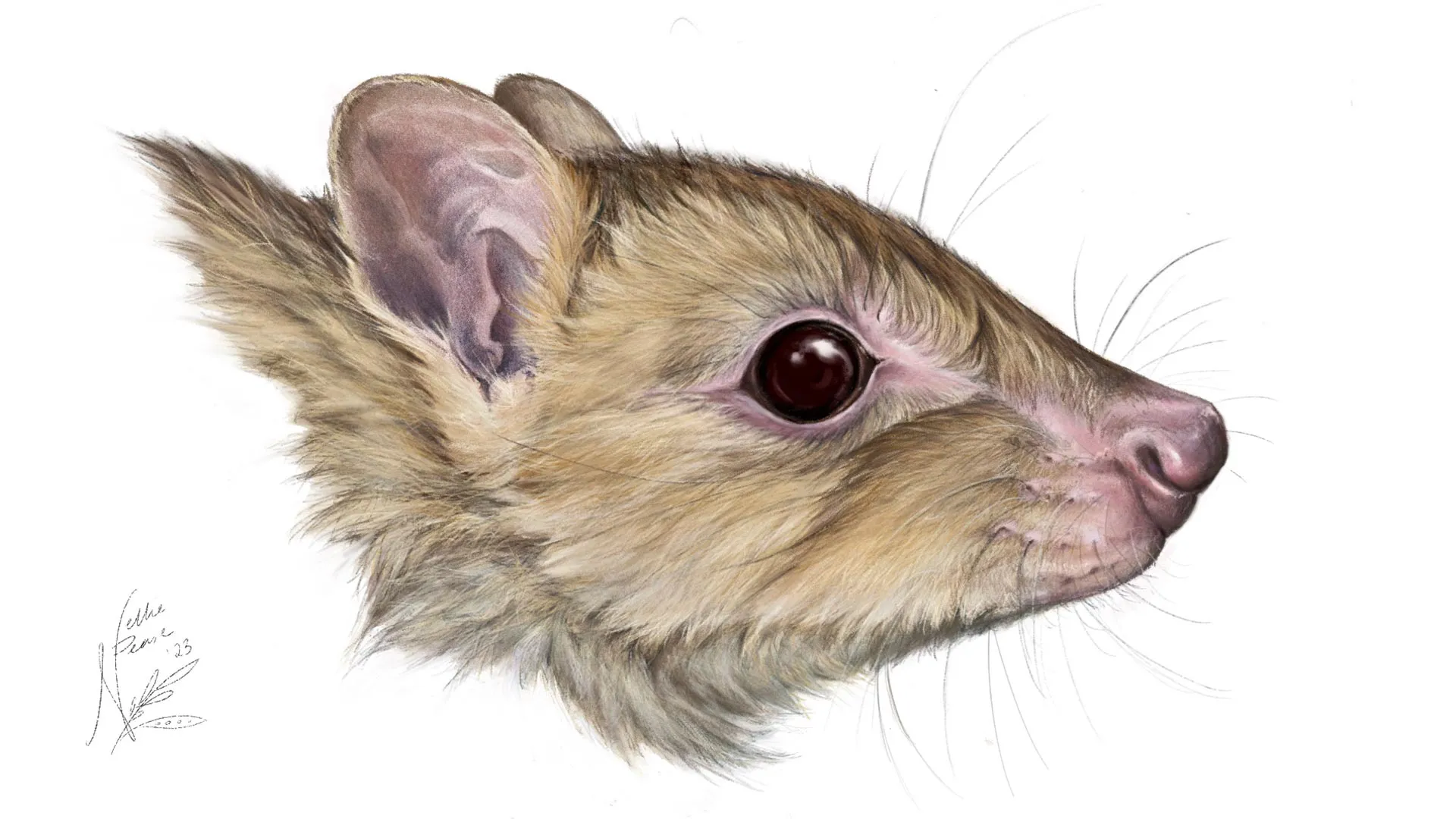
Scientists exploring Western Australian fossil caves have identified a new bettong species and two new woylie subspecies.
Scientists have identified a previously unknown species of native Australian marsupial closely related to kangaroos, using fossil evidence — and researchers believe the animal may have already been extinct before it was ever formally recognized.
By studying fossil remains collected from caves across the Nullarbor Plain and parts of southwestern Australia, a research team from Curtin University, the Western Australian Museum, and Murdoch University uncovered evidence of a brand-new bettong species. The analysis also revealed two newly defined subspecies of the woylie, a small marsupial already considered critically endangered.
Why woylies matter
Woylies, also known as brush-tailed bettongs, play a vital role in Australian ecosystems. As they dig for underground fungi — one of their main food sources — they shift large amounts of soil, sometimes several tonnes per animal each year. This digging helps improve soil health and seed distribution.
Native to Western Australia, woylies have become the most frequently relocated mammal in the country, as conservation groups work to protect and restore their dwindling populations.
Lead author Jake Newman-Martin, a PhD candidate in Curtin University’s School of Molecular and Life Sciences, said the findings shed new light on the true diversity of the species.
“Woylies are critically endangered and have been the focus of conservation work for decades,” Newman-Martin said. “Yet this research shows we still have much to learn about their evolutionary history.”
Discoveries hidden in fossil records
According to the researchers, the study formally identifies one entirely new species based solely on fossil material, along with two woylie subspecies that had not previously been recognized.
“Sadly, some of these animals likely disappeared before scientists even realized they existed,” Newman-Martin said.
The findings also divide today’s remaining woylie population into two living subspecies — a distinction that could significantly influence future breeding, relocation, and recovery programs aimed at strengthening their genetic diversity.
Co-author Dr. Kenny Travouillon, curator of terrestrial zoology at the Western Australian Museum, said the team relied on detailed measurements of fossil bones to clarify how many species and subspecies once existed.
Fossils guiding future conservation
“Our analysis confirmed multiple distinct forms and revealed greater diversity than previously understood,” Travouillon said. “Many of these fossils had never been examined this closely before.”
He added that combining fossil evidence with modern genetic research could provide powerful new tools for protecting the species that still survive today.
The newly identified Nullarbor species has been given the proposed scientific name Bettongia haoucharae. Researchers plan to collaborate with Indigenous communities to develop an appropriate shared name, acknowledging that “woylie” originates from the Noongar language.
A nationwide museum effort
The study drew on specimens from an extensive range of collections, including those held by the Western Australian Museum, South Australian Museum, Australian Museum, Queensland Museum, Museums Victoria, Flinders University, the Natural History Museum in London, and the Oxford University Museum of Natural History.
Together, the findings highlight how museum collections and fossil research can still reveal hidden chapters of Australia’s natural history — and help guide efforts to protect what remains.