

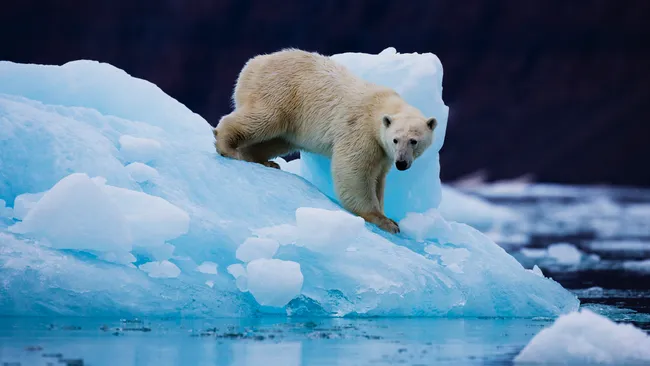
Warming temperatures appear to be driving genetic mutations in some polar bears to help them survive the shifting climatic conditions.
Rising temperatures may be triggering genetic changes in polar bears living in southern Greenland, according to a new study that suggests the animals could be responding to climate stress at the DNA level.
Polar bears are increasingly vulnerable as the planet warms. Sea ice — essential for hunting and survival — has reached record-low levels, and ongoing ice loss continues to disrupt the Arctic ecosystem these animals depend on.
However, one population of polar bears (Ursus maritimus) in southern Greenland appears to be responding differently. Researchers have identified a connection between warmer conditions and changes in the bears’ genetic activity, raising the possibility that this group is adapting to its environment.
The study, published Dec. 12 in the journal Mobile DNA, found that polar bears in Greenland’s warmest region show heightened activity in so-called “jumping genes,” a process that can rapidly alter DNA. Lead author Alice Godden, a senior research associate at the University of East Anglia in the U.K., described the findings as the first evidence that these bears may be using this genetic mechanism as a last-resort strategy to cope with shrinking sea ice.
Jumping genes — formally known as transposons or transposable elements — are segments of DNA that can move around the genome. When they insert themselves into new locations, they can influence how nearby genes function. In polar bears, more than one-third of the genome consists of these mobile elements. For comparison, transposons account for about 45% of human DNA and can make up as much as 70% of plant genomes.
The researchers suggest that increased transposon activity may be helping polar bears adjust to climate-driven changes, at least in the short term.
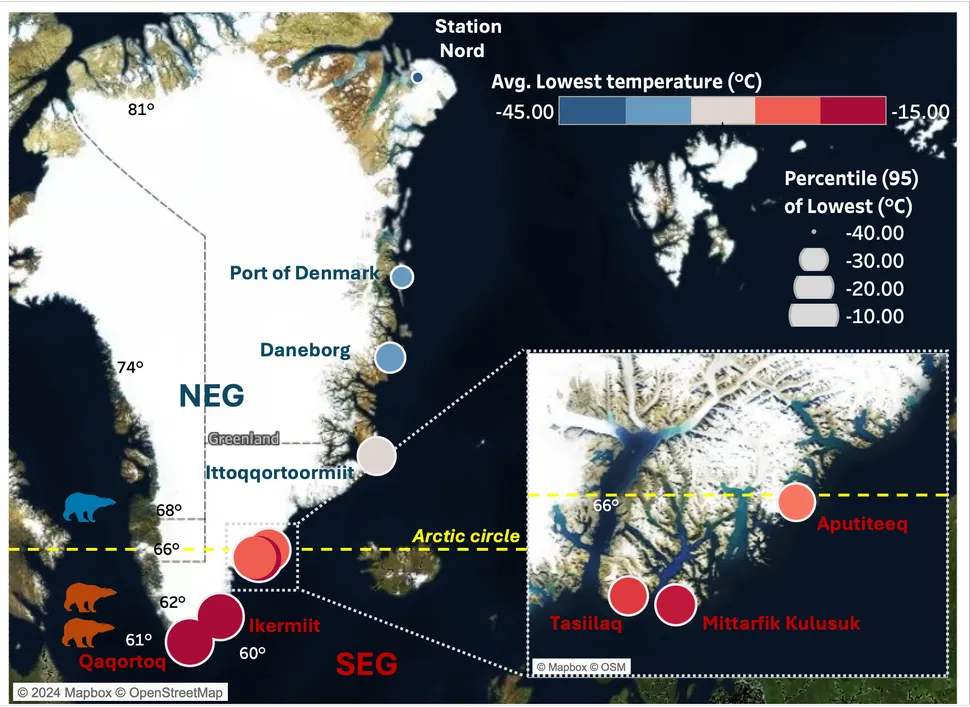
The new study builds on earlier research published in Science in 2022, which identified an isolated group of polar bears in southern Greenland that relies less on sea ice than bears farther north. That population separated from northern Greenland bears roughly 200 years ago and already showed notable genetic differences.
In the latest analysis, scientists examined DNA samples from 17 adult polar bears — 12 from northeastern Greenland, where conditions are colder, and five from the warmer southeastern region. They compared transposon activity between the two groups and matched the genetic data with regional temperature records.
The southeastern bears showed genetic changes associated with heat stress, metabolism, aging, and fat regulation — traits that could be important for surviving in warmer environments where food is less predictable. According to the researchers, these patterns suggest the bears may be biologically responding to local climate conditions.
“By linking gene activity to climate data, we found that higher temperatures are associated with a sharp rise in jumping gene activity in the southeastern bears,” Godden said. “Different bear populations are experiencing DNA changes at different rates, and those differences appear tied to their environment.”
Despite these findings, the researchers caution against seeing the results as a sign that polar bears are safe from climate threats. While genetic flexibility may offer some resilience, it does not eliminate the broader dangers posed by rapid warming.
“This gives us a bit of hope, but it doesn’t mean polar bears are no longer at risk,” Godden said. “Reducing global carbon emissions and slowing climate change remain absolutely critical if these animals are going to survive.”