

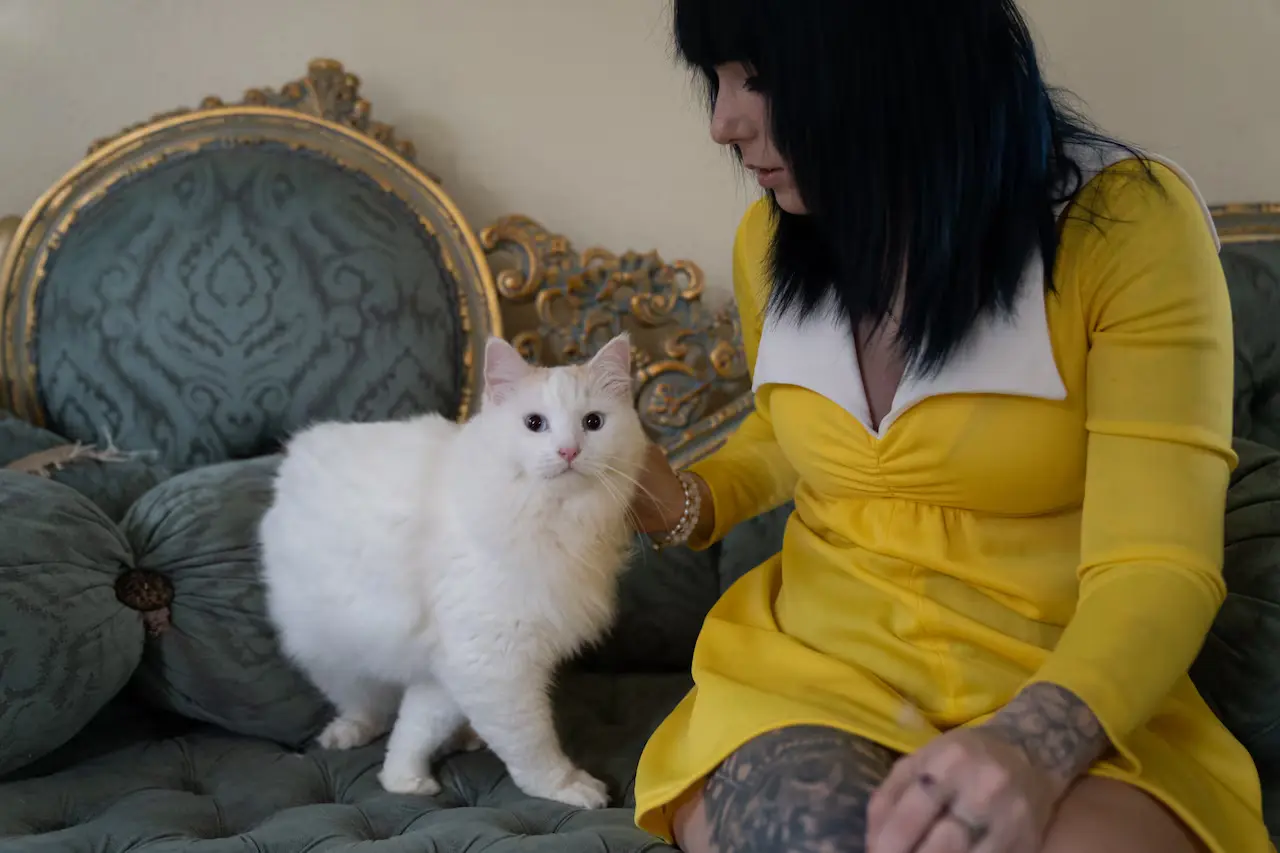
When Kelly Anderson’s ragdoll cat Chai died suddenly at just five years old, she felt a deep sense of loss. Chai had been more than a pet — she felt like a soulmate.
Unable to imagine replacing her, Anderson turned to a controversial and growing technology: pet cloning.
Within a day of Chai’s death in 2017, she began the cloning process with a Texas-based company. Using preserved DNA from her veterinarian, scientists eventually created a genetic copy of Chai — a kitten named Belle.
But the experience raised an important question scientists are still trying to answer:
Can a cloned pet really be the same as the original?
The High Cost of Cloning
Pet cloning has become more common since the first cloned animal, Dolly the sheep, was created nearly 30 years ago.
Today, cloning a cat or dog typically costs around $50,000, although the price was closer to $25,000 when Anderson began the process.
The procedure is complex. Scientists:
- Extract viable eggs from donor animals
- Insert DNA from the original pet into those eggs
- Implant embryos into surrogate mothers
- Hope a pregnancy successfully develops
Many attempts fail, and some embryos never implant. A 2022 study estimated the success rate may be as low as 16%, though some companies claim higher numbers.
Genetics vs. Experience
Even when cloning succeeds, the result isn’t a perfect replica.
Scientists say personality comes from both genetics and life experiences. While clones share the same DNA as the original animal, they grow up in different environments.
Research suggests some personality traits may transfer through genetics, including:
- Activity levels
- Sociability
- General temperament
But other traits — like curiosity, fear responses and social behavior — are heavily influenced by environment and upbringing.
Animal welfare expert James Serpell compares clones to identical twins.
They share the same DNA, but over time their personalities diverge due to different experiences.
What Studies Show
Because pet cloning is still rare, research on cloned animals is limited.
However, several studies provide clues:
- Miniature pig cloning research (2025): Some personality traits remained consistent among clones, but others varied widely.
- Cloned puppy study (2017): Clones showed stable temperaments over time, but reacted differently in stressful situations.
Overall, scientists agree that genes influence behavior — but they don’t determine it completely.
Chai and Belle: Similar but Different
When Anderson finally met Belle in 2021 — four years after beginning the cloning process — she noticed clear similarities to Chai.
Both cats were confident, strong-willed and dominant around other pets.
But Belle was also more social and adventurous.
That difference likely came from environment. Chai had been isolated as a sick kitten early in life, while Belle grew up interacting with people and exploring new places.
Belle quickly became comfortable visiting places like pumpkin patches, bars and breweries with Anderson.
Not a Copy — A New Individual
Experts emphasize that cloning creates a genetic twin, not a resurrection.
Even Anderson now describes the process that way.
Cloning gave her another cat with Chai’s DNA — but Belle developed her own personality and life story.
For anyone considering cloning, scientists say it’s important to understand the reality:
A clone may look similar and share some behavioral tendencies, but it will always become its own unique animal.