

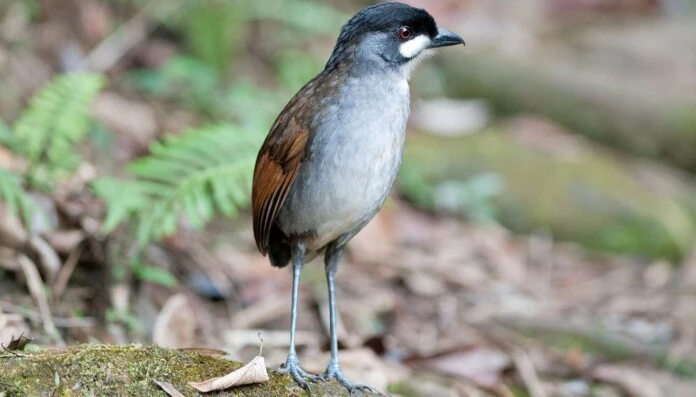
In the late 1990s, a group of scientists exploring a remote forest in Ecuador heard a bird call unlike anything they recognized.
Curious, they followed the sound through the dense vegetation until they came across an unusual bird standing on long, stilt-like legs. Its plumage was a mix of gray, black, and brown, and none of the researchers had ever seen anything quite like it.
The discovery would ultimately reshape conservation efforts in Ecuador.
Local people knew the bird as the jocotoco. Scientists soon confirmed that it represented a species entirely new to science, and its discovery became the catalyst for an ambitious conservation movement.
The bird helped inspire the creation of the Jocotoco Foundation, an organization that began raising money to purchase and protect some of Ecuador’s most biologically rich landscapes.
What started with a single rare bird eventually grew into a broad network of protected areas managed in partnership with local communities.
Today, the foundation works across a remarkable range of ecosystems, from Amazonian rainforest and high-altitude Andean grasslands to the humid Chocó forests, the dry Tumbes region, and the Galápagos Islands.
Its work has helped protect species once feared lost, uncover organisms previously unknown to science, and restore habitat for wildlife facing extinction.
The bird that started it all became known scientifically as Grallaria ridgelyi, the Jocotoco antpitta.
It was named in honor of ornithologist Robert Ridgely, who organized the 1997 expedition during which the species was first documented.
Researchers encountered the bird on the eastern slopes of the Andes near Ecuador’s border with Peru. Recognizing how vulnerable its habitat was, Ridgely and his colleagues quickly began seeking money to protect the land where the species had been found.
Their fundraising succeeded.
The effort led to the creation of the Tapichalaca Reserve, the first protected property established by what would become the Jocotoco Foundation.
From there, the project expanded dramatically.
The organization now manages a network of 19 private reserves encompassing roughly 123,000 acres. It also works alongside communities to help conserve approximately 200,000 additional acres of locally owned land.
Those landscapes are dedicated to habitat protection, ecological restoration, reforestation, and carefully managed ecotourism.
Their biological importance is difficult to overstate.
More than 1,350 bird species have been recorded across Jocotoco’s reserves, representing roughly 12.5% of all known bird species worldwide.
The protected landscapes also provide habitat for some of the Andes’ most recognizable wildlife, including Andean condors and spectacled bears, as well as threatened species such as the El Oro parakeet and Galápagos petrel.
The reserves functio