

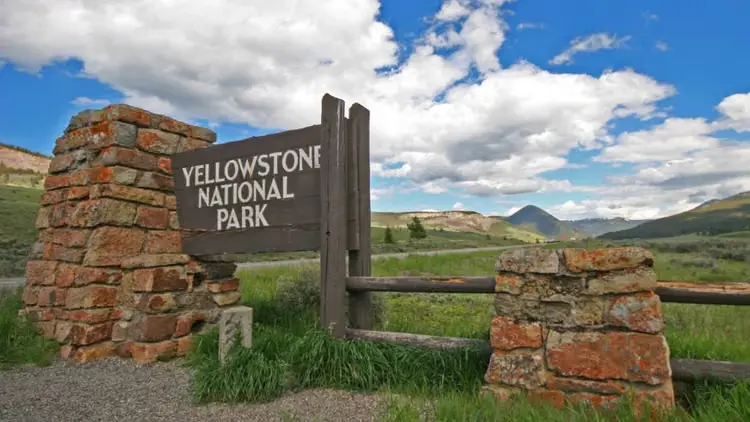
For more than a year, Will Anderson searched Yellowstone National Park for an insect that few people ever get the chance to see. His efforts initially led nowhere, but a series of demanding mountain expeditions in the summer of 2026 finally brought an unexpected reward: three rare ice crawlers hidden beneath rocks on remote alpine glaciers.
The discovery is particularly exciting because ice crawlers are among the least understood insects on the planet. They belong to the order Grylloblattodea, which includes just 35 scientifically described species. Some are known from only a single location.
For Anderson, a biology student at the University of Wyoming, finding them meant more than simply adding an insect to a research collection. It offered an opportunity to learn about creatures whose lives remain largely mysterious.
A difficult search in Yellowstone
Anderson, originally from Casper, participates in the Wyoming Research Scholars Program and works alongside Audrey Lindsteadt, a doctoral student in the university’s Program in Ecology and Evolution.
His interest in ice crawlers grew from how little scientists know about their biology, including their life cycles, preferred environments, and geographic ranges. He is also fascinated by alpine habitats, which have received comparatively little scientific attention.
The search began in late July 2025, when the researchers explored 14 rock glaciers in the Red Mountains near Heart Lake, in southwestern Yellowstone.
They examined potential hiding places, searched nearby snowfields, and even set traps overnight. Yet not one ice crawler appeared.
The conditions were less favorable than expected. Much of the seasonal snow had already melted, and many of the area’s glaciers were relatively small or inactive.
Although ice crawlers had been documented in nearby regions, they had never been recorded in Wyoming. Lindsteadt believed the state’s rock glaciers and surrounding snowfields might nevertheless offer suitable conditions for them.
The researchers would have to wait another year to find out.
An unexpected reward beneath the rocks
During a cold, snowy backpacking expedition lasting six days in late June and early July 2026, Anderson finally spotted his first two specimens.
Both were discovered beneath rocks on a large glacier near Antler Peak in northwestern Yellowstone.
The expedition soon became even more challenging. In July, a mother grizzly bear and her two-year-old cub suddenly bluff-charged the researchers, preventing them from following their intended route.
Rather than continue in that direction, the pair climbed Grey Peak and descended toward two nearby rock glaciers. The change of plans proved worthwhile: Anderson discovered a third ice crawler.
He later searched several alpine glaciers in Grand Teton National Park during August, but those efforts produced no further sightings.
By the end of the summer, he and Lindsteadt had walked approximately 170 miles (274 kilometers) in pursuit of the elusive insects.
All three specimens collected in Wyoming have so far been identified as Grylloblatta campodeiformis. This is the most widespread North American ice crawler species, with known populations in Montana, British Columbia, and Alberta.
Anderson also briefly managed to keep two specimens alive. However, he could not determine whether they were consuming the dead insects and plant material he offered them.
Strange insects that thrive in freezing temperatures
Ice crawlers are remarkably specialized creatures. They have no wings and are adapted to environments that would be inhospitable to most other insects.
North Carolina State University entomologists report that most species are active at temperatures below freezing and typically cannot survive temperatures exceeding 50°F (10°C).
Their development is unusually slow, too. They undergo incomplete metamorphosis, passing through egg, nymph, and adult stages. Depending on the species, completing one generation can take as long as seven years.
The University of Wyoming describes ice crawlers as extremophiles capable of surviving in humid alpine environments at temperatures as low as 21°F (-6°C).
They spend daylight hours sheltered beneath cold rocks, often close to snow and ice. Once night falls, they emerge to search for food, feeding primarily on other small invertebrates. This can include insects carried onto the snow by the wind, as well as some plant material.
Their feeding habits in other environments remain poorly understood, particularly when they live beneath permanent snow or spend extended periods in the soil.
Ice crawlers are found across parts of northeastern Asia, Siberia, the western United States, and Canada. North American populations are generally small and isolated, occupying mountain habitats and caves.
Could rock glaciers hold the key?
Rock glaciers look similar to conventional alpine glaciers, but their ice is buried beneath layers of rocky debris. This covering helps insulate the ice and protect it from changing environmental conditions.
Lindsteadt suspects that these formations may be especially attractive to ice crawlers because they provide colder, more humid, and potentially more stable environments than ordinary rocky slopes or seasonal snowfields.
The researchers are careful not to draw firm conclusions from just three discoveries. Nevertheless, the findings offer an encouraging indication of where future searches might be most successful.
Yellowstone has 58 documented rock glaciers, none of which had been examined in this particular research project before the team’s work began.
Their next step is to investigate 17 additional rock glaciers in eastern Yellowstone and return to previously explored sites in hopes of finding more specimens.
A race against disappearing ice
The discovery also highlights a conservation concern. Ice crawlers depend on specialized cold environments, generally living on high-elevation glaciers or in lower-elevation caves where ice persists throughout the year.
As climate change causes glaciers and ice fields to retreat, these insects risk losing the habitats on which their survival depends.
Although Anderson believes their ecological influence is relatively limited because they are so rare, ice crawlers still form part of the food webs and nutrient cycles within their environments.
He believes studying them could help scientists better understand how alpine ecosystems function and develop more effective ways to protect them.
Anderson is currently preparing a research paper that he hopes to publish in a leading alpine or entomology journal. He is also scheduled to present the findings at the Entomological Society of America’s 74th annual meeting in Columbus, Ohio, taking place November 8–11, 2026.
After an unsuccessful first season and hundreds of miles of searching, three tiny discoveries may help scientists uncover much more about an extraordinary group of insects living in Earth’s coldest habitats.