

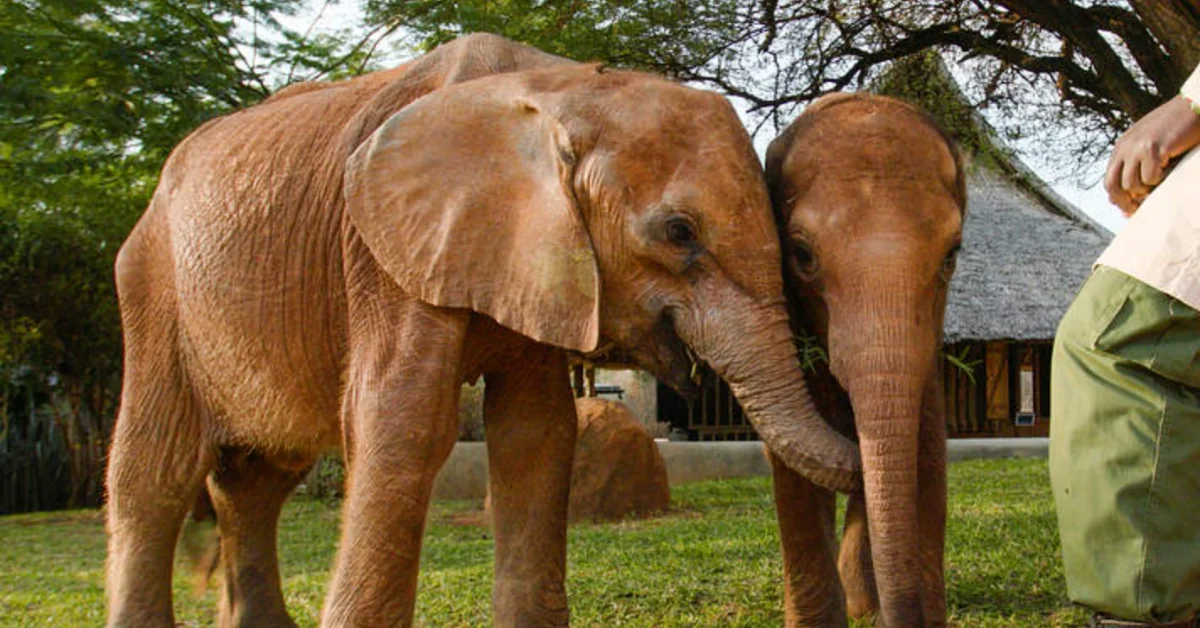
Bungalu the African elephant has endured more in his short life than most animals ever will.
Today, the 16-month-old calf is safe at the Sheldrick Wildlife Trust, where orphaned elephants are rescued, rehabilitated, and eventually prepared for a possible return to the wild.
Just six months earlier, however, Bungalu was fighting to stay alive.
In February 2026, the Kenya Wildlife Service began receiving reports about a young elephant wandering alone near Bungule, close to the foothills of Mount Kasiagau. Rangers repeatedly searched the area, but the frightened calf managed to remain out of sight.
On February 27, local residents spotted him again, prompting the Sheldrick Wildlife Trust to dispatch a helicopter to the area. But when rescuers approached, Bungalu panicked and disappeared once more.
Then the weather turned dangerous.
As February came to an end, powerful lightning storms and torrential rain swept across the Tsavo region. Considering that the calf had already survived without his mother’s milk or the protection of a herd, rescuers feared the severe weather might finally prove too much.
Fortunately, Bungalu survived.
On March 1, members of the local Maasai community found the calf and managed to keep him near a tree until rescuers could reach him.
Once Sheldrick Wildlife Trust rangers transported Bungalu to the organization’s Kaluku Unit, they discovered just how much he had endured while alone.
Deep claw marks covered his back. Although the wounds had already begun to scar, they strongly suggested that Bungalu had survived an attack by lions.
The Trust said the number of injuries made his survival remarkable and suggested that the attack may have been the event that separated him from his herd in the first place.
His physical condition presented another serious challenge.
Bungalu was severely underweight and suffering from a heavy parasite burden, which veterinarians believed was connected to the lack of proper nutrition during such an important stage of his development.
Even after his keepers began providing regular bottles of milk and fresh vegetation, gaining weight was difficult. His body had been pushed to its limits.
Despite everything he had experienced, Bungalu surprised his rescuers with how quickly he accepted them.
Rather than becoming fearful or aggressive, the young elephant appeared relieved to once again have companionship and protection. There was almost no adjustment period. By his first night at the sanctuary, he was already drinking milk from a bottle and affectionately suckling on his keepers’ fingers.
Before long, Bungalu also formed a friendship with another young elephant named Kaikai, who had herself been orphaned when she was only a few days old.
The two calves quickly became an unlikely pair.
Kaikai is energetic, confident, and often eager to charge ahead, while Bungalu is noticeably calmer and more measured. He seems perfectly content to follow wherever she leads.
Their contrasting personalities have become part of their charm.
Kaikai, who is cared for by three dedicated keepers and has earned a reputation as the sanctuary’s little “princess,” can occasionally become a little too bossy. Bungalu usually tolerates her behavior, although he has been known to respond with a firm headbutt when she pushes things too far.
Most of the time, however, he appears happy to let his companion remain in charge.
By September, Bungalu’s personality was shining through in other ways as well.
In a video shared by the Sheldrick Wildlife Trust on September 14, the calf could be seen drinking from a milk bottle while carefully wrapping the two finger-like tips of his trunk around its handle.
He was not yet strong enough to support the entire bottle by himself, but that did not stop him from trying to help.
The behavior also highlighted one of the remarkable adaptations of African elephants. Unlike Asian elephants, which have one finger-like projection at the end of the trunk, African elephants have two. These flexible tips allow them to manipulate surprisingly small and delicate objects.
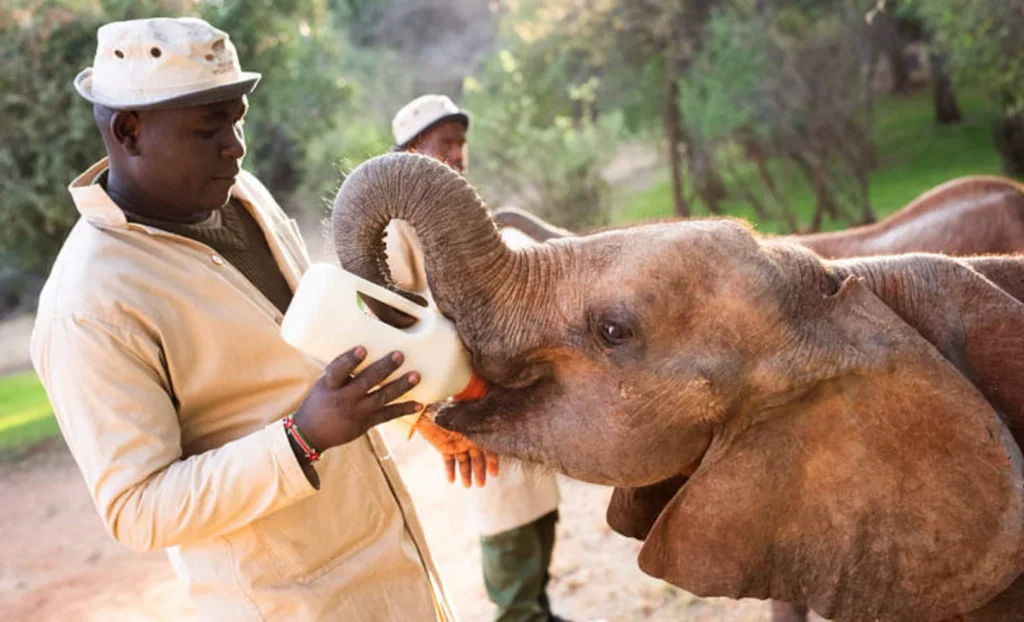
For Bungalu, that includes everything from vegetation and tiny objects on the ground to the handle of the milk bottle he eagerly waits for each day.
His calm, affectionate nature today is a striking contrast to the frightened and severely malnourished calf rescuers spent days trying to locate.
After surviving separation from his herd, a probable lion attack, hunger, parasites, and violent storms, Bungalu finally has something he had been missing for months: a family to protect him.