

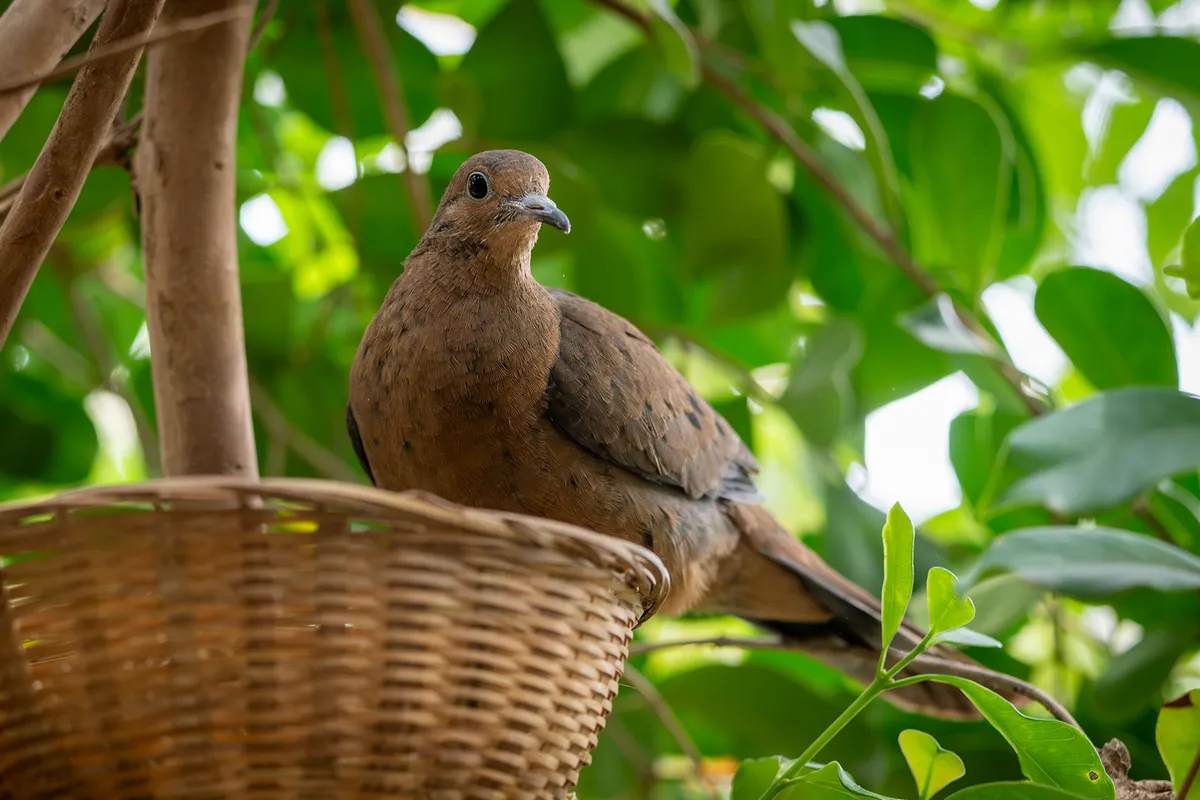
The story of the Socorro dove is one of the world’s most remarkable conservation efforts. Although the species disappeared from the wild more than 50 years ago, dedicated breeding programs have kept it alive, offering real hope that it will one day return to its native island.
A Bird Found Nowhere Else
The Socorro dove (Zenaida graysoni) once lived only on Socorro Island, one of Mexico’s remote Revillagigedo Islands, located about 600 kilometers (373 miles) off the Pacific coast.
Today, the species is extinct in the wild. The last confirmed wild sightings were in the early 1970s, and the bird was officially declared extinct in its natural habitat in 1972.
However, the species itself has not disappeared. Around 200 Socorro doves survive in carefully managed zoo populations around the world.
How The Doves Disappeared
The extinction wasn’t caused by a single event but by a series of human-introduced problems.
About 150 years ago, settlers brought sheep to Socorro Island. The sheep heavily grazed the island’s vegetation, destroying much of the habitat that ground-nesting Socorro doves depended on.
Things became even worse in 1957, when a naval base was established on the island. Domestic cats introduced by workers quickly became efficient predators of the already struggling doves.
The combination of:
- Habitat destruction by sheep
- Predation by introduced cats
proved devastating, driving the species to extinction in the wild.
Saved Just In Time
Fortunately, the species had one incredible stroke of luck.
In 1925, a scientific expedition from the California Academy of Sciences collected 17 Socorro doves and brought them into captivity.
Those 17 birds became the ancestors of every Socorro dove alive today.
Without them, the species would almost certainly have vanished forever.
A Worldwide Conservation Effort
Today, zoos across Europe and North America cooperate through an international breeding program.
Major participants include:
- Chester Zoo (UK)
- London Zoo (UK)
- Smithsonian’s National Zoo (USA)
- San Diego Zoo Wildlife Alliance (USA)
The breeding program carefully manages which birds reproduce in order to preserve as much genetic diversity as possible.
Because every bird descends from only 17 founders, maintaining healthy genetics is challenging. Conservationists also carefully avoid breeding birds that have hybridized with mourning doves.
Every Chick Matters
Every successful hatch is considered a major victory.
In April 2025, London Zoo celebrated the hatching of three Socorro dove chicks, while Chester Zoo and San Diego Zoo have also successfully bred young birds.
Given the tiny global population, each healthy chick improves the species’ chances of long-term survival.
Preparing Socorro Island
Bringing the doves back requires more than simply releasing birds.
For years, conservation teams have been restoring Socorro Island by:
- removing the introduced sheep,
- allowing native vegetation to recover,
- restoring forests and nesting habitat.
One major obstacle remains: feral cats still live on the island and continue to pose a serious threat. Until their numbers are effectively controlled or eliminated, releasing Socorro doves would be extremely risky.
Why The Doves Matter
Socorro doves are more than just another bird species.
Historically, they helped disperse seeds by eating fruit and depositing seeds throughout the island in their droppings. Returning them could help restore the island’s natural ecosystem and benefit other endemic species, including the Socorro mockingbird and the Socorro blue lizard.
Looking Ahead
If habitat restoration continues successfully and the remaining threats are addressed, conservationists hope to begin reintroducing Socorro doves to the wild by around 2030.
Their story demonstrates both sides of human influence on nature:
- Human activities drove the species extinct in the wild.
- Human dedication, international cooperation, and decades of conservation have prevented its complete extinction.
If the reintroduction succeeds, the Socorro dove could become one of the rare examples of a species returning to its native habitat after surviving for decades only in human care.