

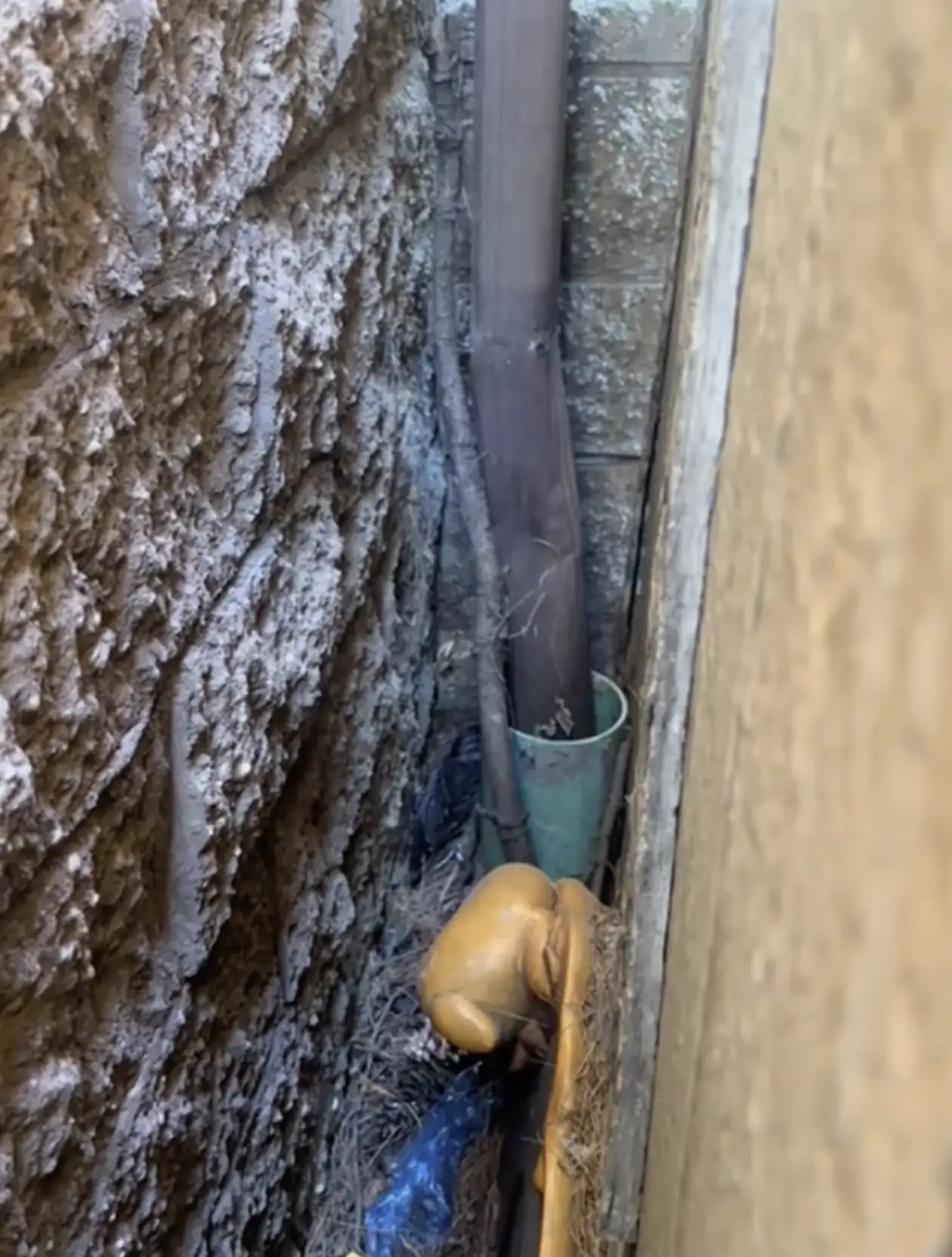
On a bright October afternoon in 2024, Long Island wildlife rehabilitator Karenlynn Stracher received an urgent call: a wild bird was trapped behind a neighborhood bakery. Without hesitation, she grabbed her gear and raced to the scene.
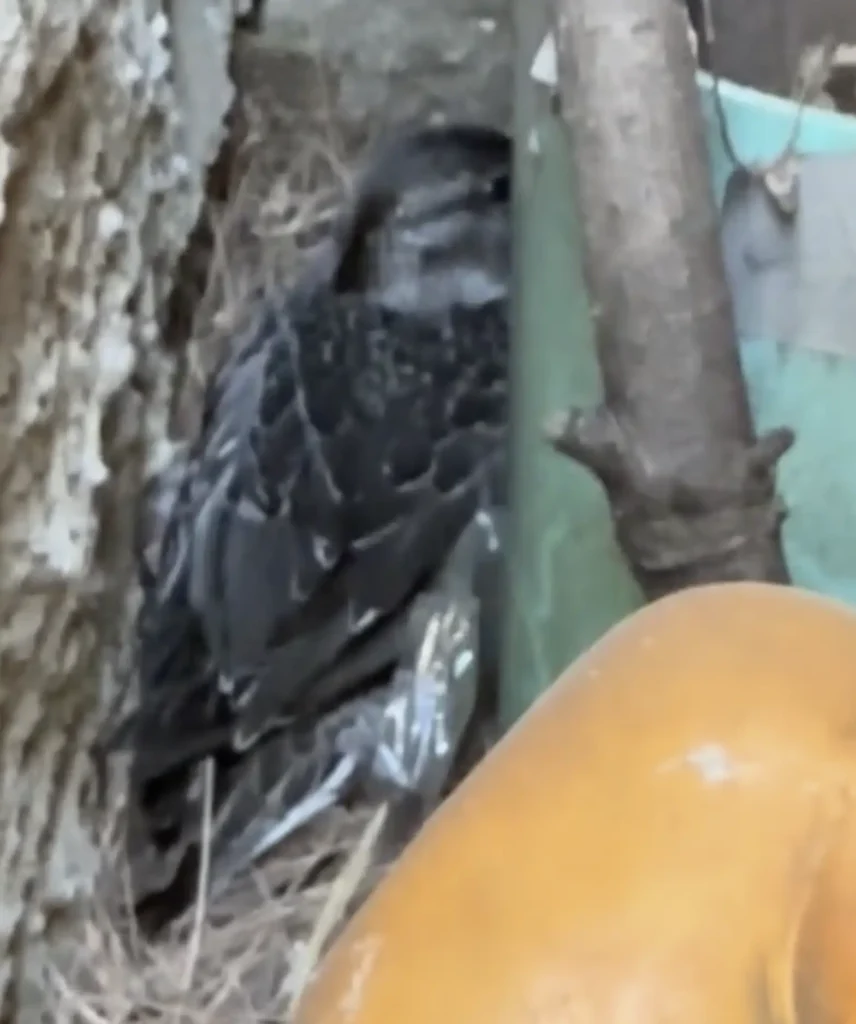
Inside the bakery, the warm aroma of fresh bread and pastries filled the air. Stracher wove past customers and display cases with quiet determination, following a worker who led her around to a narrow, shadowed space between two tightly pressed buildings. There, wedged six feet deep into a gap barely wide enough for an arm, was a small teal — a native duck whose vibrant plumage was dulled by fear and injury.
Teals are early fall migrants, often heading south long before winter arrives. This little traveler had likely been following instinct toward warmer weather when disaster struck, leaving him trapped and vulnerable.
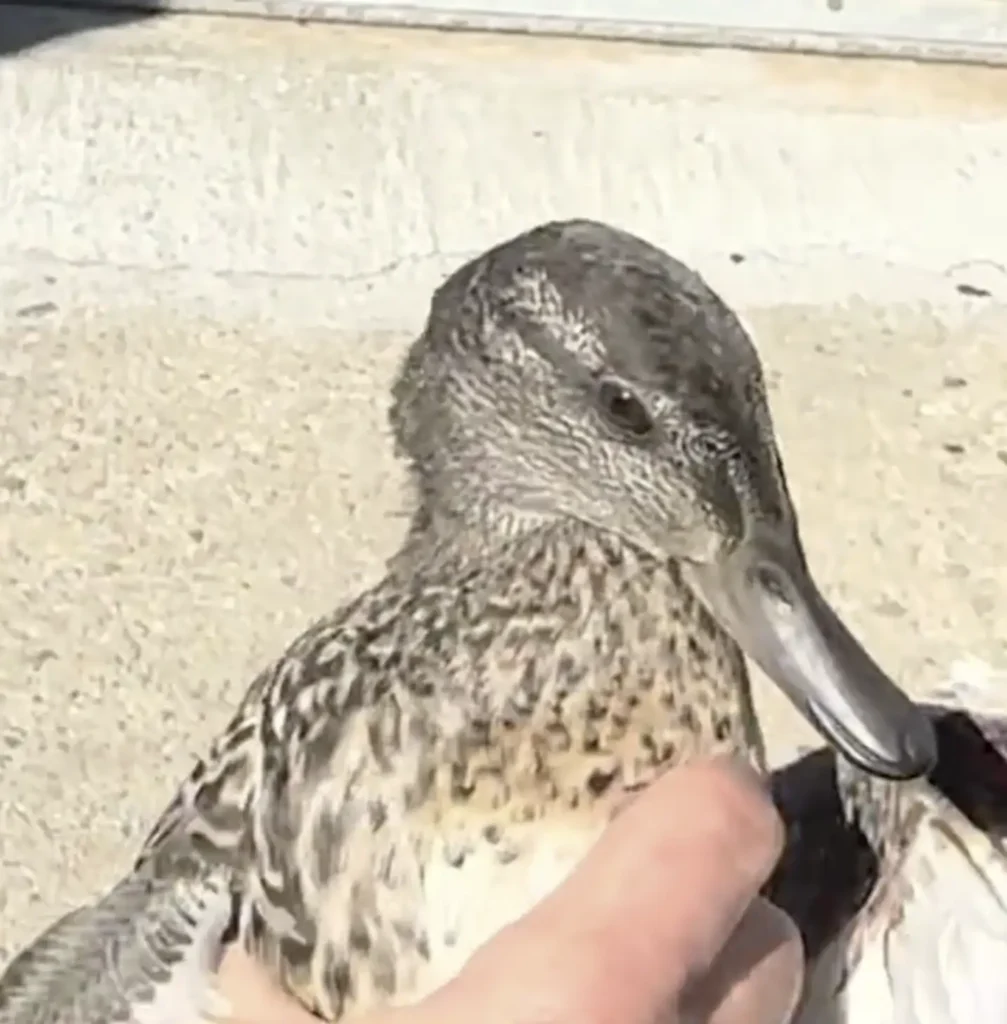
Stracher assessed the situation carefully. The opening was tight, the bird clearly in pain, and the prospect of reaching him seemed uncertain. With practiced patience and a long-handled net, she coaxed the teal forward. The frightened bird tried to take flight, but his injury made it impossible. When he darted to escape on foot, Stracher acted swiftly, cornering him gently against a fence before scooping him up with care.
She transported the tiny duck to Sweetbriar Nature Center, where staff tended his wounds and helped him regain strength. After much-needed rest and expert care, the resilient teal was ready to return to the wild.
Thanks to the quick thinking of a concerned bakery worker and the dedication of a skilled rescuer, one small teal was given a second chance — and is once again soaring freely through the open sky, exactly where he belongs.