

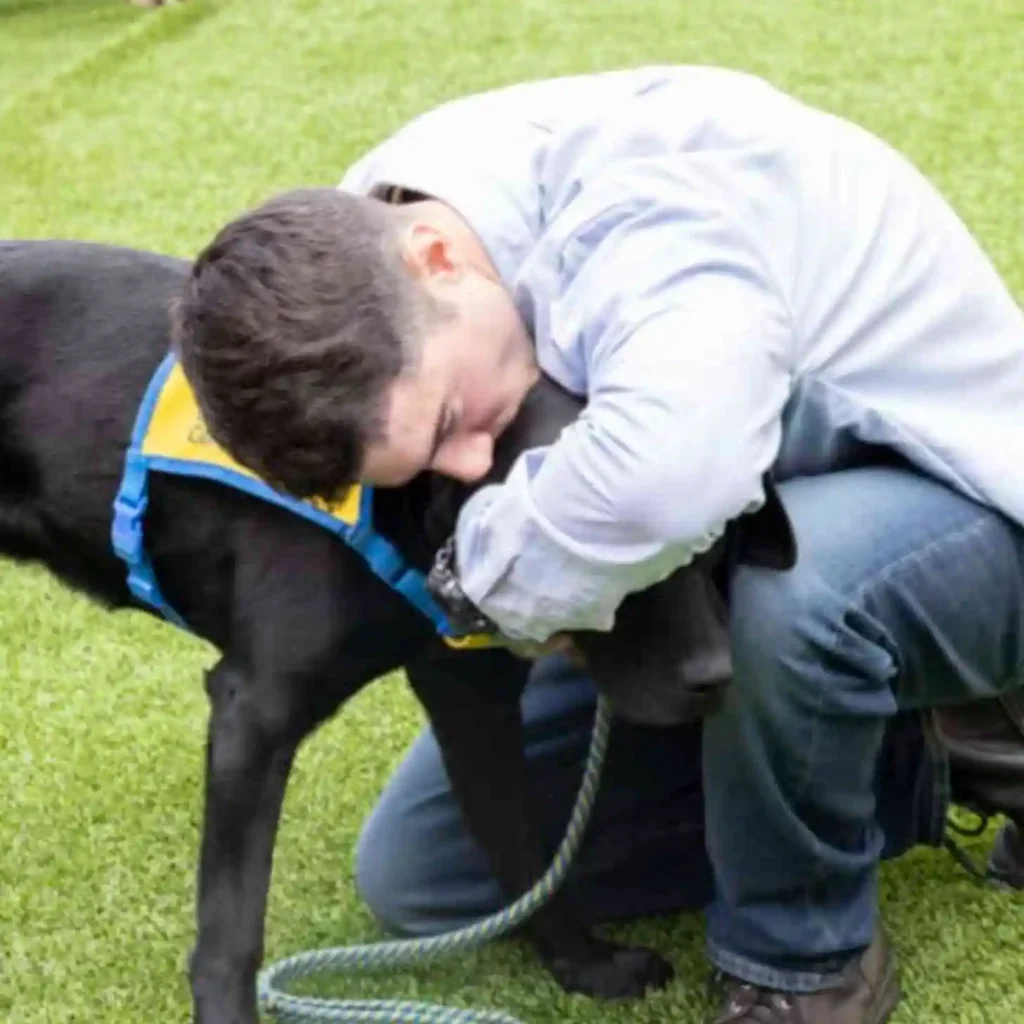
This April marked one year since Chase Benoit, incarcerated at San Quentin Rehabilitation Center, last saw Wendel — the guide dog he helped raise and train behind prison walls.
When the black retriever walked into the room and locked eyes with Benoit, however, time seemed to disappear.
The recognition was instant.
Through an American Sign Language interpreter, Benoit expressed his joy and relief. He could tell immediately that Wendel remembered him. More than anything, he felt grateful knowing the dog he once trained now lived a happy life with a loving owner.
Training Dogs, Changing Lives
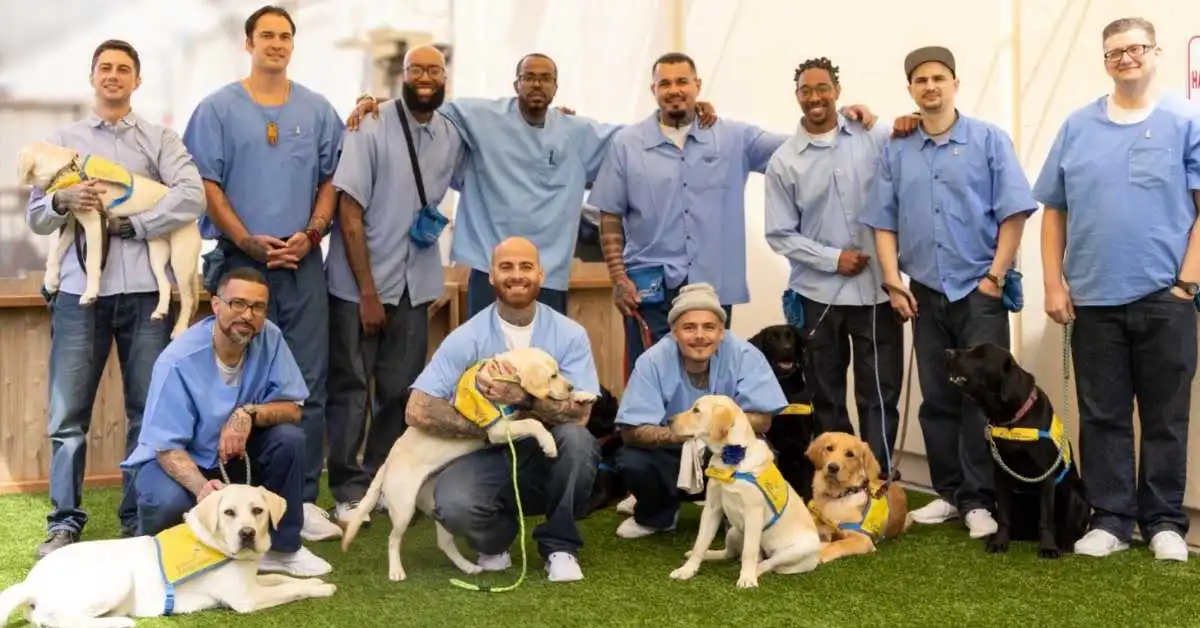
The reunion grew out of a unique prison-based training program run by Canine Companions, a nonprofit that pairs people with trained service dogs at no cost.
According to James Dern, the organization’s national director of puppy programs, dogs trained through these prison programs succeed at a notably higher rate than average. In fact, they become working service dogs about 10% more often than those trained elsewhere.
He attributes that success to the extraordinary time, patience, and care incarcerated trainers invest in their dogs.
A Year of Responsibility and Trust
In April 2023, Benoit became one of four incarcerated men selected to welcome four-month-old puppies into their cells.
Over the following year, the men shared full responsibility for raising the dogs and teaching them 20 essential skills. Every few months, the puppies left the prison for supervised outings to grocery stores and public parks, where they practiced navigating the real world.
Later, between 16 and 17 months of age, professional trainers completed the dogs’ education before matching them with their future partners.
Gratitude From the Other Side of the Leash
For recipients like Benjamin Carter, the impact of the program is deeply personal.
After receiving his service dog, Artemis, Carter immediately noticed the balance between discipline and affection. While Artemis stays focused and responsive on the job, he also offers warmth and companionship at home.
Carter credits that balance to the foundation built by the incarcerated trainers — people he has never met, yet feels deeply connected to.
A Program That Keeps Growing
Since launching at San Quentin in 2023, the program has expanded rapidly.
Today, 16 incarcerated trainers raise eight puppies at the facility. Meanwhile, 11 additional correctional facilities have joined the effort, extending the program’s reach across the country.
Each expansion means more trained service dogs — and more incarcerated people finding purpose through responsibility and care.
Finding Meaning Behind Bars
For Benoit, the experience reshaped his sense of self.
Participating in the program gave him something he had searched for most of his life: meaningful purpose. By helping others and contributing to something larger than himself, he found a sense of belonging and pride that endured beyond prison walls.
And in Wendel’s unmistakable recognition, he saw proof that the bond they built still mattered — to both of them.