

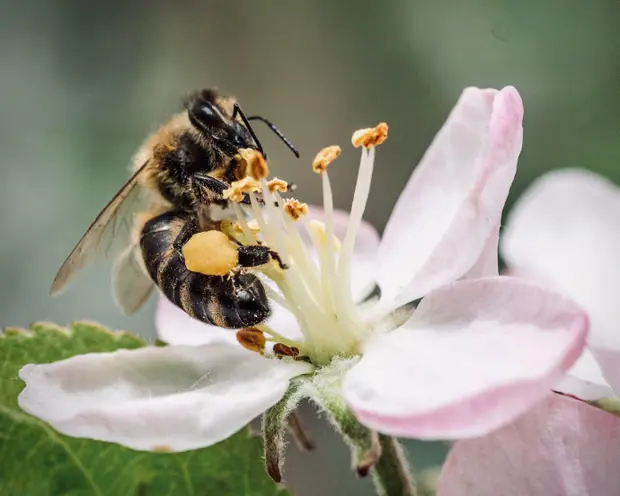
Every summer, around 1,000 virgin queen bees arrive in the Belgian town of Chimay for a dramatic event known as the “wedding flight.” During this aerial mating ritual, a male bee mates with a queen mid-flight — his endophallus is torn away in the process, and he dies instantly.
For beekeepers gathered from Belgium, the Netherlands, France and Germany, this sacrifice serves a larger purpose: protecting the endangered European dark bee.
The queens, once fertilized, are collected in small, colorful hives and transported — sometimes more than 300 kilometers — to establish new colonies across Europe.
Reviving a Native Subspecies
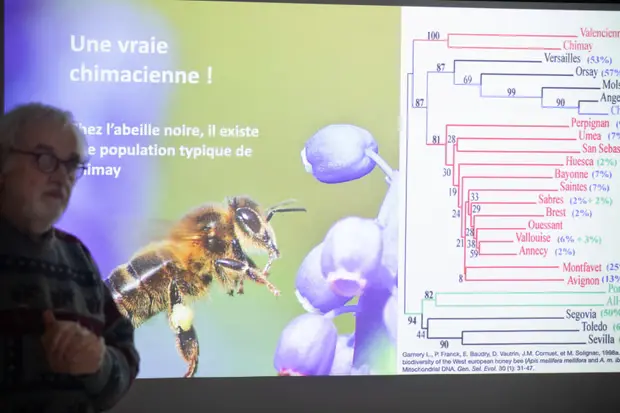
The annual pilgrimage, which began in 2000, is focused on conserving the European dark bee, Apis mellifera mellifera. It is the native subspecies of the western honeybee, Apis mellifera, adapted over thousands of years to northern and western Europe’s cooler, wetter climate.
Conservationists argue it is the only honeybee subspecies truly suited to this region.
For much of the 20th century, however, beekeepers imported hybrid honeybees bred for higher honey yields. These cross-bred bees intermingled with dark bees, threatening to erase the native subspecies through genetic dilution.
Today, dark bee populations survive only in fragmented pockets across Scandinavia, France, Spain and parts of the UK, where they were once thought extinct.
Chimay: A Sanctuary for Dark Bees
Chimay has become a refuge thanks largely to Belgian biologist and beekeeper Hubert Guerriat, founder of the conservation group Mellifica. Since the 1980s, Guerriat has trained beekeepers to work exclusively with dark bees and restrict hybrid imports.
Across roughly 30,000 hectares around Chimay and Momignies, participating beekeepers are permitted to keep only dark bees.
At the Maison de l’Abeille Noire (“House of the Dark Bee”), queens spend two weeks mating with up to 20 males, storing millions of sperm in a pouch that can last several years. Beekeepers reserve spots much like booking a campsite.
Why Dark Bees Matter
Dark bees differ from hybrid honeybees in key ways.
Hybrid queens lay large numbers of eggs year-round, producing bigger colonies that require more winter feeding. Dark bee queens, by contrast, lay fewer eggs, creating smaller colonies that consume less food and are better adapted to colder, wetter conditions.
“They are not interchangeable,” Guerriat says. “Nature is like a high-precision watch. You cannot swap in one bee for another.”
Dark bees are:
- More resistant to cold and humidity
- Better adapted to sudden weather shifts
- Potentially more resilient to parasites and disease
- Possibly less vulnerable to invasive predators such as Asian hornets
During a particularly rainy summer in 2024, hybrid honeybee colonies struggled, while dark bees appeared less affected, according to local keepers.
Honey With a Different Philosophy
Dark bee keepers often produce less honey, but they report fewer colony losses and reduced reliance on supplemental sugar feeding.
There is also a niche market for “miel de noire” (dark bee honey), along with beeswax candles, lip balms and syrups. For some, the shift represents a move toward more ecological beekeeping practices.
Meanwhile, conservationists are also restoring wild dark bee populations in forests by installing log hives to mimic the large tree cavities where they once nested.
A Broader Ecological Question
The western honeybee remains the world’s most important managed pollinator. Yet growing evidence suggests large-scale honeybee farming can negatively affect wild pollinators.
For advocates of the dark bee, the goal is not simply honey production, but preserving local biodiversity and ecosystem resilience in an era of climate change, disease and habitat loss.
As beekeepers across Europe face record colony die-offs, the dark bee offers a reminder that native species — shaped by centuries of local adaptation — may hold the key to more sustainable apiculture.
“With time,” Guerriat says, “people discover it is a beautiful bee.”