

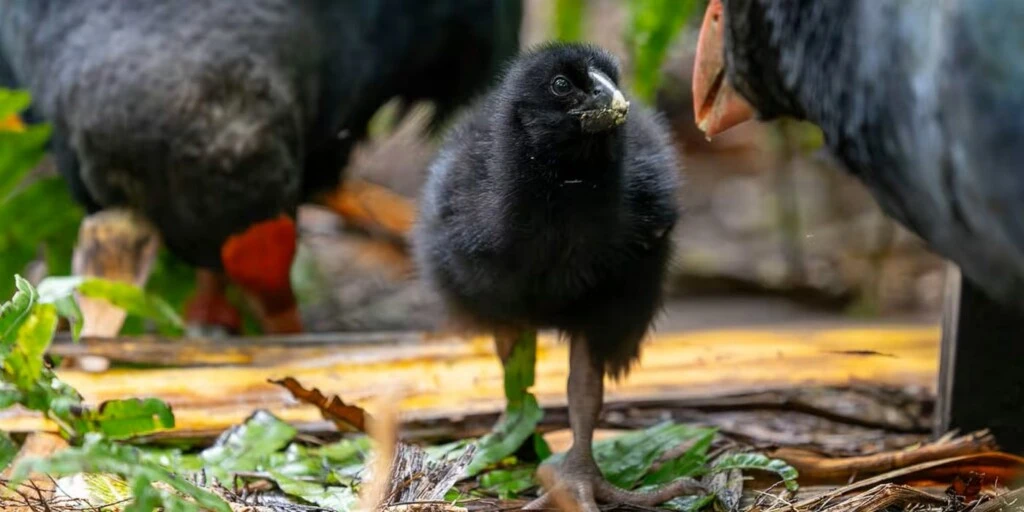
In what conservation staff are calling a true Christmas miracle, a pair of endangered takahē birds in New Zealand has surprised everyone by successfully raising a chick — despite previously being believed incapable of breeding.
With only about 500 takahē remaining nationwide, the arrival of even a single chick is a significant boost for the species’ survival.
The unexpected discovery took place at Zealandia, a predator-free ecosanctuary located just minutes from downtown Wellington. In early November, staff grew concerned when a female takahē named Waitaa stopped appearing at feeding stations, prompting a search for signs of nesting.
Their suspicions were confirmed when they heard faint, high-pitched calls — unmistakable evidence that a chick had hatched. The news was especially astonishing because Waitaa’s partner, Bendigo, had long been thought infertile.
Jo Ledington, Zealandia’s General Manager of Conservation and Restoration, said the team chose to keep the discovery quiet at first, waiting until they were confident the chick was healthy and had made it through the most challenging spring weather.
“I’m incredibly excited that Zealandia can contribute to the national takahē recovery not just by helping people connect with this remarkable bird, but by directly increasing the population,” Ledington said.
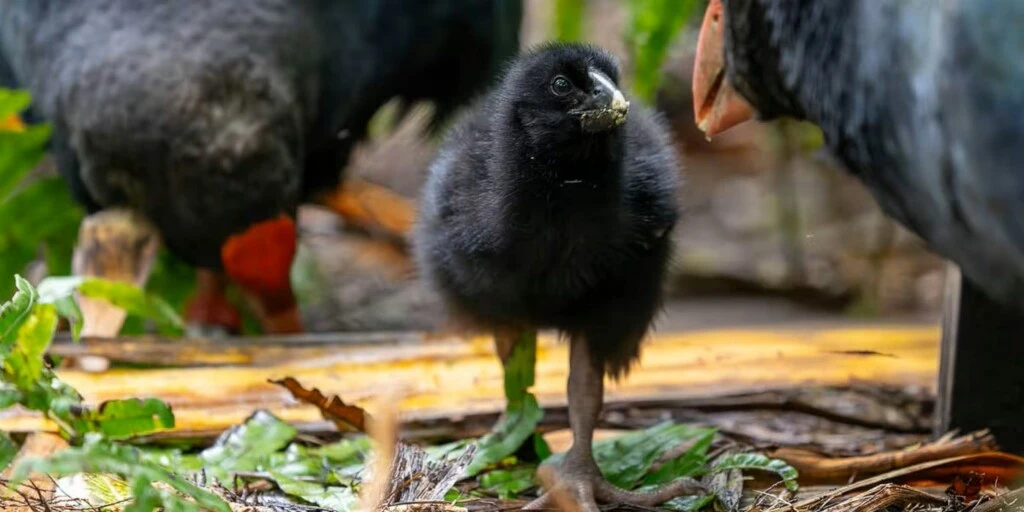
The takahē is a large, flightless relative of the rail family, known for its strong legs, oversized feet and short wings. Once believed extinct on New Zealand’s South Island, the species was rediscovered in 1948. Adult takahē are striking, with shimmering blue and green plumage and a notably rounded shape that has earned them a reputation for looking almost planet-like when viewed head-on.
Bendigo and Waitaa arrived at Zealandia last year as a bonded pair classified as non-breeding. After an unsuccessful nesting attempt, conservationists assumed the pair would not be able to produce offspring. When Waitaa vanished from view, staff installed a trail camera in a suspected nesting area — and soon confirmed the presence of the chick.
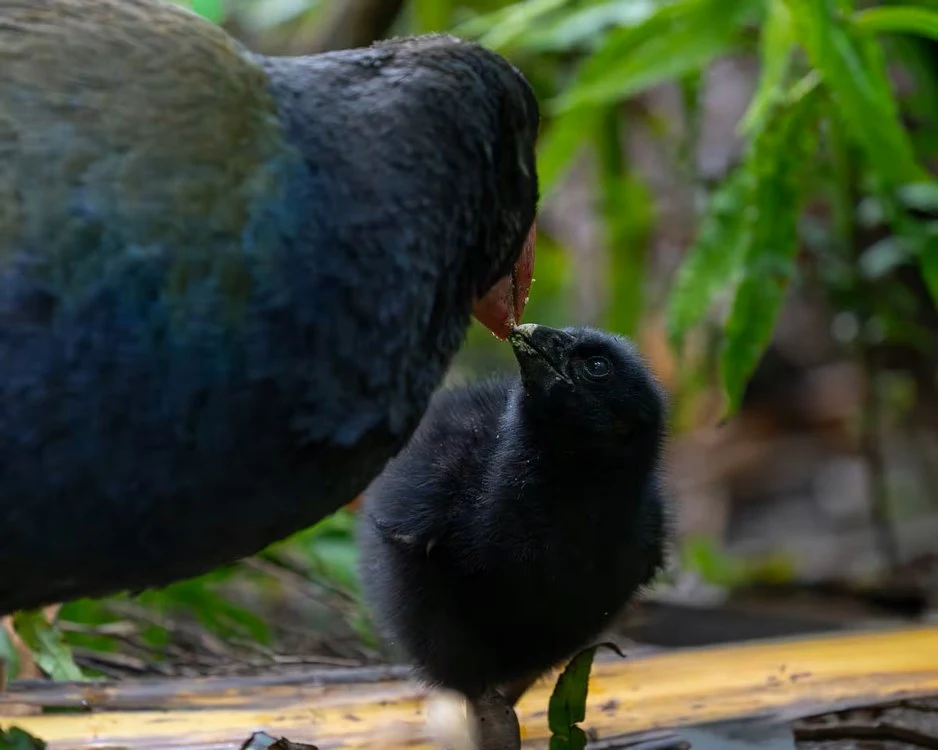
“Every single chick is incredibly important for a species with numbers this low,” Ledington told The Guardian.
It will be some time before the chick’s sex is determined. In the future, it will be banded, receive a health assessment, and eventually be named and relocated as part of the wider conservation program. For now, however, Zealandia staff are celebrating.
“At this moment,” sanctuary officials said in a statement, “Zealandia is a safe and perfect place for this chick to grow.”