

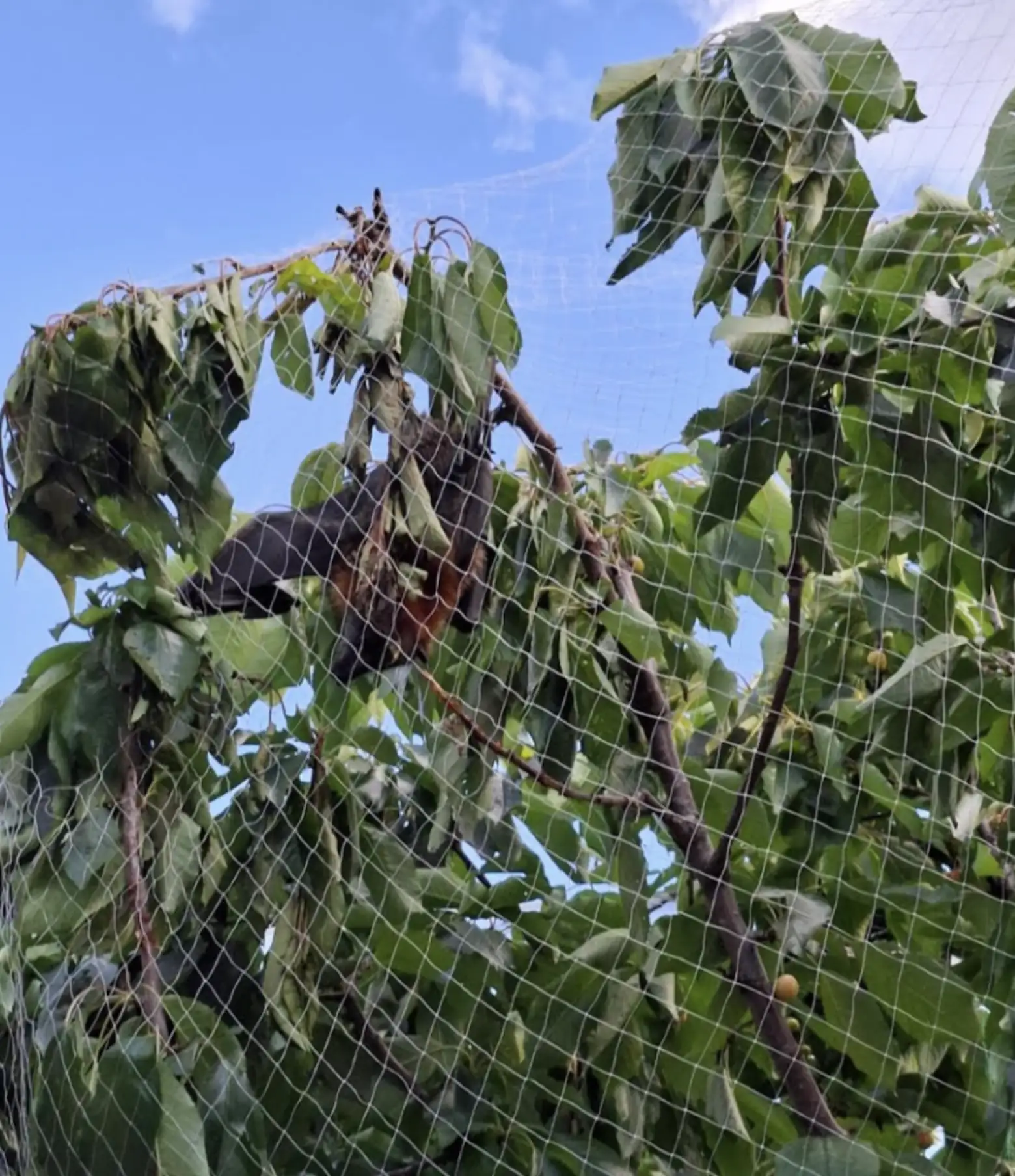
She was struggling to survive 💔
Injured Flying Fox Rescued After Getting Tangled in Tree Netting in Australia
In Melbourne’s northern suburbs, a woman named Sonia noticed something unusual hanging in the netting of her cherry tree — a large, dark shape that turned out to be an adult grey-headed flying fox.
The bat had likely been trying to reach the fruit when she became stuck in the net. Unable to free herself, she was left injured and trapped.
Sonia quickly contacted wildlife experts from The Wildlife Rescuers Inc., who sent rescuer Meaghan Scott to the scene, along with Fae Pawley from the Fly By Night Bat Clinic.
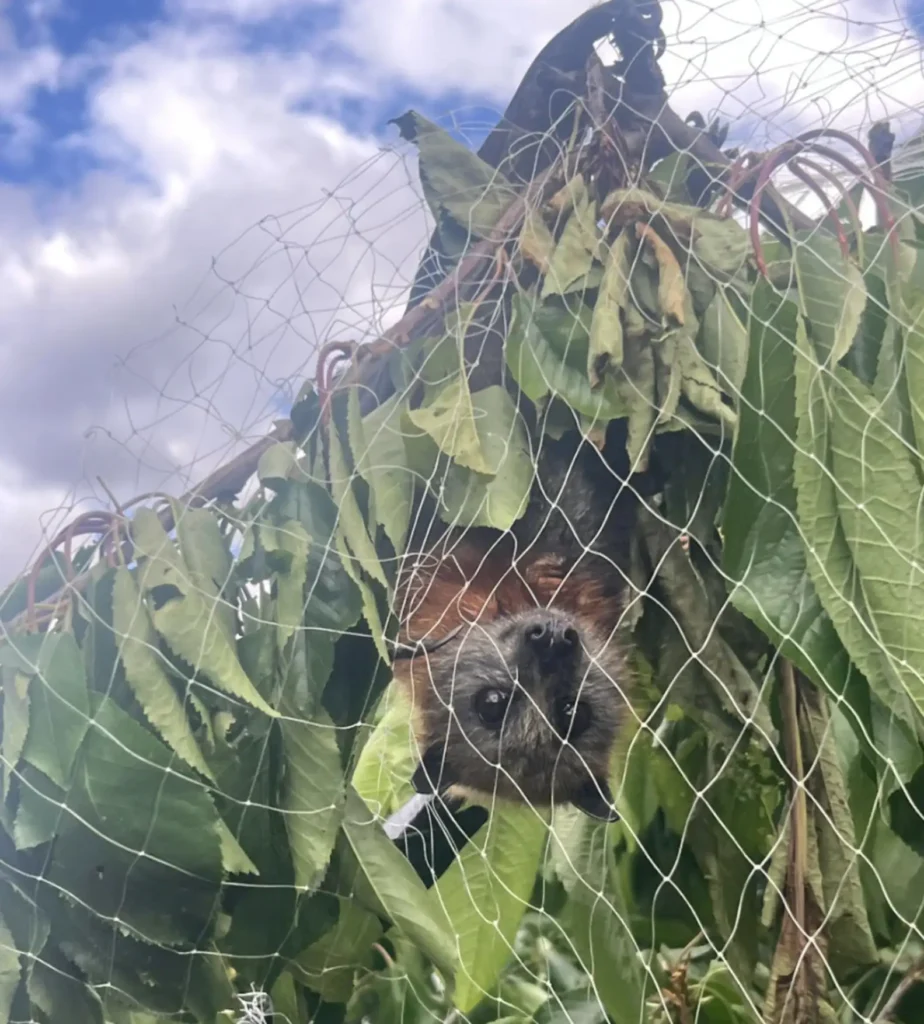
When Scott arrived, she explained that the type of netting on the tree was unsafe. Although it isn’t legally sold in Australia, it can still be purchased through some online retailers. Wildlife-safe netting, she explained, should have holes no bigger than 5 millimeters to prevent animals from becoming trapped.
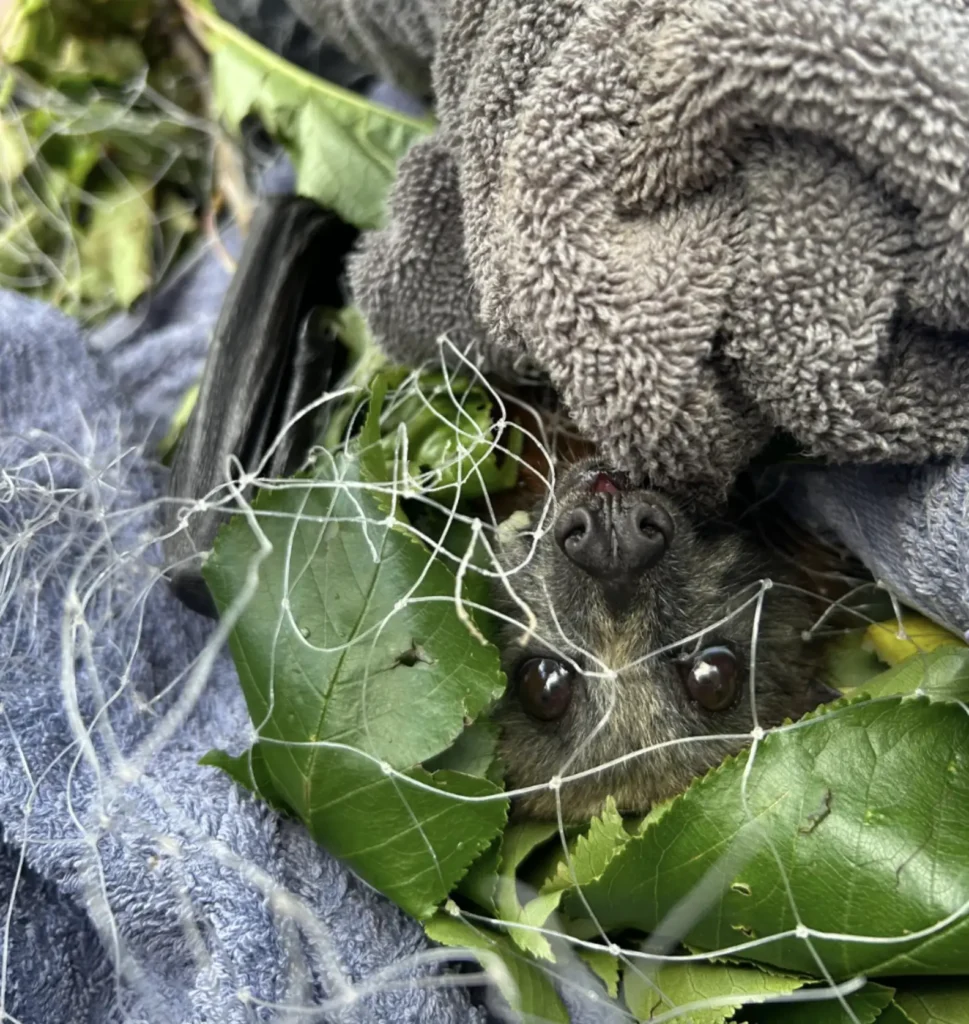
The rescuers set up a secure cage and carefully climbed ladders to reach the bat. Using a towel to gently restrain her, Scott held the bat steady while Pawley slowly cut away the tangled netting. Once free, the bat was wrapped up and carefully checked for injuries.
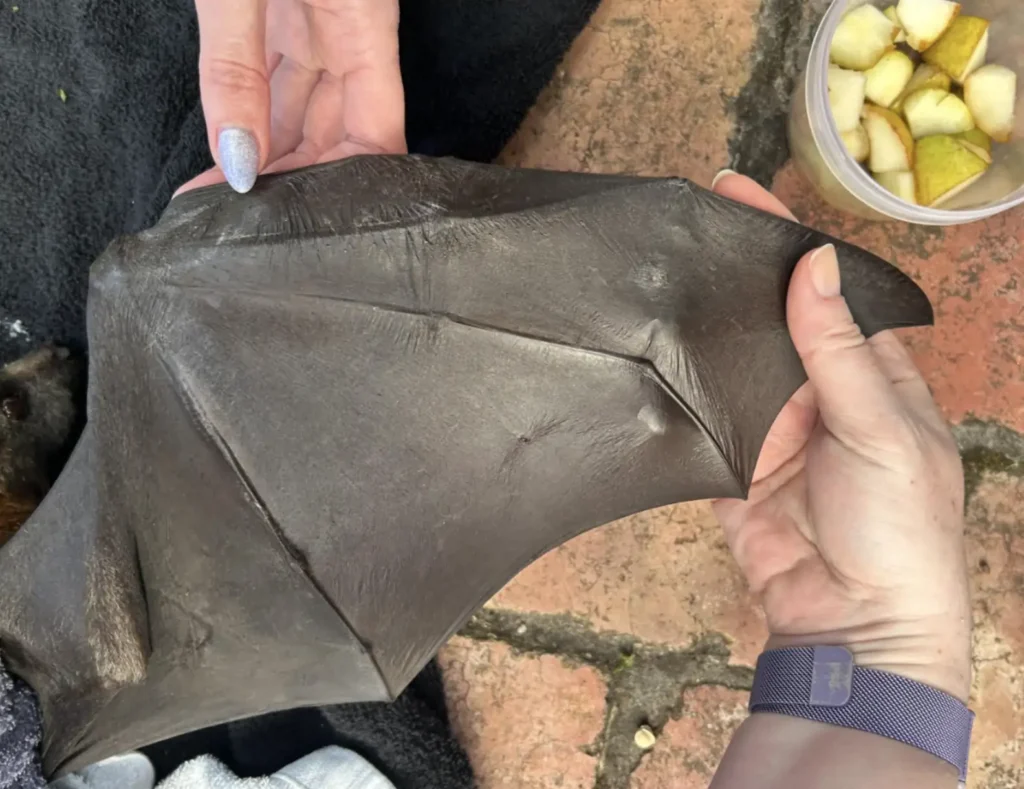
Surprisingly, she stayed calm during the process.
“Flying foxes often seem to understand that you’re helping them,” Pawley told The Dodo. “Once you offer them a little food, they relax — almost like a dog does. People are always surprised by how gentle and cooperative they are.”
Upon examination, the rescuers found that the bat’s wing had been injured and would need professional care. She was transported to a licensed wildlife rehabilitator named Emma, who took over her recovery.
Today, the flying fox is still healing under expert care and is surrounded by other rescued bats while she regains her strength.
Pawley hopes the story changes how people see bats.
“Our goal is to show that flying foxes aren’t aggressive creatures like the media sometimes suggests,” she said. “They’re gentle, important pollinators — and when people meet them up close, they usually realize how adorable they truly are.”