

Birds-of-Paradise Glow in New Ways
Birds-of-paradise have long captivated us with their brilliant and varied plumage, but scientists have now discovered an astonishing new feature: biofluorescence.
Feathers That Shine
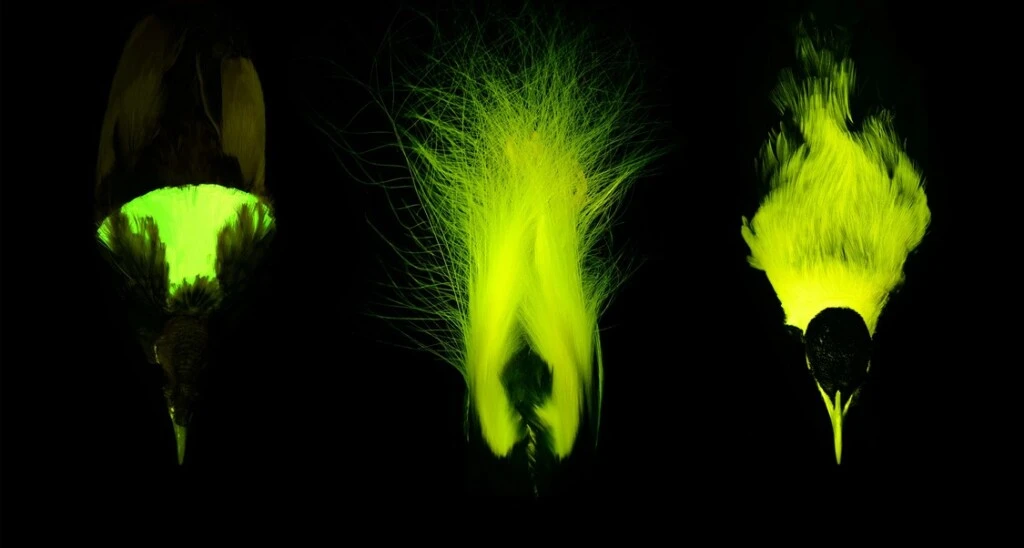
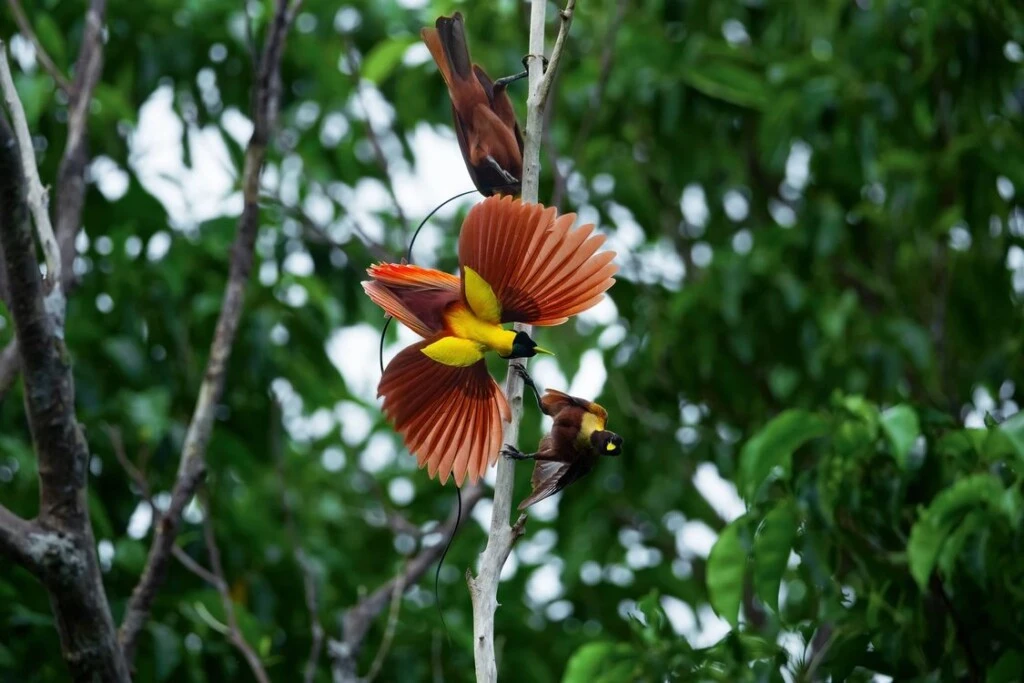
Researchers found that 37 of the 45 known species of birds-of-paradise have feathers that absorb ultraviolet (UV) light and re-emit it as a yellow-green glow. From elongated plumes and bright crowns to fluffy breast patches—or even feathers so black they absorb nearly all light—these birds, native to the islands of Australasia, are already among the world’s most spectacular show-offs.
A Surprising Discovery
Ornithologists are now wondering why these already dazzling birds need yet another layer of visual flair. The discovery came unexpectedly when a team of ichthyologists—scientists who normally study fish—noticed biofluorescence in museum specimens of birds-of-paradise while investigating similar traits in fish.
Using UV light in a darkened room, the researchers watched drawer after drawer of specimens glow like stars, revealing previously unseen patterns across various parts of the birds’ bodies.
Biofluorescence Beyond Feathers
Lead author Rene Martin, a fish biologist at the University of Nebraska-Lincoln, suggests the glowing patches might enhance mating displays. Interestingly, the glow isn’t limited to feathers—some species even display biofluorescence inside their mouths.
The team also observed a pattern with mating behavior: the eight monogamous species exhibited much more subdued biofluorescence compared to species that pair anew each year.
Seeing the Glow
Birds have one extra photoreceptor in their eyes compared to humans, allowing them to perceive more colors. Co-author Emily Carr, a PhD student at the American Museum of Natural History, notes that birds-of-paradise also have a small drop of oil in their eyes that filters certain wavelengths, potentially making the biofluorescence even more vivid to their vision.
Why They Glow
While the exact reason for the glow remains under investigation, scientists suspect it may play a role in mating displays or social dominance. Edwin Scholes, founder of the Birds-of-Paradise Project at Cornell Laboratory of Ornithology, remarked, “It’s not just tail feathers or flank feathers—it’s widespread across the group, which is what makes it so fascinating.”