


An Unexpected Find in Coastal Japan
In 2025, a team of student researchers from Tohoku University made a surprising marine discovery after encountering an unusually large Portuguese man o’ war glowing a vivid cobalt blue. What first appeared to be a familiar ocean drifter soon revealed itself to be an entirely new species.
A Discovery by Chance
The find happened accidentally while student researcher Yoshiki Ochiai was conducting unrelated fieldwork in Sendai Bay.
“I was working on a different project when I noticed this striking organism I had never seen in the area,” Ochiai explained. “I collected it, sealed it in a ziplock bag, jumped on my scooter, and brought it back to the lab.”
Naming a New Species
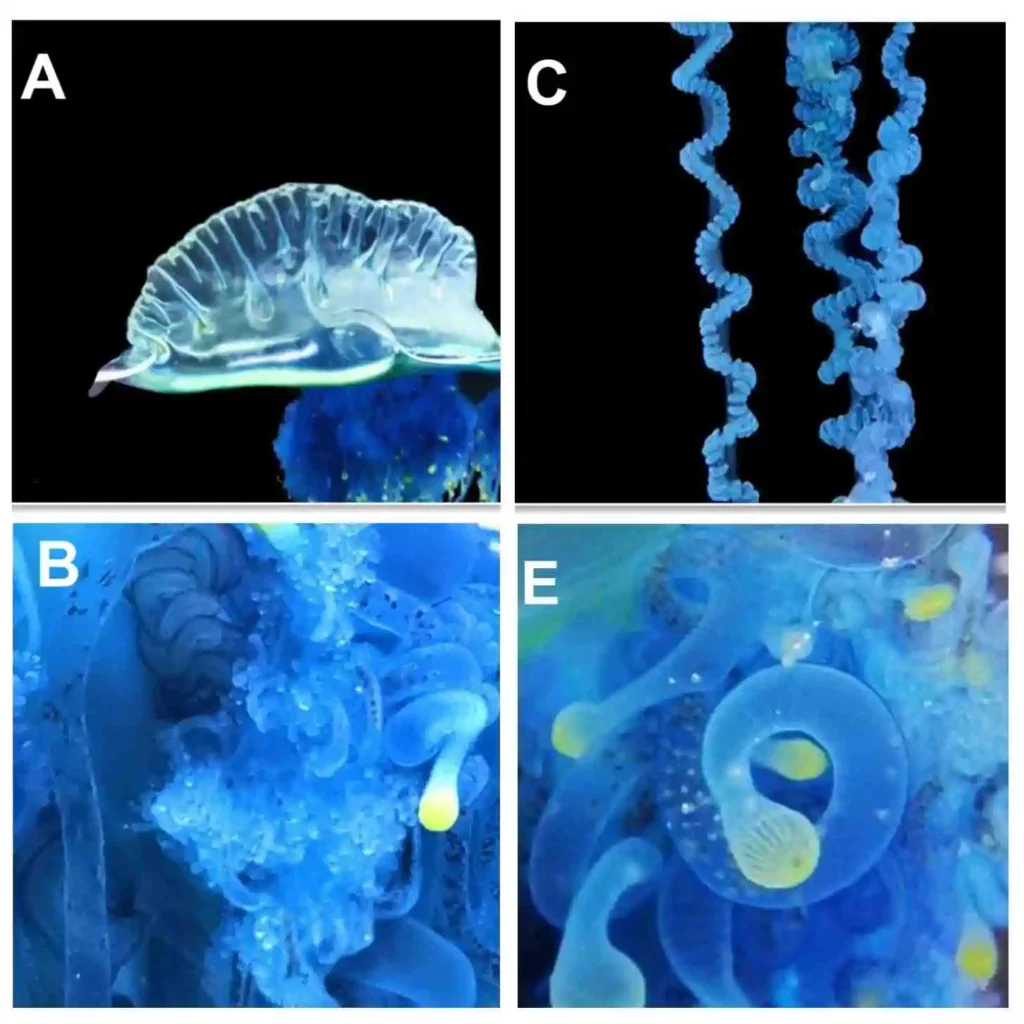
Further analysis confirmed the creature was a previously unidentified species of Physalia. The team named it Physalia mikazuki, which translates to “crescent helmet man-o-war.”
Professor Cheryl Ames, from Tohoku University’s Graduate School of Agricultural Science and the Advanced Institute for Marine Ecosystem Change, said the name pays tribute to legendary samurai Date Masamune, who famously wore a helmet adorned with a crescent moon.
A Complex Scientific Puzzle
The students published their findings in Frontiers in Marine Science on October 30. Lead author Chanikarn Yongstar described the painstaking work required to document the organism’s anatomy.
“Recording the structures that distinguish it from the four known Physalia species was incredibly detailed work,” Yongstar said. “Each feature had to be compared with historical illustrations drawn by early scientists—a real challenge given how intricate and tangled its body is.”
DNA Provides Confirmation
While physical traits suggested something new, genetic analysis sealed the discovery. Kei Chloe Tan, who led the DNA research, confirmed the species was genetically distinct from other man o’ wars found in tropical waters.
“This was exciting on its own,” Tan said, “but it also raised the question of how a species like this reached northern Japan.”
Notably, Physalia mikazuki is the first man o’ war species ever recorded in the Tohoku region.
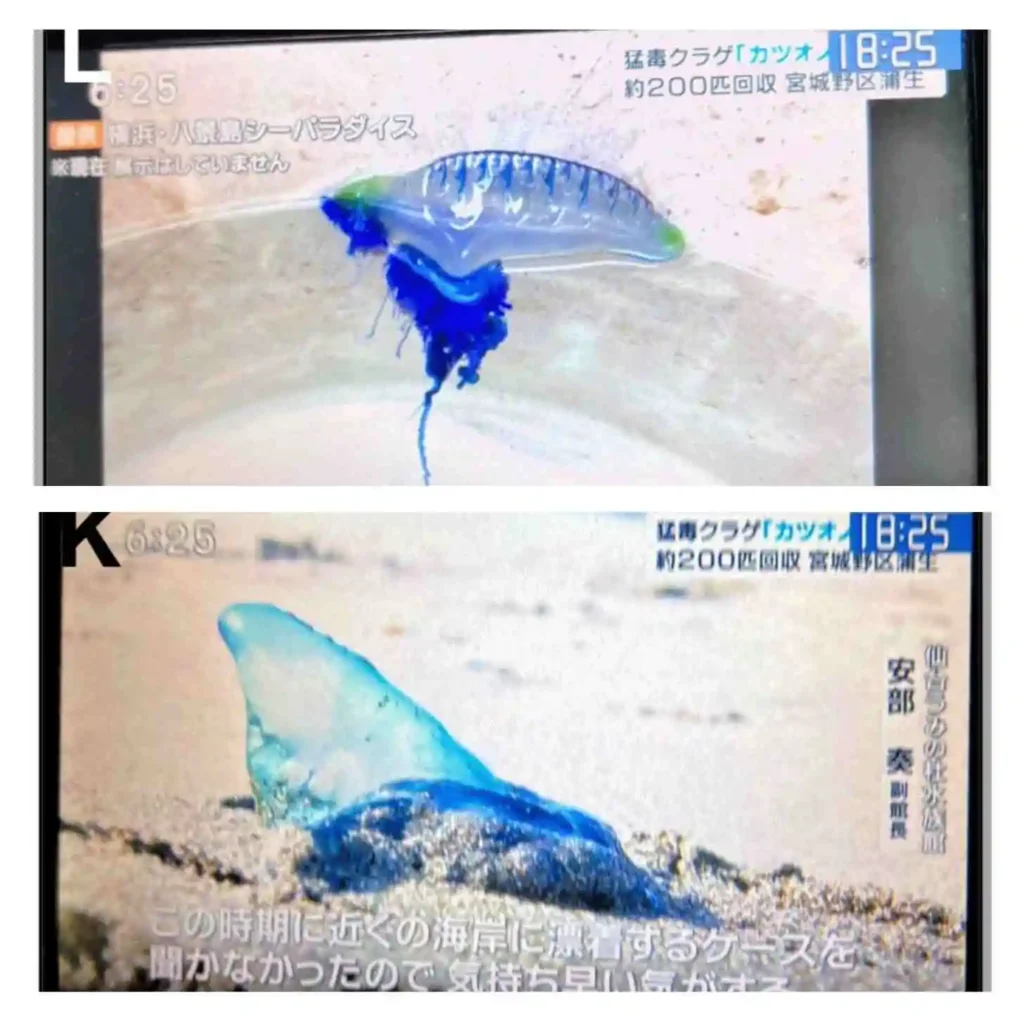
Tracing Its Ocean Journey
To determine how the species arrived in Sendai Bay, the team ran computer simulations modeling surface ocean currents. Student researcher Muhammad Izzat Nugraha likened the process to tracking floating beach balls over time.
“Our simulations showed a clear path from Sagami Bay northward,” Nugraha said. “The models suggest warm waters from the Kuroshio Current likely carried the organism to the exact location where it was discovered.”
Not Actually a Jellyfish
Despite their common name, Portuguese man o’ wars are not true jellyfish. They belong to a group called siphonophores—colonies made up of specialized individuals known as zooids.
Each zooid performs a different function, yet all share identical DNA and operate together as a single organism.
Dangerous but Essential
Like many gelatinous marine animals, man o’ wars are highly venomous and can pose serious risks to humans. However, they play an important ecological role.
They help recycle nutrients, support microscopic marine life, and serve as prey for endangered species such as loggerhead sea turtles, making them a vital part of ocean food webs.
A Creature Worth Understanding
“These animals can be intimidating,” said student researcher Ayane Totsu, “but they’re also remarkably beautiful and deserve continued scientific study.”
The discovery of Physalia mikazuki highlights how much remains unknown beneath the ocean’s surface—and how curiosity, collaboration, and chance can still reveal new species in unexpected places.