

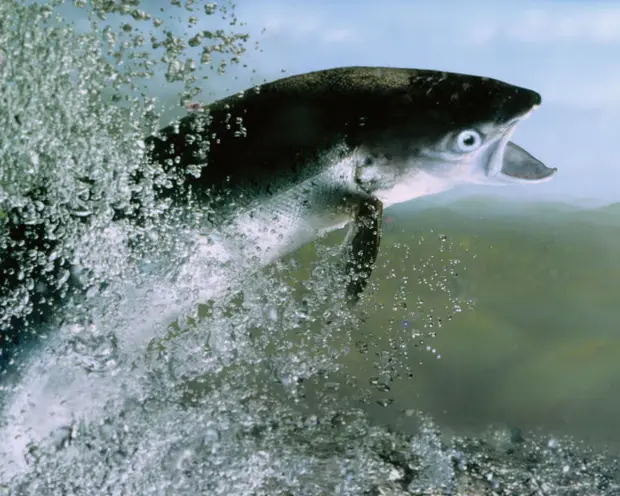
Species that is critically endangered in Britain is spotted in Mersey, Bollin and Goyt rivers in north-west
Young Atlantic salmon have been spotted in three rivers in north-west England for the first time since 2015, which experts have described as a major environmental breakthrough. The fish were found in the River Mersey and its tributaries, the Bollin and the Goyt, showing that salmon have successfully returned from the Arctic to breed.
Atlantic salmon were classed as critically endangered in Britain in 2023. Their presence in these rivers suggests that conditions have improved enough for them to complete their long migration and successfully spawn in freshwater gravel beds. After spending two to three years feeding in the Arctic, salmon return to the rivers where they were born to reproduce.
The Environment Agency said it was very encouraged by the discovery and announced plans to carry out a new salmon distribution study in early 2026. The study will use environmental DNA (eDNA) sampling to better understand how widely the salmon are returning and how strong the recovery may be.
Salmon numbers in Britain have fallen by between 30% and 50% since 2006 due to climate change, pollution, invasive non-native species, and physical barriers such as dams and weirs. Although salmon can now swim up the Mersey to reach spawning grounds in the Bollin and Goyt, other rivers remain blocked. For example, weirs on the River Tame and locks on the River Irwell prevent salmon from migrating upstream.
Mark Sewell from United Utilities said many rivers in the region were biologically dead during the 1980s but have since been transformed into healthy ecosystems. He described the return of salmon as proof of a significant environmental turnaround.
Mike Duddy of the Salford Friendly Anglers Society said more action is still needed to help the species recover fully. He called for the construction of fish passes to allow salmon to return to rivers such as the Roch and Irk, saying now is the right time to invest in protecting the species for future generations.
Atlantic salmon populations declined sharply during the Industrial Revolution, recovered for a time, but have faced renewed threats in recent years. Scientists hope the recent sightings mark the beginning of a long-term recovery.