

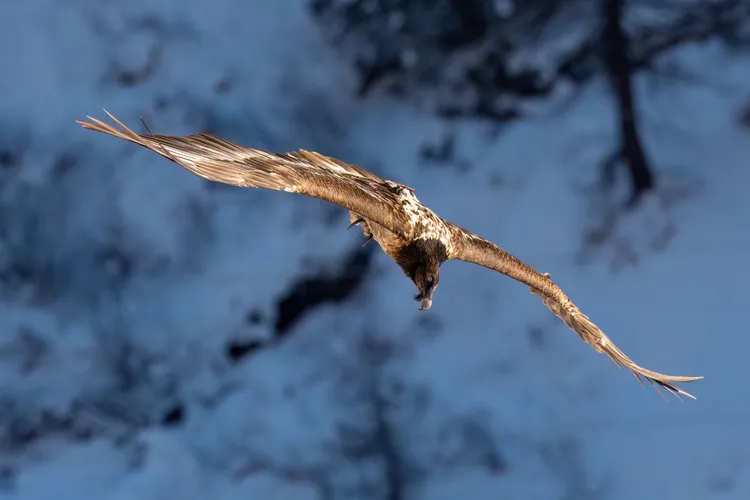
A South African conservationist is working to save one of the world’s largest vultures from disappearing from southern Africa. With fewer than 400 bearded vultures remaining in the mountains of South Africa and Lesotho, an ambitious breeding programme could play an important role in their survival.
Shannon Hoffman, a raptor conservationist and National Geographic Explorer, has spent more than a decade developing methods to rescue and raise bearded vulture chicks.
Her Bred 4 the Wild Bearded Vulture Breeding Programme focuses on increasing the population of these remarkable birds through egg rescue, specialised feeding and carefully managed breeding.
The programme has reached an important stage, with five breeding pairs established and conservationists hoping to welcome their first captive-bred chicks.
Why Are Bearded Vultures Disappearing?
Bearded vultures face several serious threats in their natural habitats.
In southern Africa, the population has declined because of poisoning, electrocution from power lines and habitat loss.
Poisoning is particularly dangerous. Some poachers deliberately leave poisoned animal carcasses to kill vultures, preventing the birds from revealing illegal hunting activities.
Human development also threatens their mountain habitats, while electrical infrastructure creates additional dangers.
Their slow reproductive rate makes population recovery even more challenging.
Bearded vultures generally do not begin breeding until they are at least eight years old. Although females may lay two eggs, usually only one chick survives.
These factors make conservation programmes especially important for the remaining southern African population.
What Makes Bearded Vultures Unique?
Bearded vultures, also known as lammergeiers, are extraordinary birds with unusual feeding habits.
Unlike most vultures, they survive primarily on bones.
Their powerful digestive systems contain highly acidic stomach fluids that allow them to digest bone material.
When they encounter bones that are too large to swallow, they may carry them into the air and drop them onto rocks to break them into smaller pieces.
Bearded vultures are also recognised by their distinctive reddish-orange feathers. Their colouring comes from bathing in iron-rich soil, which stains their naturally lighter plumage.
Bearded Vulture: Key Facts
| Feature | Information |
|---|---|
| Scientific name | Gypaetus barbatus |
| Common name | Bearded vulture |
| Alternative name | Lammergeier |
| Main diet | Bones |
| Breeding maturity | Around 8 years or older |
| Reproduction | Usually one surviving chick per breeding season |
| Southern African population | Fewer than 400 |
| Major threats | Poisoning, electrocution and habitat loss |
Their unusual diet makes them important scavengers in mountain ecosystems.
Rescuing Eggs to Increase the Population
One of Hoffman’s most innovative conservation methods involves rescuing bearded vulture eggs from wild nests.
Bearded vultures frequently lay two eggs, but the first chick to hatch usually attacks its younger sibling.
This natural behaviour, known as cainism, means the second chick has a very low chance of survival.
To prevent the loss of these chicks, Hoffman’s team carefully collects second eggs from wild nests.
The process can be dangerous because bearded vultures often build their nests on steep mountain cliffs.
Trained conservationists sometimes rappel down cliffs to reach the eggs safely.
The collected eggs are then transferred to specialised breeding facilities, where they can hatch under controlled conditions.
This approach aims to increase the number of surviving chicks without removing those that would normally survive in the wild.
Raising Baby Vultures With Special Puppets
After hatching, the chicks require specialist care.
However, conservationists face an unusual challenge: they must feed and raise the young birds without allowing them to become too attached to humans.
This is important because human imprinting can affect how birds behave and interact with other members of their species.
Hoffman’s team uses a specially designed vulture puppet to feed the chicks during approximately their first month of life.
The puppet, created by a craftsman in Spain, resembles an adult bearded vulture.
By using the puppet, keepers can provide food while reducing the chicks’ exposure to human faces.
As the young vultures develop, their diet gradually changes.
They initially receive food such as rats and mice before progressing to bones and animal carcasses donated by local farmers and butchers.
These methods are designed to support healthy development and encourage natural feeding behaviour.
Five Breeding Pairs Offer New Hope
After years of conservation work, Hoffman’s programme has reached an important milestone.
Five pairs of bearded vultures have been successfully matched and moved into specialised breeding chambers.
As of September 23, 2026, none of the pairs had produced chicks, but the conservation team was hopeful that successful breeding could occur.
Producing captive-bred chicks would represent an important achievement for the programme.
However, breeding alone cannot guarantee the species’ long-term survival.
Conservationists must also address the threats facing wild populations, including poisoning, dangerous power lines and habitat destruction.
Why Bearded Vulture Conservation Matters
Bearded vultures play an important role in maintaining healthy ecosystems.
By consuming bones and other animal remains, they help remove material left behind by other scavengers.
Their disappearance could affect the natural balance of mountain ecosystems.
Protecting these birds requires a combination of captive breeding, habitat conservation and cooperation with local communities.
Reducing poisoning incidents and improving the safety of electrical infrastructure are particularly important for protecting wild populations.
Programmes such as Bred 4 the Wild demonstrate how innovative conservation techniques can support threatened wildlife.
Conclusion
Shannon Hoffman’s efforts offer renewed hope for the remaining bearded vultures of southern Africa.
Through egg rescue, puppet feeding and carefully managed breeding, her team is developing new approaches to protecting these remarkable birds.
With fewer than 400 individuals remaining in the region, every successful breeding attempt could make an important contribution to conservation.
Although significant challenges remain, the establishment of five breeding pairs represents an encouraging step.
The programme highlights how scientific research, dedicated conservationists and innovative wildlife management can work together to protect threatened species.