

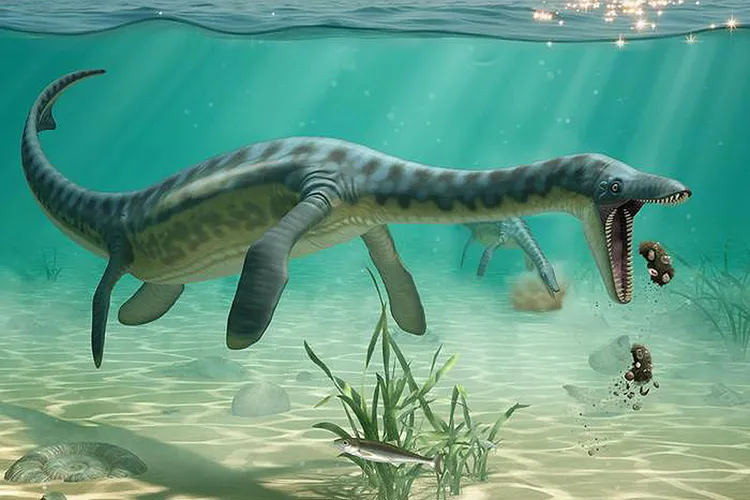
Scientists have discovered what they believe to be 150-million-year-old fossilized plesiosaur vomit, offering new insights into the feeding behavior of prehistoric marine reptiles.
The unusual discovery suggests that some plesiosaurs may have traveled from deeper ocean waters to shallow coastal areas to regurgitate the indigestible remains of their meals.
The research, published in the scientific journal Geological Magazine in September 2026, provides a fascinating glimpse into the everyday lives of animals that dominated ancient marine environments for millions of years.
Ancient Fossil Discovery Near Norway
Paleontologist Dirk Knaust identified unusual fossilized material in ancient river delta sediments recovered approximately 50 kilometers (31 miles) off the coast of Norway.
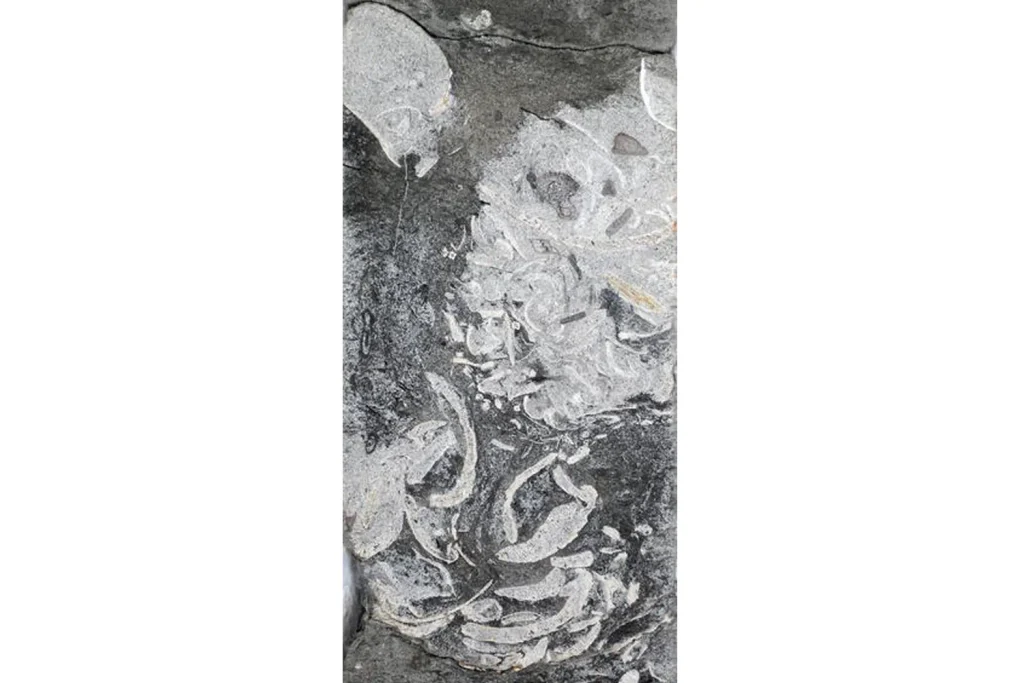
The material, estimated to be around 160 million years old, contained compact clusters of shells and plant remains.
After examining more than 20 fossilized clusters, ranging in size from a walnut to a mango, Knaust concluded that they were most likely regurgitated food remains produced by prehistoric marine reptiles.
The discovery offers a possible explanation for how certain plesiosaurs processed hard-shelled prey that their teeth could not crush.
How Did Plesiosaurs Eat?
Plesiosaurs were prehistoric marine reptiles known for their powerful flippers and, in many species, exceptionally long necks.
They inhabited ancient oceans and fed on various marine animals, including fish and shellfish.
Researchers believe some plesiosaurs used their long necks to reach the seafloor and collect shellfish.
However, their teeth were not suitable for crushing hard shells.
Scientists suggest that the reptiles swallowed their prey and later expelled the indigestible material through regurgitation.
This behavior resembles that of modern owls, which produce pellets containing the bones, fur and other undigested remains of their prey.
The newly discovered fossils provide potential physical evidence that certain plesiosaurs used a similar feeding strategy.
Key Facts About the Discovery
| Category | Details |
|---|---|
| Researcher | Dirk Knaust |
| Fossil age | Approximately 160 million years |
| Location | Offshore Norway |
| Fossils examined | More than 20 clusters |
| Possible animal | Cryptoclidid plesiosaur |
| Fossil contents | Shells and plant remains |
| Scientific journal | Geological Magazine |
| Publication date | September 2026 |
Why Did Plesiosaurs Travel to Shallow Waters?
One of the most interesting aspects of the discovery was the location of the fossilized remains.
The material was found in sediments that formed within an ancient river delta.
However, the shellfish identified in the fossils required the relatively stable salt levels of the open ocean to survive.
River deltas experience changing salinity because freshwater mixes with seawater, making them unsuitable environments for those particular shellfish.
This difference led Knaust to propose that the animals consumed their prey in deeper ocean waters before swimming toward the coastline.
Once they reached shallow areas, the plesiosaurs may have rested and regurgitated the hard remains of their meals.
Unlike modern seals and crocodiles, which can move onto land, plesiosaurs probably remained underwater because of their large bodies and aquatic adaptations.
Although the interpretation is consistent with the fossil evidence, the behavior remains a scientific hypothesis.
Which Prehistoric Animals Produced the Fossils?
Identifying the animal responsible for the fossilized material was another important part of the research.
Knaust considered several possible candidates, including prehistoric fish, sharks, crocodiles and marine reptiles.
He examined the size of the fossil clusters and the combination of hard-shelled prey found inside them.
The evidence was most consistent with the feeding habits of cryptoclidid plesiosaurs.
These marine reptiles typically measured between four and eight meters long and lived during the Middle Jurassic and Early Cretaceous periods.
Their anatomy and feeding adaptations made them plausible candidates for producing the fossilized material.
However, because no animal was directly associated with the fossil clusters, identifying the exact species remains challenging.
What Made Plesiosaurs So Successful?
Plesiosaurs were among the most successful groups of prehistoric marine reptiles.
They first appeared more than 200 million years ago and survived for over 140 million years before disappearing during the mass extinction at the end of the Cretaceous Period.
Their fossils have been discovered around the world, demonstrating their ability to inhabit a wide variety of marine environments.
Different plesiosaur species developed distinct body shapes and feeding strategies, allowing them to exploit different food sources.
Key Characteristics of Plesiosaurs
| Feature | Description |
|---|---|
| Animal group | Prehistoric marine reptiles |
| Habitat | Ancient oceans |
| Movement | Powerful swimming flippers |
| Diet | Fish, shellfish and other marine animals |
| Body structure | Varied, with some species having long necks |
| Survival | More than 140 million years |
| Extinction | Approximately 66 million years ago |
Their long evolutionary history demonstrates how successfully these animals adapted to changing prehistoric marine ecosystems.
Why Is Fossilized Vomit Important to Science?
Fossils usually provide information about an extinct animal’s physical appearance, anatomy and evolutionary relationships.
However, discovering evidence of ancient feeding behavior is much more difficult.
Fossilized vomit, scientifically known as regurgitalite, can provide valuable information about what prehistoric animals ate and how they processed their food.
In this case, the fossilized shell clusters offer possible evidence of a feeding strategy that researchers had previously suggested but struggled to document.
The findings may also help scientists understand how prehistoric marine reptiles moved between different feeding and resting environments.
By examining unusual fossils such as these, paleontologists can reconstruct aspects of ancient animal behavior that skeletal remains alone cannot reveal.
Could Similar Fossils Exist Elsewhere?
Knaust believes similar feeding behavior may have occurred along other prehistoric coastlines.
If certain plesiosaurs regularly traveled toward shallow waters after hunting, comparable fossil deposits could exist in other ancient marine sediments.
The discovery may therefore encourage researchers to re-examine previously collected fossils containing unusual clusters of shells and organic material.
Some specimens that were originally interpreted as ordinary sediment deposits could potentially contain overlooked evidence of prehistoric feeding behavior.
Future research may help scientists determine whether regurgitation was common among particular plesiosaur groups.
It could also provide a clearer understanding of how these reptiles hunted, digested food and interacted with their marine environments.
Conclusion
The discovery of what may be 160-million-year-old plesiosaur vomit provides a remarkable glimpse into prehistoric marine life.
By examining fossilized clusters of shells and plant remains, researchers have proposed that certain plesiosaurs hunted in deeper waters before moving toward shallow coastal areas to regurgitate indigestible material.
Although additional research is necessary to confirm the interpretation, the findings offer valuable evidence about the feeding behavior of ancient marine reptiles.
The discovery also demonstrates that even the most unusual fossils can reveal important information about extinct animals and the ecosystems they inhabited millions of years ago.