

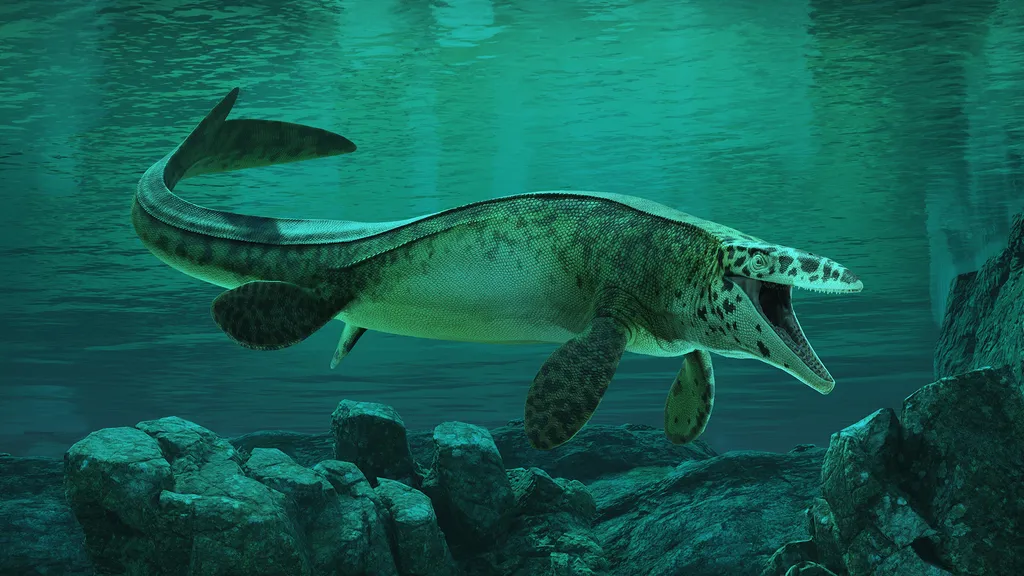
A new “T. rex” has been identified — but this one did not roam the land. Instead, it ruled the seas.
Scientists have described a new species of mosasaur, a giant marine reptile that lived during the Cretaceous period, around the same time as dinosaurs. The new species belongs to the genus Tylosaurus and has been named Tylosaurus rex, meaning “king of the tylosaurs.”
The fossils are about 80 million years old and were mostly found in northern Texas decades ago. Based on the remains, researchers estimate that Tylosaurus rex could grow up to 43 feet long — about the length of a tour bus.
Like other mosasaurs, this sea reptile was a powerful predator. It had unusually strong jaws and neck muscles, along with finely serrated teeth that would have helped it grip and tear into prey.
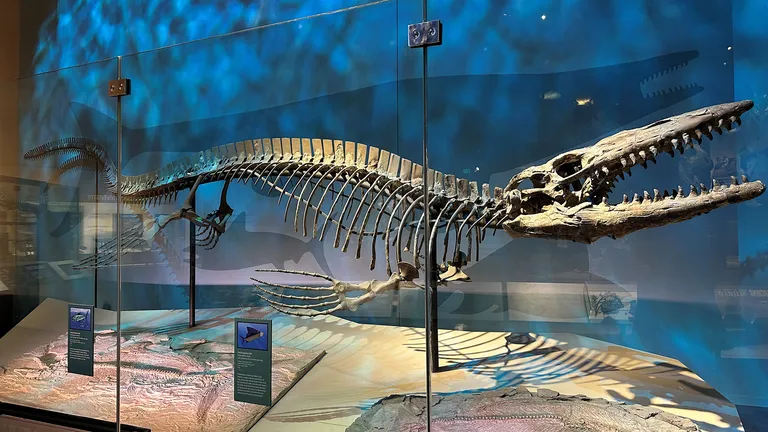
The discovery began when paleontologist Amelia Zietlow, a research associate at the American Museum of Natural History, was examining a fossil in the museum’s collection. The specimen had been labeled as Tylosaurus proriger, a well-known mosasaur species first described in 1869.
But something about the fossil didn’t match.
After comparing it with the original reference specimen of T. proriger at Harvard’s Museum of Comparative Zoology, Zietlow and her colleagues realized the fossil actually belonged to a different species. More than a dozen other fossils in museum collections were later found to share the same features.
Compared with Tylosaurus proriger, the newly named Tylosaurus rex was larger, lived several million years later and had serrated teeth that T. proriger did not. Most T. proriger fossils come from what is now Kansas and are about 84 million years old, while the new T. rex fossils are mostly from Texas and date to around 80 million years ago.
At that time, much of central North America was covered by the Western Interior Seaway, a vast body of water stretching from the Gulf of Mexico toward the Arctic. Mosasaurs were among the top predators in that ancient ocean.
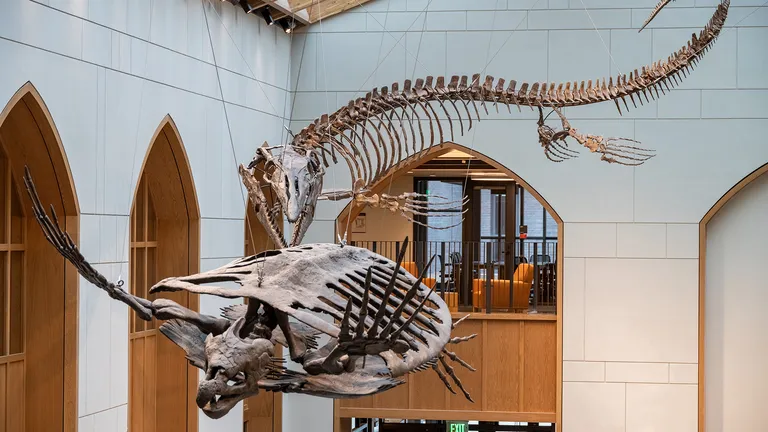
Some Tylosaurus rex fossils also show signs of violent injury. One specimen at the Perot Museum of Nature and Science in Dallas, nicknamed “the Black Knight,” is missing the tip of its snout and has a fractured lower jaw. Researchers believe the damage may have been caused by another member of the same species.
That suggests these giant marine reptiles may have fought each other, possibly over territory, mates or food.
Several famous mosasaur fossils once identified as Tylosaurus proriger will now be reclassified as Tylosaurus rex, including specimens displayed at the University of Kansas and Yale Peabody Museum.
The name also connects to an older idea. In the late 1960s, paleontologist John Thurmond suspected that large tylosaurs from northeast Texas represented an unknown species and informally called them “sea tyrants.” The new name, Tylosaurus rex, echoes that concept while giving the animal an official scientific identity.
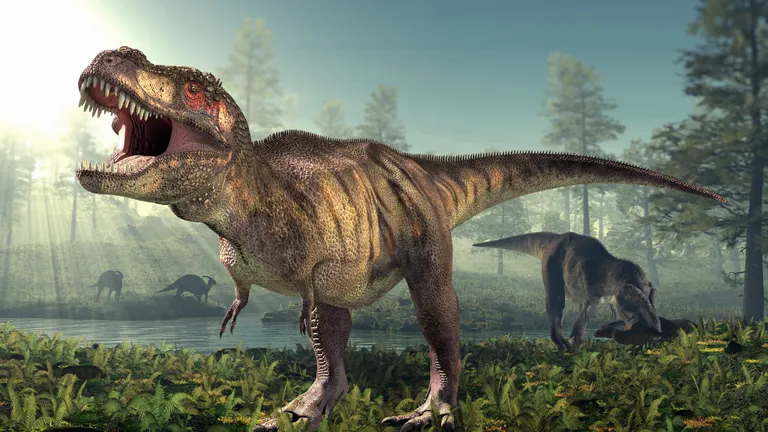
Researchers say the discovery is about more than naming a new species. It also shows why scientists need to revisit old museum fossils and update long-standing assumptions about mosasaur evolution.
For decades, some mosasaur fossils may have been misidentified. By taking a closer look with modern methods, scientists are revealing a clearer picture of the ancient predators that once dominated the seas.