

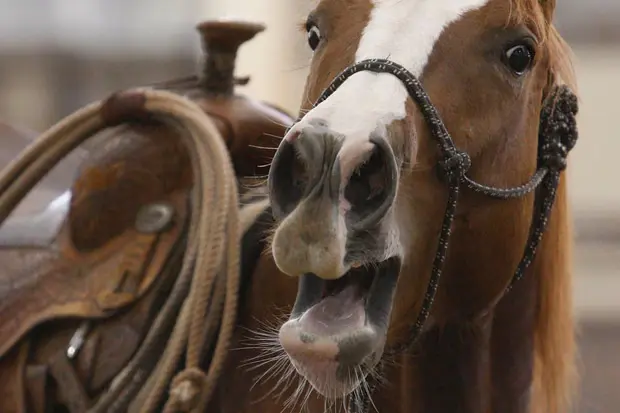
Horses whinny to reconnect with herd mates, greet familiar companions and even express excitement at feeding time. But for years, scientists couldn’t fully explain how they produce that unmistakable, two-toned call.
A whinny — also known as a neigh — is unusual because it combines both low- and high-pitched sounds at the same time. It’s almost like a grunt and a squeal layered together.
The low sound is straightforward: like humans speaking or singing, horses push air across vibrating tissues in their voice box (larynx), creating sound.
The high-pitched tone, however, has long puzzled researchers.
A Surprising Discovery: Horses Whistle
In a new study published in Current Biology, scientists uncovered the answer: horses whistle.
Researchers inserted a small camera through horses’ nasal passages to observe their larynx while they produced whinnies and softer “nickers.” They also conducted scans and passed air through isolated larynxes from deceased horses to better understand the mechanics.
They discovered that while one part of the larynx vibrates to create the low tone, a second structure just above it contracts and forms a narrow opening. Air passing through that opening produces a whistle-like sound — creating the high pitch.
This differs from humans, who whistle using their lips and mouths. Horses whistle internally, directly through their voice box.
A Rare Vocal Talent
Some small rodents, such as rats and mice, are known to whistle using similar mechanisms. But horses are the first large mammals found to do so.
They’re also unique in being able to whistle through their larynx while simultaneously producing another tone — essentially “singing” in two pitches at once.
Researchers believe this dual-tone call may allow horses to communicate more complex emotions. The two frequencies could carry layered information — perhaps signaling excitement, separation, recognition or reassurance all at once.
Interestingly, wild Przewalski’s horses can produce similar calls, and elk create somewhat comparable multi-tonal vocalizations. However, closer relatives like donkeys and zebras don’t produce the same high whistle component, leaving evolutionary questions unanswered.
Why It Matters
Understanding how animals produce sound helps scientists learn more about communication, evolution and emotion in social species.
The discovery shows that a “whinny” isn’t just a simple noise — it’s the result of two different sound-producing mechanisms working together.
By combining vibration and whistling, horses may be able to express richer emotional states when interacting with herd members.
In other words, when a horse calls out across a field, it’s not just making noise — it may be carrying a surprisingly layered message.