

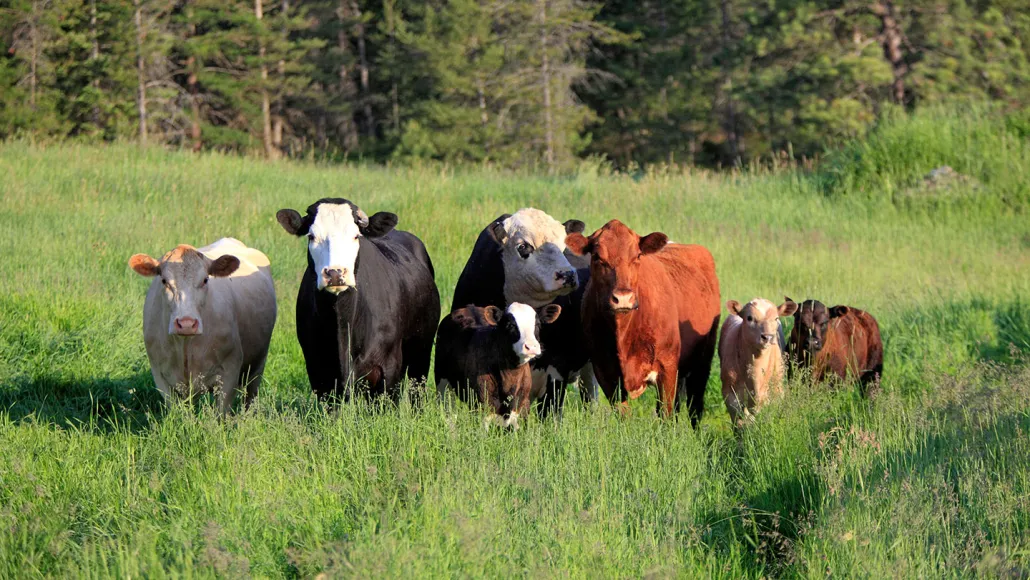
A genome analysis of Beefalo, a bison-cattle crossbreed, reveals little to no bison DNA
Many people spend money on DNA tests to discover their family history, and some even pay to learn about the ancestry of their pets. Yet few stop to wonder about the genetic background of the meat they eat.
One livestock breed marketed for its unique heritage is the Beefalo, a cross between domestic cattle and the American bison. The breed has long been promoted as combining the strengths of both species, with supporters claiming it offers greater resistance to disease, improved hardiness, leaner meat, and higher protein content than traditional beef cattle.
However, new genetic research suggests that Beefalo may contain far less bison ancestry than commonly believed.
In a study published on June 10 in eLife, scientists reported that most of the Beefalo animals they analyzed showed either extremely small amounts of bison DNA or none at all.
The findings surprised the research team. Beth Shapiro, an evolutionary biologist at the University of California, Santa Cruz, explained that the expectation was to find stronger evidence of bison ancestry within the breed. Instead, genetic testing revealed that many of the animals lacked detectable bison DNA altogether.
Researchers were initially interested in determining whether decades of breeding had gradually reduced the amount of bison genetics in Beefalo. To investigate, they carried out the first genome-wide study of the breed, examining preserved semen samples from 47 animals. Most of these samples dated back to the 1970s and 1980s, and several belonged to animals from the original Beefalo breeding program.
The results were unexpected. Thirty-nine of the 47 animals showed no measurable bison ancestry. The remaining eight did contain bison DNA, but the proportion was still well below the standard established by the American Beefalo Association (ABA), which defines a full Beefalo as having three-eighths bison ancestry.
The American Beefalo Association disagrees with the study’s conclusions. According to its president, Dan Stricker, every animal registered as a “full-blood” Beefalo must successfully complete DNA testing conducted by laboratories at the University of California, Davis, or Neogen Genomics in Edmonton, Alberta. These tests are intended to verify the presence of bison ancestry before registration.
Stricker questioned whether the samples examined in the study accurately represented today’s registered Beefalo population. He argued that modern animals have undergone generations of selective breeding designed to preserve desirable bison characteristics.
The researchers acknowledge that their work focused mainly on the breed’s earliest generations rather than a large sample of living Beefalo. Nevertheless, study coauthor Jonas Oppenheimer, now an evolutionary biologist at the Centre for Paleogenetics in Stockholm, believes it is unlikely that modern Beefalo possess more bison ancestry than the breed’s founding animals.
The study also highlights the biological challenges involved in creating lasting hybrids between cattle and bison. Although the two species are capable of interbreeding, maintaining a stable hybrid population has historically proven difficult. Throughout the twentieth century, multiple breeding programs attempted to establish permanent cattle-bison hybrids, but none achieved lasting success. According to the researchers, the Beefalo may be another example of these difficulties.
Ironically, while domesticated Beefalo appear to contain relatively little bison DNA, many wild bison populations carry traces of cattle ancestry. This has raised concerns among conservationists, who worry that cattle genes could gradually alter important characteristics of wild bison, including their natural behavior, resistance to disease, and even their conservation status under certain legal protections.
Despite these concerns, the new findings suggest that genetic exchange between cattle and bison has been less widespread than previously assumed. According to Shapiro, although some interbreeding occurred after domestic cattle were introduced to North America, the overall level of gene flow has been relatively limited and has likely had a smaller impact on bison populations than earlier studies suggested.
The research offers a fresh perspective on the genetic history of both Beefalo and wild bison, while emphasizing that appearances and marketing claims do not always reflect an animal’s true genetic ancestry.