

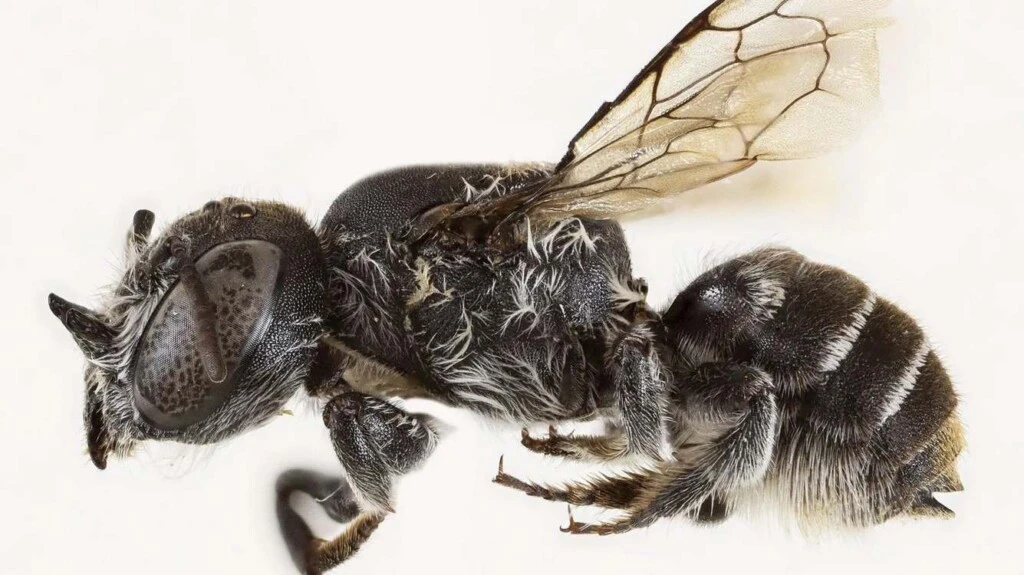
She may sport devilish-looking horns, but Megachile lucifer isn’t out to steal souls—she’s just after pollen.
This newly identified solitary bee species was discovered in Western Australia’s Goldfields region by scientists studying a rare wildflower habitat. It’s the first addition to the Megachile genus in two decades, making this Bremer Ranges resident, east of Perth, a compelling reason to strengthen local habitat protections.
“The female had these tiny, striking horns on her face,” said Dr. Kit Prendergast of Curtin University. Interestingly, the name came to her while watching the Netflix show Lucifer during the species’ formal description. “It just seemed to fit perfectly.”
Only female bees carry these horn-like structures, which may help them access pollen from certain plants or serve as a defensive adaptation. The full species description appeared in the Journal of Hymenoptera Research.
The bee’s habitat overlaps with rare wildflowers, and Dr. Prendergast urges that the area be “formally protected and gazetted as conservation land that cannot be cleared.”
“Since the new bee was discovered alongside this endangered wildflower, both are vulnerable to habitat disruption and threats such as climate change,” she told the BBC.
Solitary bees like M. lucifer play a crucial role in pollinating wild plants, with over 1,500 species in the Megachile genus alone.