

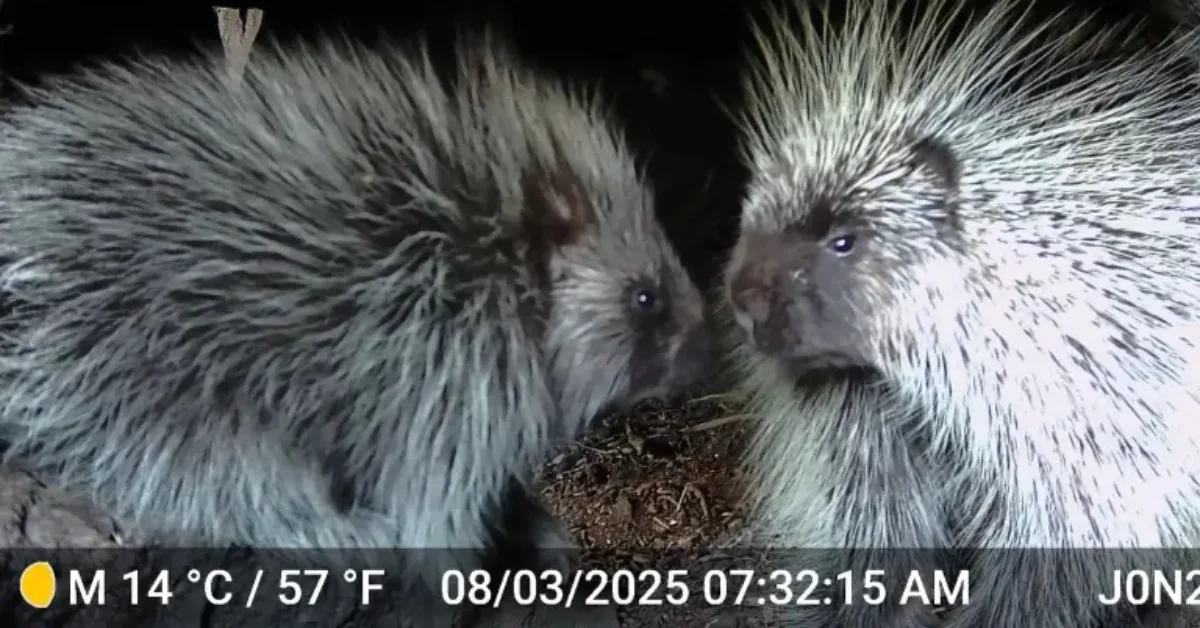
Community Volunteers Join Oregon’s Effort to Protect Declining Porcupines
The Oregon Department of Fish and Wildlife (ODFW) is asking residents to help gather information on one of Central Oregon’s most recognizable native mammals as concerns grow over declining porcupine populations.
Although porcupines are not officially listed as endangered in Oregon, they have been designated as a Species of Greatest Conservation Need, reflecting concerns about their long-term future. Wildlife experts believe their numbers may be falling, but there is not yet enough scientific data to determine the scale of the problem.
Researchers suspect several factors are contributing to the decline, including collisions with vehicles, an increase in natural predators, and environmental changes linked to climate change. So far, however, most evidence has come from isolated observations rather than organized research.
To improve its understanding of the species, ODFW launched a statewide monitoring project during the summer of 2025. The initiative aims to document where porcupines live, measure survival rates, and identify the greatest threats facing their populations.
A major part of the project depends on public participation. Residents are encouraged to report porcupine sightings through the iNaturalist citizen science platform, giving researchers valuable information about where the animals are being seen. These reports also help determine the best locations for trail cameras that can verify porcupine activity.
To support the program, the High Desert Museum has partnered with public libraries in Deschutes, Crook, and Jefferson counties to lend trail cameras to community members interested in participating.
According to Jon Nelson, Curator of Wildlife at the High Desert Museum, the institution maintains a collection of trail cameras specifically intended for public use. Volunteers receive guidance on how to install the cameras responsibly, observe wildlife without disturbing natural behavior, and upload their observations to community science databases where wildlife managers can analyze the information.
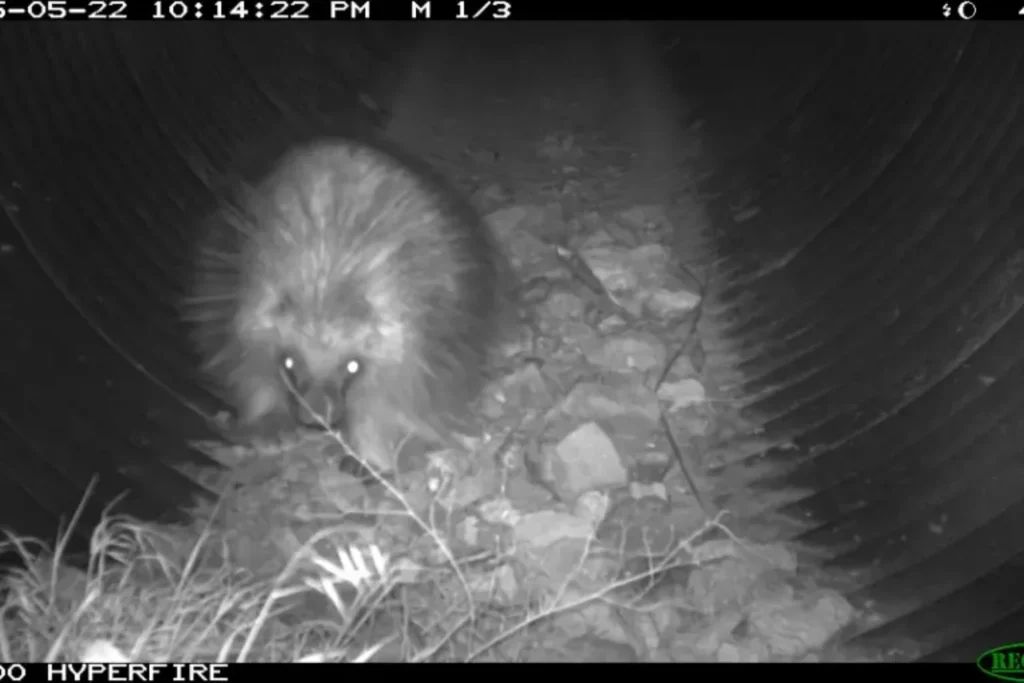
Financial support for the trail camera program comes from the Wildlife Ecology Institute and the Oregon Wildlife Foundation.
Jefferson County Library Director Jane Ellen Innes believes the initiative benefits both wildlife conservation and the local community. She says the project helps residents become more familiar with the unique wildlife of Central Oregon’s high desert while also encouraging greater engagement with library programs and educational resources.
Residents wishing to borrow a trail camera must first enroll as volunteers in ODFW’s porcupine study and agree to upload photographs to iNaturalist. Participants are also invited to complete a training workshop offered by the High Desert Museum before checking out the equipment.
Each camera may be borrowed for up to three months, and volunteers have the option to renew the loan if additional monitoring time is needed.
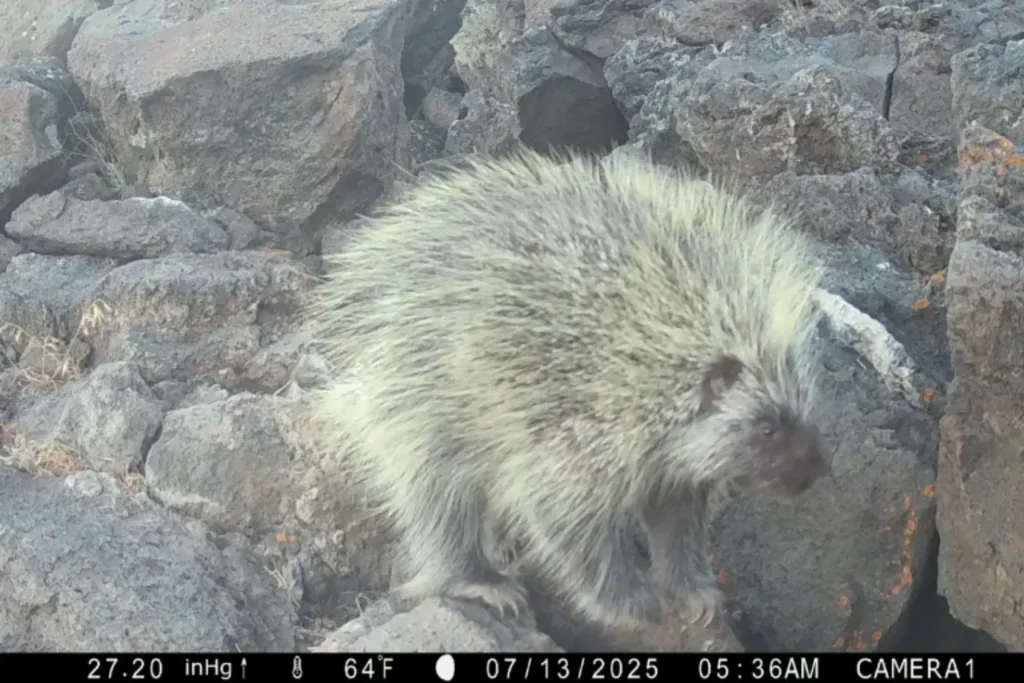
Although the statewide porcupine survey is relatively new, the museum has spent roughly fifteen years using trail cameras to document wildlife throughout the region. Nelson explained that camera traps are especially valuable because they operate continuously, capturing images both day and night and recording species that are rarely seen by people.
This technology is particularly useful for monitoring porcupines, which are largely nocturnal and often avoid human activity.
The public has responded enthusiastically to the project. Since the monitoring program began, residents have submitted more than 140 porcupine observations, providing researchers with important new information about where the animals are living.
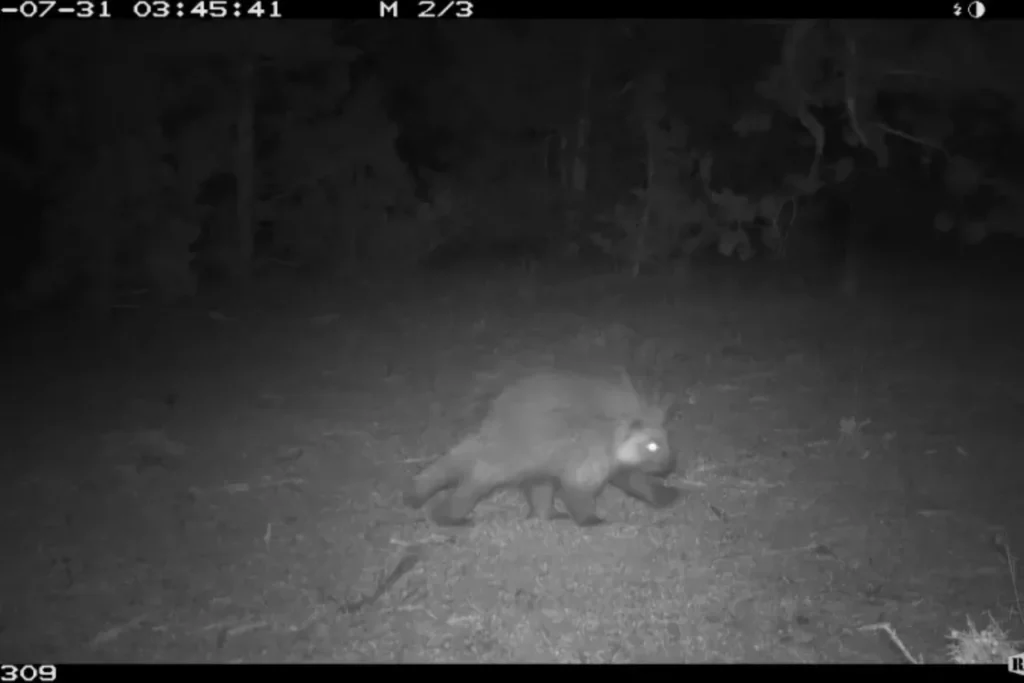
In addition to collecting public sightings, biologists have captured twenty porcupines and equipped them with radio collars. Tracking these individuals will allow scientists to study movement patterns, seasonal home ranges, habitat use, dispersal, survival rates, and other aspects of their behavior over an extended period.
The information gathered through both radio tracking and citizen science will help establish a standardized monitoring system that can guide future conservation strategies for the species.
According to assistant wildlife biologist Mikayla Bivona, who leads the study, one of the most rewarding aspects of the project has been the public’s excitement.
She says many residents call simply to report seeing a porcupine crossing a road, often commenting on the animal’s slow, waddling walk. Their growing curiosity and appreciation for these distinctive mammals has encouraged more people to observe and report wildlife than ever before.
By combining professional research with the efforts of volunteers across Central Oregon, wildlife officials hope to build a clearer picture of porcupine populations and develop effective conservation measures to ensure these iconic, quill-covered animals continue to thrive in the region’s high desert landscapes.