


In the villages surrounding Nigeria’s Afi Mountain Wildlife Sanctuary, a growing movement led by local women is transforming wildlife conservation from the ground up.
Using membership dues to fund their work, these women organize forest patrols, investigate wildlife crimes, protect rivers, and ensure environmental laws are enforced fairly—regardless of who breaks them. Their success has inspired neighboring communities to launch similar conservation groups, creating a powerful grassroots movement to safeguard one of Africa’s most important ecosystems.
Protecting a Sanctuary Rich in Wildlife

Located in southeastern Nigeria, Afi Mountain Wildlife Sanctuary covers approximately 39 square miles of tropical forest and is home to some of the world’s rarest species.
The sanctuary provides habitat for the critically endangered Cross River gorilla, the Nigeria-Cameroon chimpanzee, drills, duikers, porcupines, and hundreds of species of birds, butterflies, and bats.
Sixteen surrounding communities share responsibility for protecting the forest and have developed local rules aimed at preserving its unique biodiversity.
Women Decide It’s Time to Act
The movement began in 2023 when Ofre Mary and other women from the village of Ulom decided they could no longer watch environmental destruction continue unchecked.
“Our men have failed to stop the threats,” Mary explained. “That’s why women decided to take a stand.”
The women formed the Ulom Women’s Conservation Collective, meeting twice each month to discuss threats to the forest, organize patrols, and review wildlife protection rules.
Patrolling Forests and Stopping Illegal Activities
The volunteers regularly patrol the sanctuary, searching for signs of illegal logging, hunting, wildfires, and other environmental crimes.
Whenever they hear chainsaws, see smoke rising from the forest, or receive reports of suspicious activity, they investigate—sometimes independently and sometimes alongside community leaders, forestry officials, and conservation organizations.
Depending on the findings, offenders may face fines, have equipment confiscated, or even be exiled from the community under traditional laws.
Ensuring Everyone Is Held Accountable
One of the collective’s greatest achievements has been ensuring environmental laws are enforced equally.
Community leaders say that, in the past, wildlife regulations often existed only on paper because favoritism and nepotism prevented meaningful enforcement.
Today, the women insist that every resident follows the same rules.
“Even if my own sister breaks the law, we would arrest her,” said collective member Osang Sarah. “If the community makes a law, everyone must abide by it.”
Saving Forests From Illegal Logging
The women have already achieved several major conservation victories.
In one instance, they successfully persuaded community leaders to reject a timber agreement that would have opened parts of the forest to logging.
On another occasion, they tracked smoke rising from the mountains and discovered illegally cut timber that had caught fire.
Their efforts have dramatically reduced pressure from illegal loggers while encouraging local residents to recognize the long-term value of protecting the forest.
Inspiring Other Communities
The success of Ulom’s initiative has spread quickly.

Today, more than half of the communities surrounding Afi Mountain Wildlife Sanctuary are creating similar women’s conservation groups.
Leaders from neighboring villages regularly visit Ulom to learn how the patrols operate before establishing their own organizations.
Several of these new groups have already stopped illegal logging, prevented new forest clearing, and blocked additional timber deals.
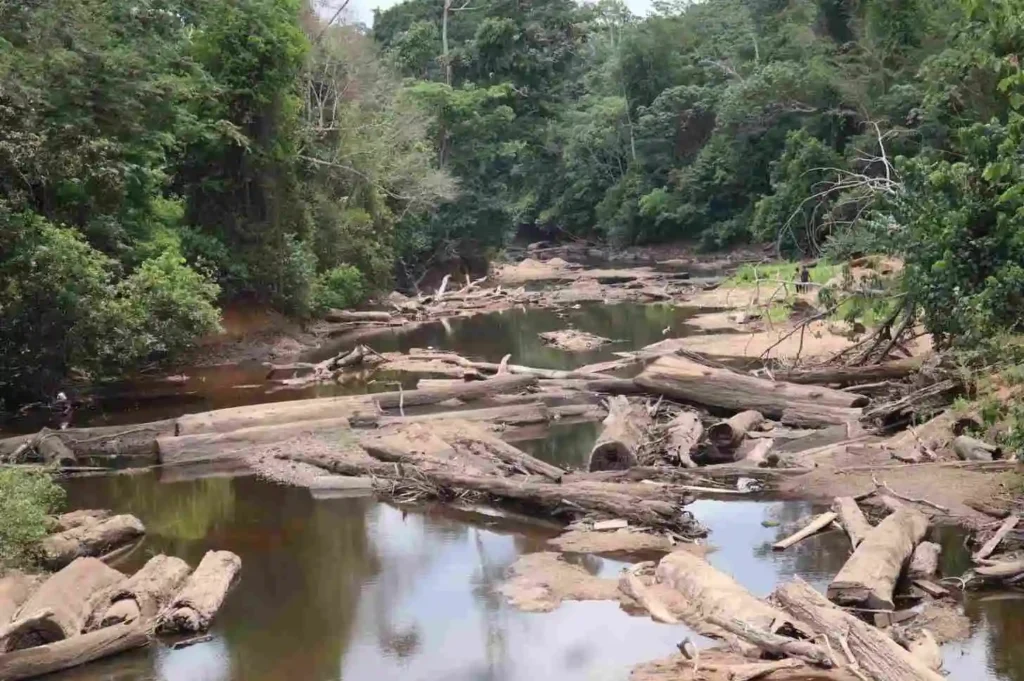
Protecting Rivers as Well as Forests
The women’s work extends beyond the trees.
They also organize regular patrols along rivers and streams to prevent pollution, which threatens both local communities and wildlife that depend on clean water.
If contamination is discovered, community members work together to isolate polluted sections of the river before removing contaminated water and restoring the natural flow.
According to local leaders, river poisoning has nearly disappeared in areas where the women actively patrol.
Signs That Nature Is Recovering
Despite limited funding, difficult terrain, and a lack of equipment, the women continue their work because they are already seeing encouraging results.
Illegal river pollution has dropped dramatically, forests are beginning to regenerate, and wildlife is becoming more visible once again.
“The animals are returning. You can see their fecal droppings and play spots,” Sarah said. “The forest is gradually regenerating and thick. Recently, we started hearing the calls of chimpanzees once more.”
A Grassroots Movement Making a Lasting Difference
What began as a small gathering of determined women has grown into one of the region’s most inspiring conservation efforts.
By combining traditional community leadership with grassroots action, these volunteers are helping protect endangered wildlife, restore forests, preserve clean waterways, and inspire neighboring villages to do the same.
Their work demonstrates that lasting conservation often begins not with large organizations, but with local people determined to safeguard the natural world for future generations.