

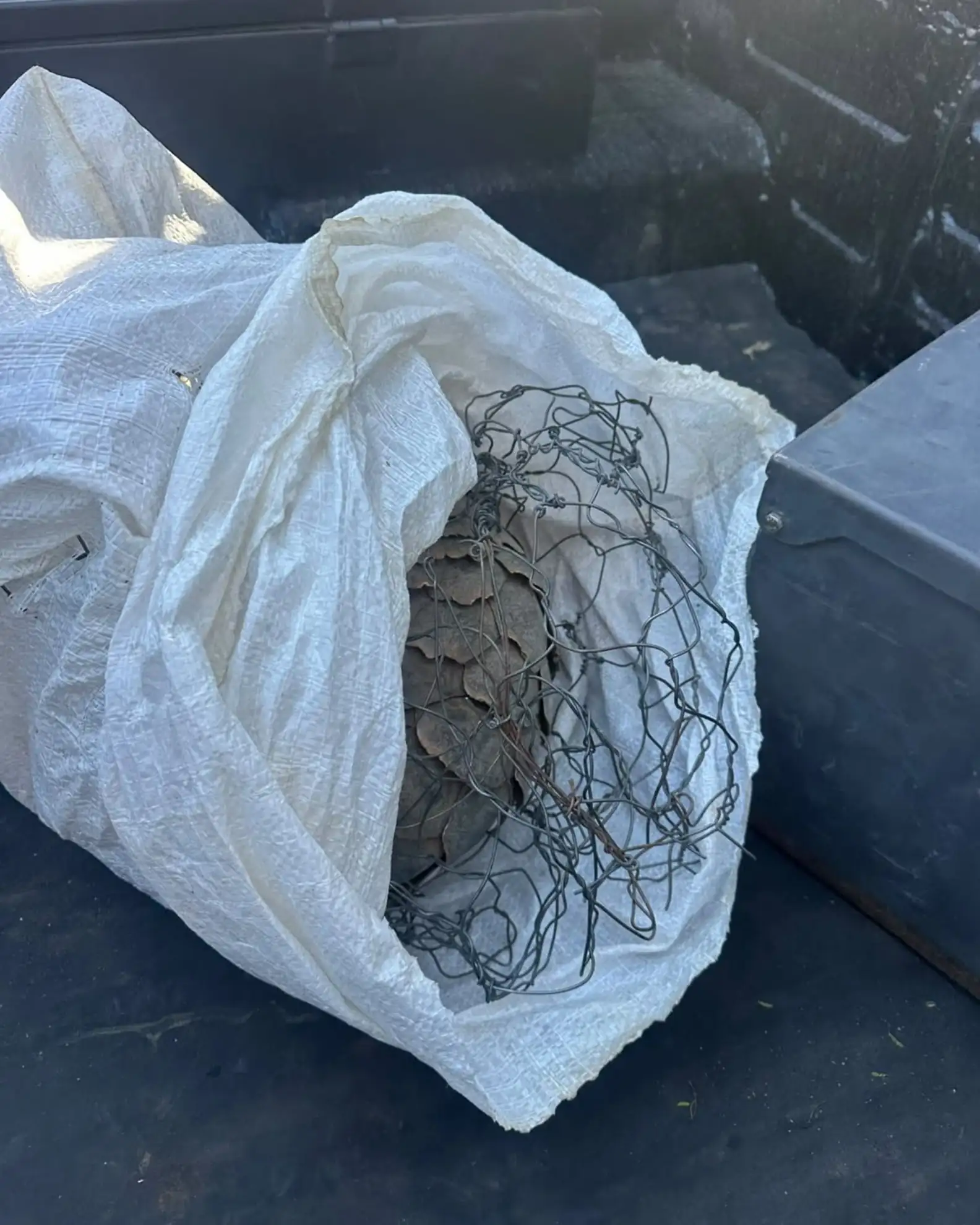
He could hardly move …
For weeks, a helpless pangolin named Rambo endured unimaginable conditions while trapped in the illegal wildlife trade. Confined inside a small wire cage without proper food or water, the defenseless animal suffered painful injuries as he desperately struggled to escape.
But hundreds of miles away, a dedicated team of wildlife rescuers was working tirelessly to save him. What should have been a relatively straightforward rescue turned into a weeks-long mission filled with setbacks, uncertainty, and extraordinary determination.
When the team finally reached Rambo, his condition was heartbreaking. Yet his remarkable journey toward recovery would soon demonstrate just how resilient these extraordinary animals can be.
A Rescue Mission That Became a Race Against Time
For the team at Limpopo Pangolin Collective (LPC), rescuing pangolins from illegal wildlife trafficking is an essential part of protecting one of the world’s most threatened groups of mammals.
Most rescue operations take a day or two to complete. But Rambo’s case proved far more complicated.
After learning that a large adult male pangolin was being held captive by wildlife traffickers, the team immediately began organizing a rescue.
Their initial plan involved traveling nearly 560 miles to meet the individuals holding the animal and recover him safely.
Unfortunately, when the rescuers reached the arranged location, the captors never appeared.
After such a long journey, the team was forced to return without Rambo.
It was a devastating setback, especially knowing that the helpless pangolin remained trapped in dangerous conditions.
But the rescuers refused to abandon him.
Over the following days, they repeatedly adjusted their plans, determined to find another opportunity to bring the animal to safety.
Eventually, a second journey of approximately 560 miles provided the breakthrough they had been hoping for.
This time, the rescuers successfully recovered Rambo from the illegal wildlife trade.
Although the people responsible escaped during the operation, the most immediate priority had finally been achieved.
Rambo was free.
The Heartbreaking Condition Rescuers Discovered
The relief of finding Rambo quickly turned to concern when rescuers examined his physical condition.
The pangolin had reportedly spent weeks confined inside a cramped chicken-wire cage, restrained so tightly that he could barely uncurl his body.
For a pangolin, being able to curl into a protective ball is an essential natural behavior. But Rambo had been left in a position that prevented him from moving normally.
His repeated attempts to escape had caused serious injuries.
Both of his front feet were wounded, and one of his claws had been torn away completely.
The physical damage was only part of the problem.
Rambo was also severely dehydrated, underweight, and suffering from respiratory difficulties after his prolonged captivity.
According to Scales Pangolin Rescue Fund (SPRF), the animal had been kept without food or water, leaving him in extremely poor condition by the time help arrived.
Despite the severity of his injuries, the rescuers believed he still had a chance.
Rambo was transferred into specialized care, where an experienced rehabilitation team could begin addressing his most urgent medical needs.
His fight for survival was far from over, but he was finally surrounded by people dedicated to helping him heal.
Intensive Care Gives Rambo a Second Chance
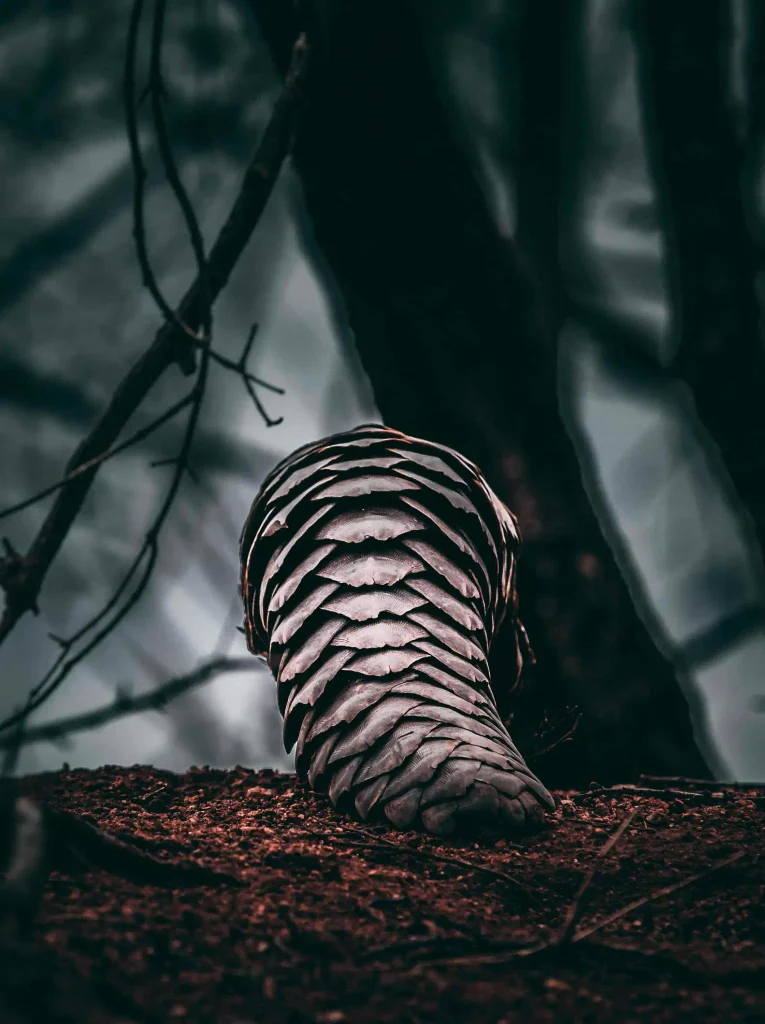
Upon arriving at the rehabilitation facility, Rambo required immediate intensive care.
His weakened condition meant that recovering his strength would take time, careful medical attention, and constant monitoring.
The veterinary and rehabilitation team began providing nutritional support through tube feeding while closely observing his health around the clock.
For approximately a week, the injured pangolin remained in intensive care as his caregivers worked to stabilize him.
Although progress was gradual, Rambo slowly began showing encouraging signs of improvement.
Eventually, he became strong enough to begin supervised outdoor foraging walks.
These carefully managed outings were an important part of his recovery.
Pangolins naturally feed primarily on ants and termites, using their powerful claws to access insect nests and their long, specialized tongues to collect food.
For an animal recovering from prolonged captivity, returning to natural feeding behaviors is an important rehabilitation milestone.
Rambo’s caregivers hoped that spending time outdoors would encourage him to begin searching for food independently.
But the process required patience.
During his first several walks, he still wasn’t ready to eat on his own.
The team continued supporting him, knowing that each outing offered another opportunity for progress.
Then, during his eleventh foraging walk, something wonderful finally happened.
Rambo began eating independently for the first time since his rescue.
For the people who had spent so many days helping him survive, it was an extraordinary moment.
The milestone represented far more than a successful feeding session. It was a promising sign that Rambo was beginning to regain the natural instincts and strength he would need for life beyond rehabilitation.
A Remarkable Recovery Brings New Hope
Following his breakthrough outdoors, Rambo continued making encouraging progress.
According to the rescue organization’s update, the recovering pangolin gained more than 4.4 pounds, a meaningful improvement for an animal who had arrived severely underweight.
His progress also allowed his caregivers to move him out of intensive care and into the next stage of rehabilitation.
The injuries to his front legs eventually healed completely, while the damaged claw continued receiving treatment and protective bandaging.
Although he still faced a lengthy recovery, the improvements were significant.
The pangolin who had once been too weak to feed naturally was now steadily rebuilding his strength.
His caregivers continued monitoring his condition and supporting his recovery with the ultimate goal of returning him to his natural habitat when he was healthy enough.
For everyone involved in his rescue, watching Rambo regain his independence was an emotional reward after weeks of uncertainty.
Rescuers Help Bring Wildlife Trafficking Suspects to Justice
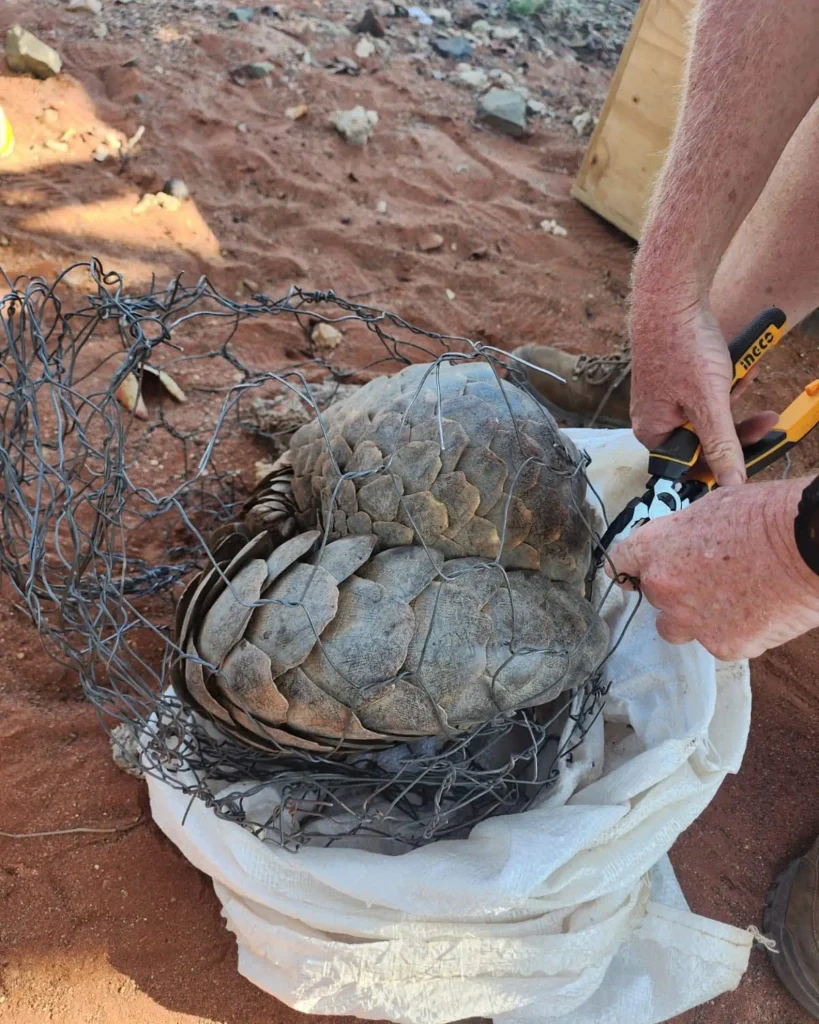
While Rambo received specialized medical care, the Limpopo Pangolin Collective team continued working on another important part of his case.
The people believed to be responsible for his captivity had escaped during the rescue, but the investigation did not end there.
Working alongside law enforcement, the team continued pursuing the suspects.
Approximately one week after Rambo was recovered, their efforts resulted in the suspects being located and arrested.
The arrests marked another significant development in a case that had demanded weeks of persistence from wildlife rescuers.
For conservation organizations, rescuing individual animals is only one part of the larger effort to combat illegal wildlife trafficking.
Pangolins are heavily targeted for their distinctive scales, which are illegally traded in international markets. Their meat is also sought in some regions.
All eight living pangolin species face conservation threats, making the protection of surviving populations especially important.
Organizations such as LPC and SPRF work to give trafficked animals a chance to recover while supporting broader efforts to protect these remarkable mammals.
Rambo’s case illustrates both the devastating consequences of wildlife trafficking and the difference that committed conservation teams can make.
One Pangolin’s Fight for Freedom Inspires Hope
Rambo’s journey is a powerful story of survival, compassion, and determination.
From weeks of confinement in a tiny wire cage to intensive medical treatment and his first successful attempts at feeding independently, every stage of his recovery has represented an important step forward.
His rescuers traveled hundreds of miles, faced repeated disappointments, and continued working even when their original plans fell apart.
Their refusal to give up ultimately gave Rambo something he desperately needed: a second chance.
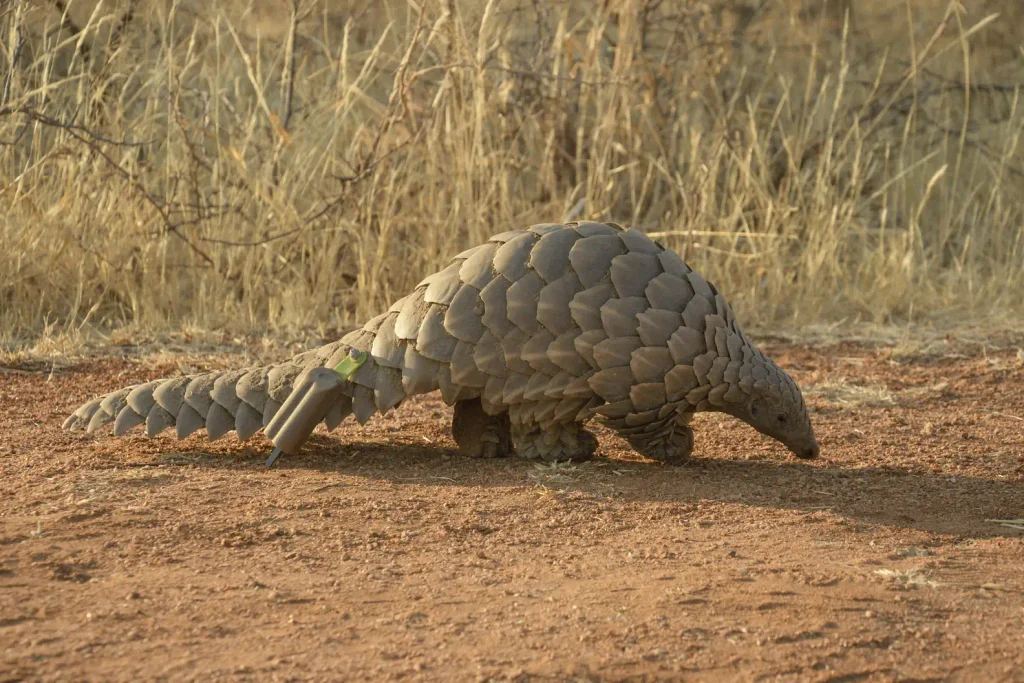
At the time of the rescue organization’s latest account of his progress, Rambo remained in rehabilitation, with hopes that he would eventually be healthy enough to return to the wild.
His recovery was not yet complete, but the improvements were encouraging.
For the dedicated people caring for him, the dream is simple: to see Rambo living freely in his natural habitat, searching for food, exploring his surroundings, and behaving like a wild pangolin once again.
His story is also a reminder that every rescued animal matters.
Behind every successful wildlife rescue are people willing to travel extraordinary distances, overcome difficult obstacles, and fight for creatures that cannot ask for help themselves.
And thanks to those efforts, a pangolin who once faced an uncertain future now has a genuine chance to return to the life he deserves.