

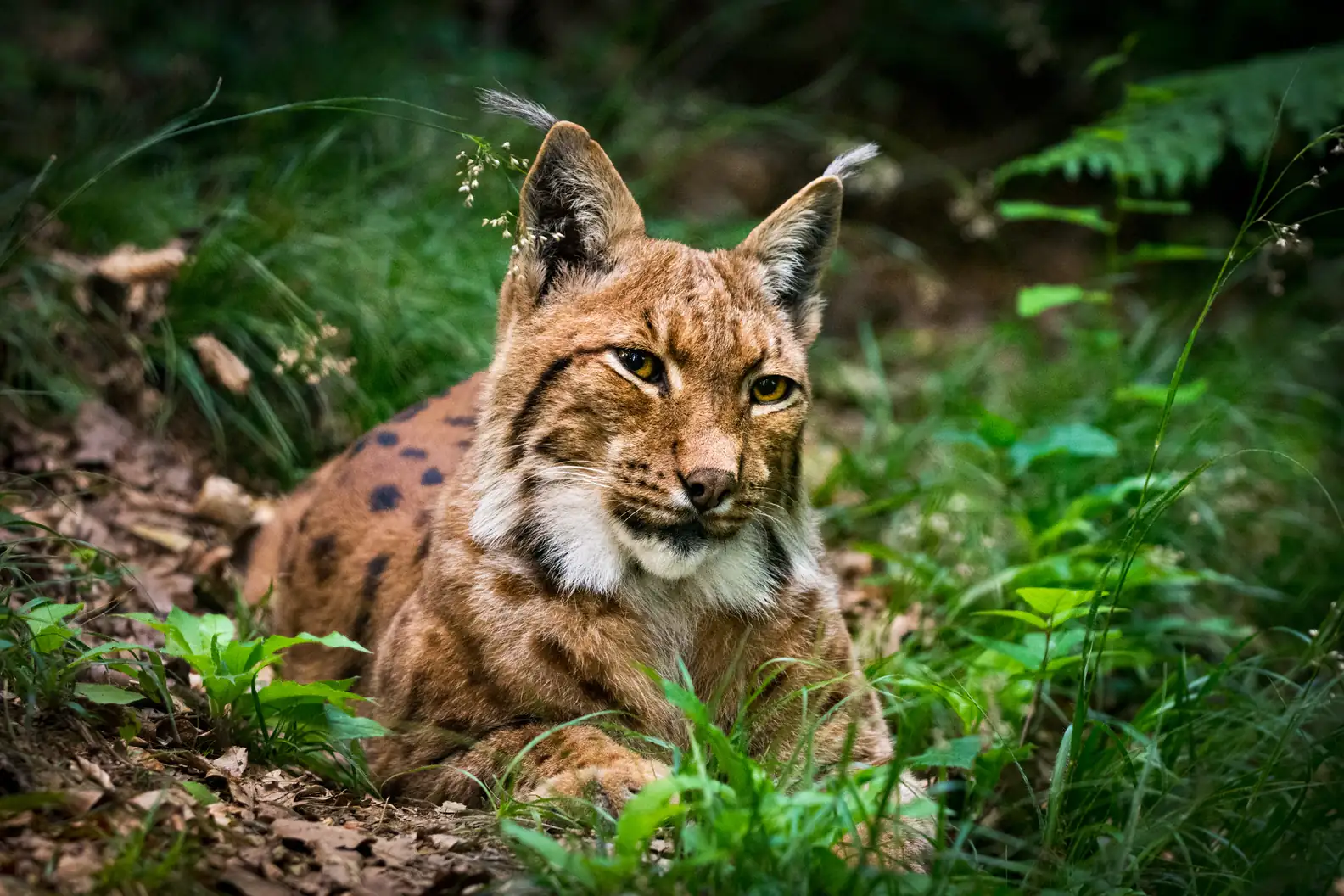
“I was very surprised!”
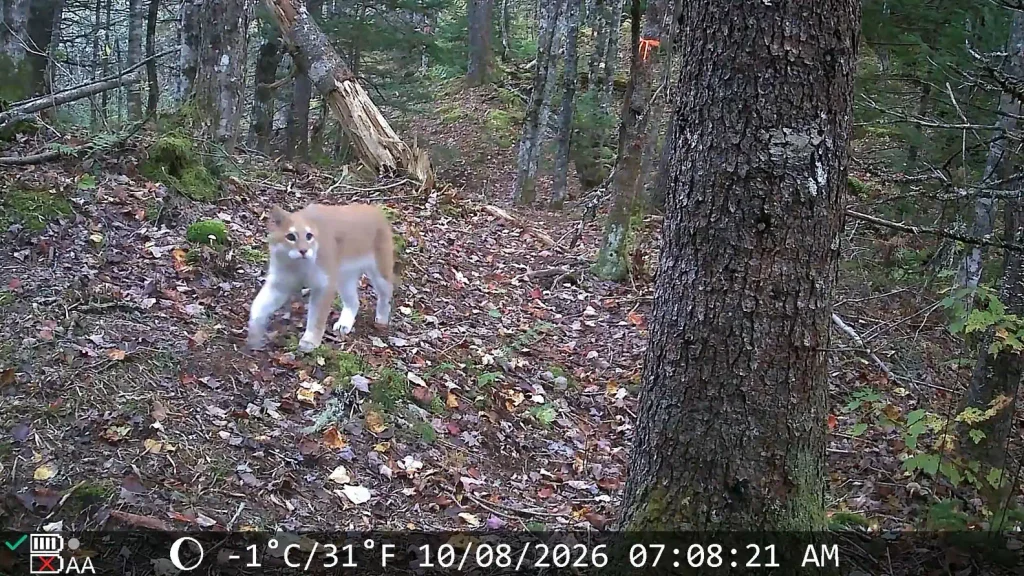
A wildlife enthusiast in Nova Scotia, Canada, was left stunned after one of her trail cameras captured footage of an unusual animal wandering through her wooded property. At first glance, the mysterious visitor appeared to be a bobcat, but its striking orange-and-white fur looked remarkably different from the spotted coats typically associated with these wild felines.
The unexpected discovery has since raised fascinating questions among wildlife observers and researchers, with even experienced experts struggling to explain the animal’s unusual appearance.
An Unexpected Visitor Appears on a Trail Camera
Bell Santana has spent years observing the wildlife surrounding her 12-acre property in Nova Scotia. With several solar-powered trail cameras positioned throughout the wooded landscape, she regularly captures glimpses of animals moving through their natural habitat.
Over time, her cameras have recorded numerous native species, providing a fascinating look at the creatures sharing the forest near her home.
But one particular recording was unlike anything she had encountered before.
While reviewing footage from one of her cameras, Santana noticed a wild cat with an extraordinarily unusual appearance.
The animal seemed to have the distinctive body shape of a bobcat, but its coloring was completely unexpected.
Instead of the familiar spotted or mottled coat, the mysterious feline appeared to have almost entirely orange fur, with lighter cream or white coloring around its face and underside.
Its appearance was so unusual that Santana initially wondered whether something was wrong with her camera.
She carefully reviewed other recordings captured by the same device, but everything appeared to be functioning normally.
Whatever the explanation, the footage showed something she had never seen during her years of monitoring local wildlife.
A Mysterious Orange Bobcat Raises Questions
Bobcats are native to Nova Scotia and are known for their distinctive short tails, tufted ears, and beautifully patterned fur.
Their coats can range from grayish-brown to reddish-brown, often featuring dark spots or streaks that help them blend into their surroundings.
However, the animal captured on Santana’s camera appeared significantly different.
Its fur looked unusually uniform in color, and the lack of clearly visible spots made identification difficult.
The footage’s relatively low resolution added another layer of uncertainty, preventing viewers from examining the finer details of the animal’s coat and facial features.
As attention grew around the recording, questions emerged about whether the mysterious creature was genuinely an unusually colored bobcat or whether the footage might have another explanation.
Santana maintained that the video was authentic and said she had not used artificial intelligence to create it.
She also shared additional footage showing the original recording playing directly on her trail camera’s screen.
Even so, the animal’s identity and unusual appearance remained subjects of discussion.
Another Wildlife Camera Captures a Similar Animal
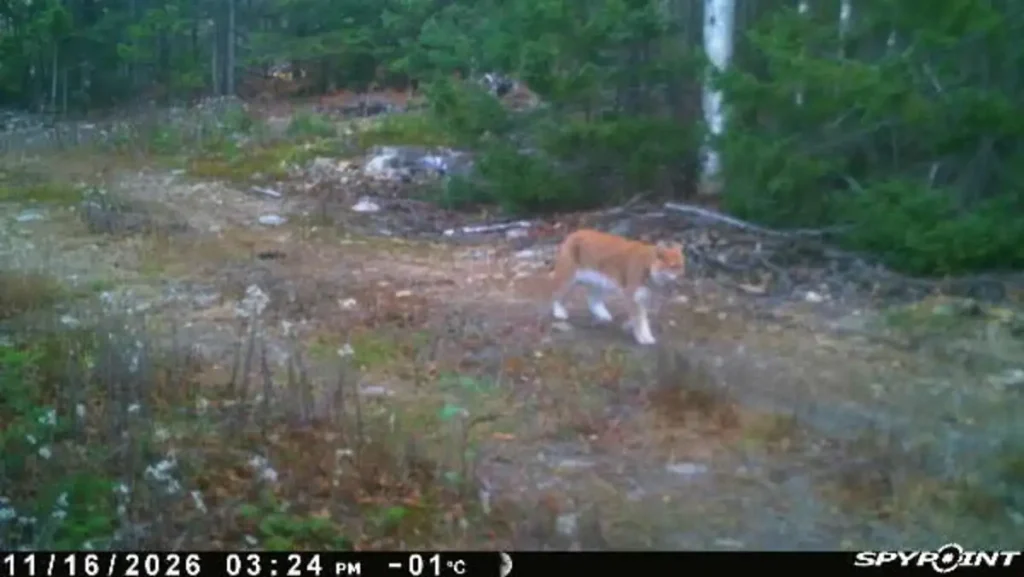
Santana wasn’t the only person in Nova Scotia to encounter a remarkably colored wild cat.
Another local resident, Brent Partland, reported that his trail camera had captured images of a bobcat with striking orange-and-white coloring.
Partland was equally surprised when he first examined the photographs.
The unusual combination of colors initially reminded him and others of a tiger, although such an animal would make little sense in the Nova Scotia wilderness.
He also considered whether it could be a cougar, but the absence of a visible long tail made that explanation seem less likely.
Eventually, he concluded that the animal was most likely an exceptionally colored bobcat.
Partland explained that bobcats occasionally appeared on his trail camera, but he had never captured one with such distinctive coloring during daylight hours.
While the two recordings showed similarly unusual-looking animals, there was no evidence establishing that they featured the same individual.
Nevertheless, the images offered an intriguing opportunity to examine how much variation can occur in the appearance of wild cats.
Wildlife Experts Examine the Unusual Footage
To better understand the mysterious sightings, wildlife specialists examined the available images and recordings.
Among them was Dr. Donald McAlpine, a retired zoology curator at the New Brunswick Museum who has conducted research involving unusual pigmentation in bobcats.
After reviewing Santana’s footage, McAlpine identified several details that made him cautious about drawing firm conclusions.
The animal’s fur appeared surprisingly clean, while its eyes looked darker than he would typically expect. He also couldn’t clearly identify the characteristic spotting commonly visible on a bobcat’s coat.
However, the recording’s limited image quality made it difficult to determine exactly what was being shown.
McAlpine found Partland’s photographs more consistent with the natural appearance of a bobcat.
The animal’s coloring fell within the species’ known range, and some faint spotting appeared visible despite the image’s limited resolution.
His observations highlighted an important distinction: although bobcats can naturally display orange or reddish fur, that alone doesn’t explain every unusual feature in Santana’s recording.
Could This Be an Extremely Rare Coat Variation?
Aidan Branney, a University of Georgia doctoral student who has studied bobcat ecology, also examined Santana’s video.
He found the animal’s appearance highly unusual, particularly the seemingly spotless orange coat and prominent white markings around its face.
Branney noted that he had never encountered a coat variation resembling the one shown in the footage.
Although Santana had provided additional video to support the recording’s authenticity, he remained uncertain about what exactly the camera had captured.
The observations from both specialists demonstrate why the mysterious feline has attracted so much interest.
Natural variations in fur pigmentation can produce remarkable differences in wildlife appearance, but determining whether a particular animal represents such a variation requires reliable visual evidence.
In this case, the available footage doesn’t provide enough detail to confidently explain the unusual coloring.
For now, the mystery remains unresolved.
A Wildlife Enthusiast Hopes for Another Encounter
Despite the unanswered questions, Santana remains excited about the possibility of seeing the mysterious animal again.
Her property provides an opportunity to observe wildlife without interfering with the animals’ natural behavior.
With seven trail cameras positioned around the land, she continues monitoring the forest and documenting the creatures that pass through.
Another appearance by the unusual orange feline could potentially provide clearer images and help researchers better understand what the original recording captured.
Until then, the footage remains one of the most intriguing discoveries from her years of wildlife observation.
For Santana, the experience is also a reminder of why she began monitoring the animals around her home in the first place.
Nature has an extraordinary ability to surprise us, even in places we think we know well.
And sometimes, all it takes is one unexpected trail camera recording to reveal just how many mysteries may still be waiting in the woods.