

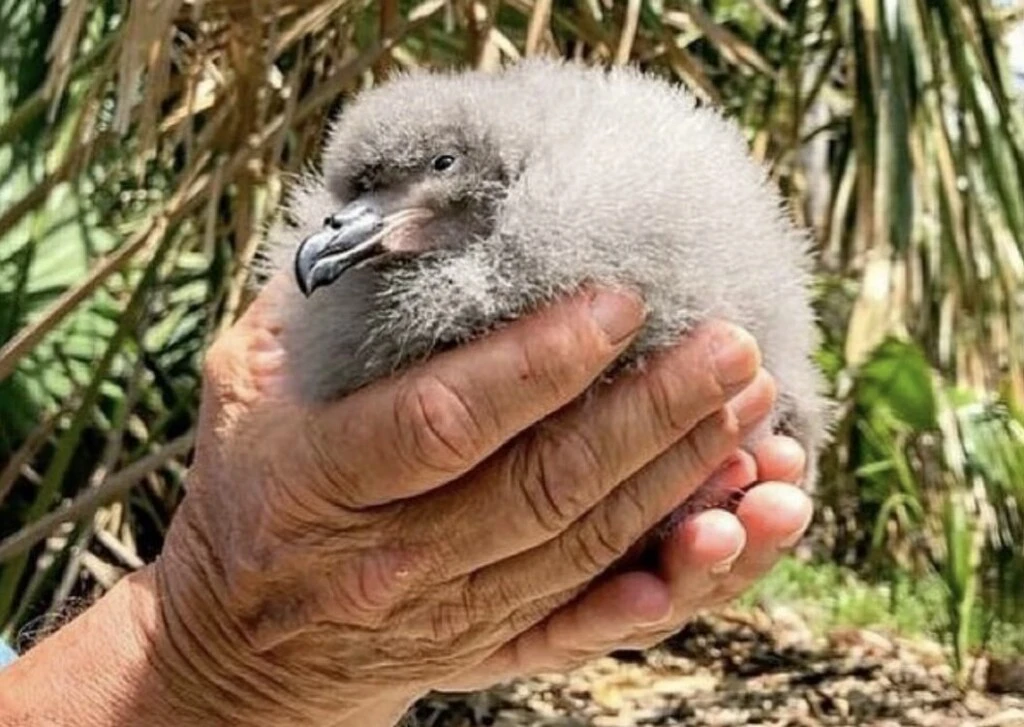
Though not a rare event anymore, the hatching of an endangered seabird — and national icon of Bermuda — is still cause for celebration among conservationists working on Nonsuch Island.
This tiny, 14-acre island in the northeast of Bermuda is the only place in the world where the cahow, or Bermuda petrel, comes to breed. It’s also one of the rarest seabirds on Earth.
That the cahow exists at all is remarkable.
For nearly 300 years, the species was believed to be extinct, disappearing during the early days of British colonization and not being rediscovered until the mid-20th century.
Even today, the odds are stacked against them.
Cahows are slow breeders — adults may take 3 to 6 years before returning to breed, and even then, a female lays just one egg. About half of those eggs never hatch, and even among those that do, many chicks don’t survive their first year. The birds nest on the ground, making them especially vulnerable to predators.
In 1960, British ornithologist David Wingate discovered just 18 breeding pairs on Nonsuch Island.
That discovery sparked the Cahow Recovery Program — now considered one of the most successful conservation efforts for a critically endangered species.
When Wingate’s successor, Jeremy Madeiros, took over, the number had grown to 55 birds. Today, there are around 450 cahows of all ages — an incredible comeback.
A major part of this success has been improving nesting conditions. Cahows prefer deep, dark burrows, and conservationists began building artificial nesting sites to meet those needs.
Today, about 85% of cahows nest in these man-made burrows.
The recovery effort also transformed Nonsuch Island itself. Once barren, it has been restored into a thriving wildlife sanctuary — a “living museum” of what Bermuda’s ecosystem looked like before colonization.
Now, native species have returned, including:
- Yellow-crowned night herons
- Bermuda skinks
- Land hermit crabs
- West Indian top shells
Access to the island is strictly limited to protect it from invasive species, but educational visits and live camera feeds allow people to witness the cahow’s recovery from afar.
More than 60 years into this restoration effort, Nonsuch Island stands as proof that even species once thought lost forever can be brought back — with patience, protection and persistence.