

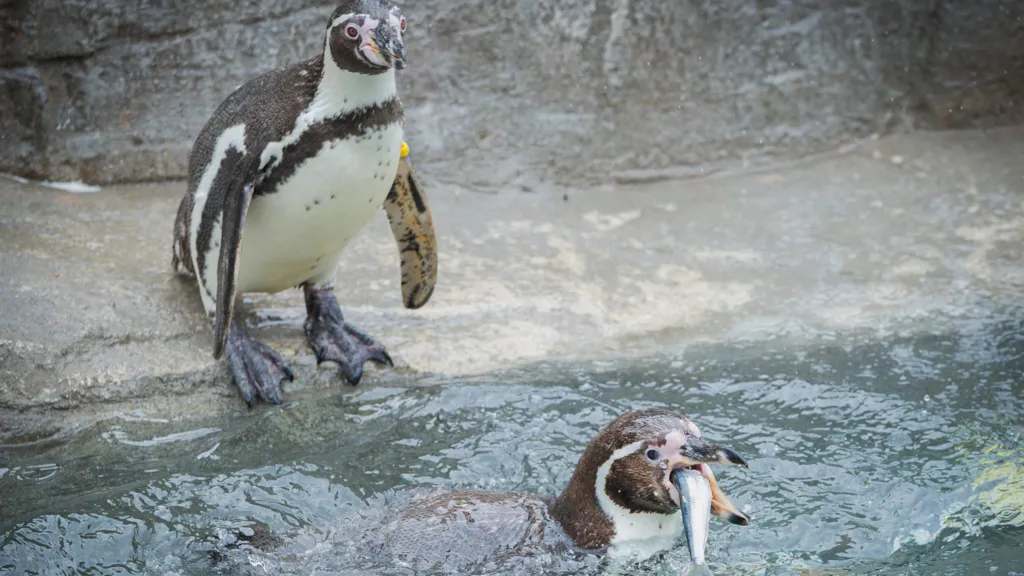
A group of penguins at a wildlife park in Cornwall are enjoying a more local menu after a chance conversation led to a new supply of freshly caught sardines.
Paradise Park in Hayle is now sourcing between two and three tonnes of sardines each year from local fisherman Tom Lambourn, whose catch comes from waters just 10 miles away.
The change means the park’s 26 Humboldt penguins can once again eat Cornish sardines instead of relying on frozen sprats imported from the Netherlands.
A Chance Conversation Sparked the Idea
The penguins had eaten sardines for years until the park’s longtime local supplier retired.
After that, staff struggled to find a replacement and eventually switched to imported fish.
The solution came unexpectedly when Lambourn visited Paradise Park and overheard a keeper mentioning how much the penguins enjoyed sardines.
He immediately realized he might be able to help.
“When I heard the penguins loved sardines but that the park thought they couldn’t get them, I thought: ‘Well, I might be able to help with that,’” Lambourn said.
The Penguins Quickly Approved
The new supply has proved popular with the birds.
Lambourn joked that the penguins have “excellent taste” and said he was pleased to see fish caught locally being used so close to where they were landed.
For the park, the arrangement has restored a familiar favorite to the penguins’ diet while also creating a stronger connection with the local fishing community.
A Special Birthday Meal for Spneb
Among the penguins enjoying the Cornish catch is Spneb, a 38-year-old Humboldt penguin who is believed to be the oldest of her species in the world.
She recently celebrated her birthday with one of her favorite meals — locally caught sardines.
Her long life has made her a particularly well-known member of the Paradise Park colony, and the return of sardines gave staff an ideal way to mark the occasion.
Local Fish Means Fewer Food Miles
Paradise Park curator David Woolcock said staff were delighted to find a supplier so close to home.
The sardines are caught only a short distance from the park, reducing the need to transport fish over much longer distances.
Woolcock described the arrangement as an example of how one simple conversation can lead to a positive change.
And, most importantly, he said the penguins love the result.
Supporting Cornwall’s Fishing Industry
The partnership also provides a way to highlight Cornwall’s local fishing industry.
Gus Caslake, Seafish industry engagement manager for South West England and chair of the Cornish Sardine Management Association, praised the decision to keep locally caught fish within the region.
He said the arrangement both reduces transportation and demonstrates the quality of Cornish sardines.
Visitors Can Learn More About the Penguins’ Diet
The project has also added an educational element for visitors.
A new information board has been installed beside the penguin pool in partnership with Cornish sardine fishermen.
It explains more about the birds’ diet and the local fishing industry supplying their food.
A Simple Change With Local Benefits
What began with an overheard conversation has created benefits for both the wildlife park and the local fishing community.
The penguins get to enjoy one of their favorite foods again, Paradise Park can source more of its fish locally, and visitors have an opportunity to learn where the birds’ meals come from.
For the park’s 26 Humboldt penguins, the best part is much simpler: Cornish sardines are back on the menu.