

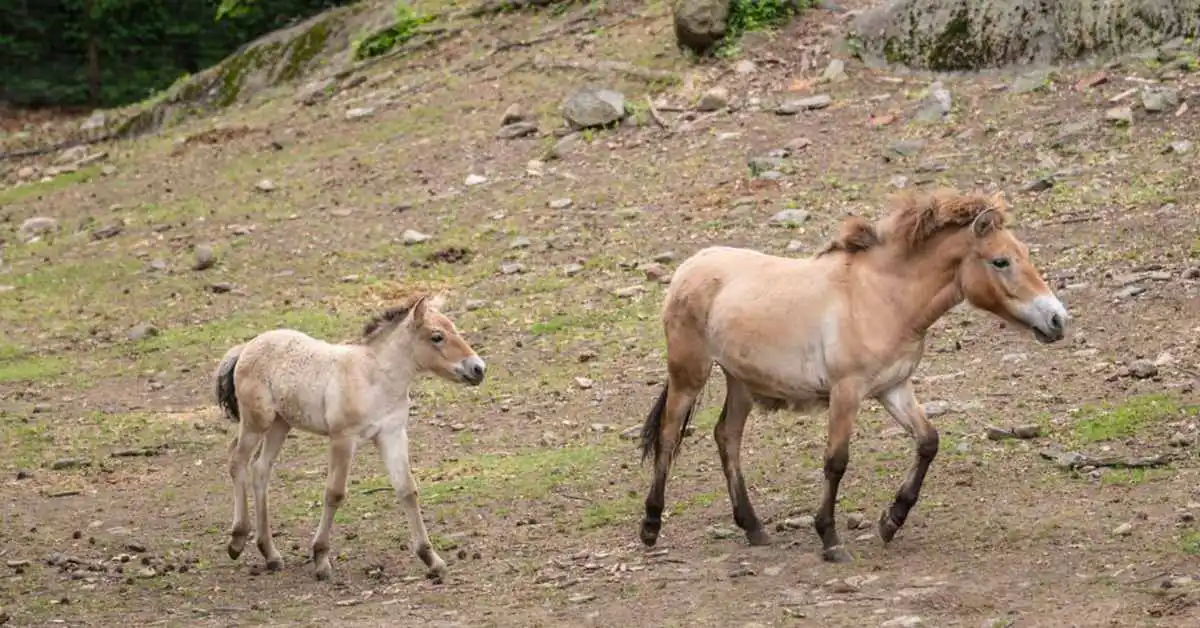
The arrival is an important conservation milestone because fewer than 2,000 Przewalski’s horses remain worldwide. Every new foal helps strengthen the future of a species that once disappeared completely from the wild.
Przewalski’s horses, pronounced “shuh-VAL-skees,” are considered the world’s last truly wild horses. They separated from domestic horses more than 5,000 years ago and have a very distinct appearance.
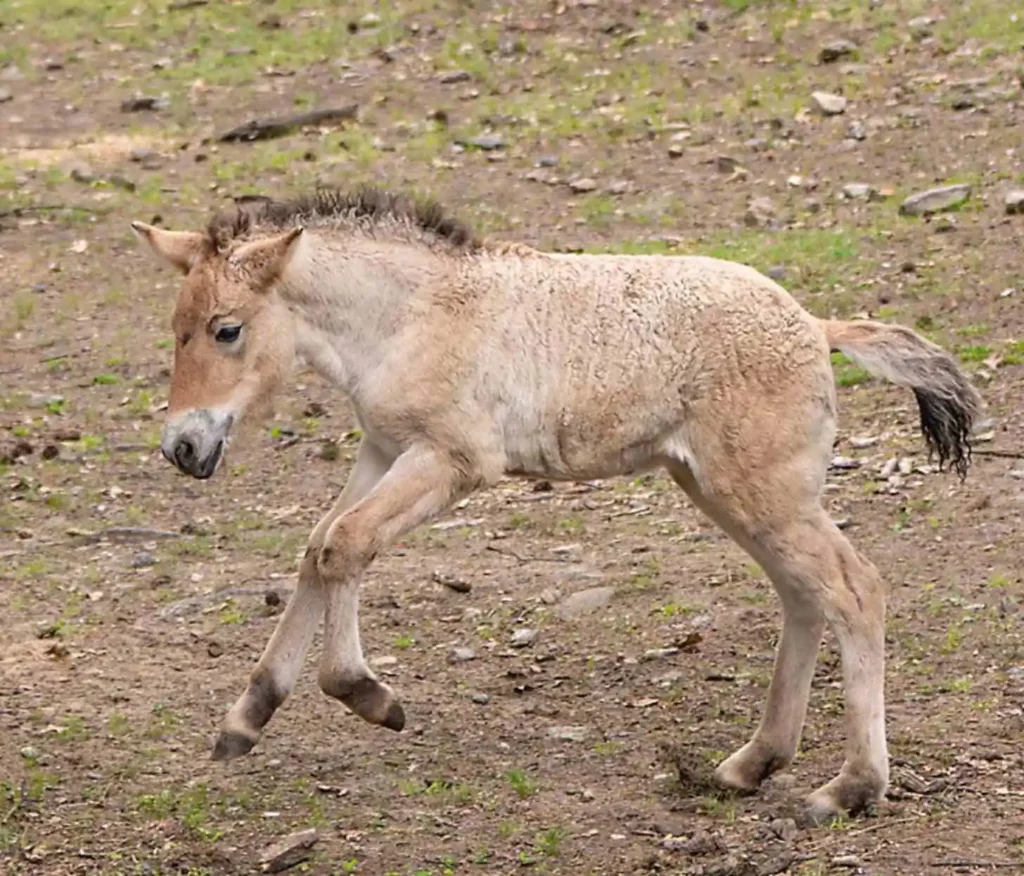
Compared with many domestic horses, they are smaller and sturdier, with large heads, thick necks and short legs. Their coats are dusky brown, with pale yellowish-white bellies, dark legs and stripes behind their knees. They also lack a forelock, the hair that usually falls between a horse’s ears, and instead have a short, upright mane that gives them a zebra-like look.
Przewalski’s horses once roamed across Europe and Asia, but human expansion gradually pushed them farther east. Eventually, they survived only in the Mongolian steppes of the Gobi Desert.
By 1969, the species was declared extinct in the wild.
At that point, conservationists turned to captive breeding programs to save the horse from disappearing forever. Through careful breeding and reintroduction efforts, zoo-born Przewalski’s horses were eventually returned to protected grasslands in China in 1989 and Mongolia beginning in 1992.
Today, every living Przewalski’s horse, including the newborn at the Bronx Zoo, descends from just 14 individuals. That makes each birth especially meaningful.
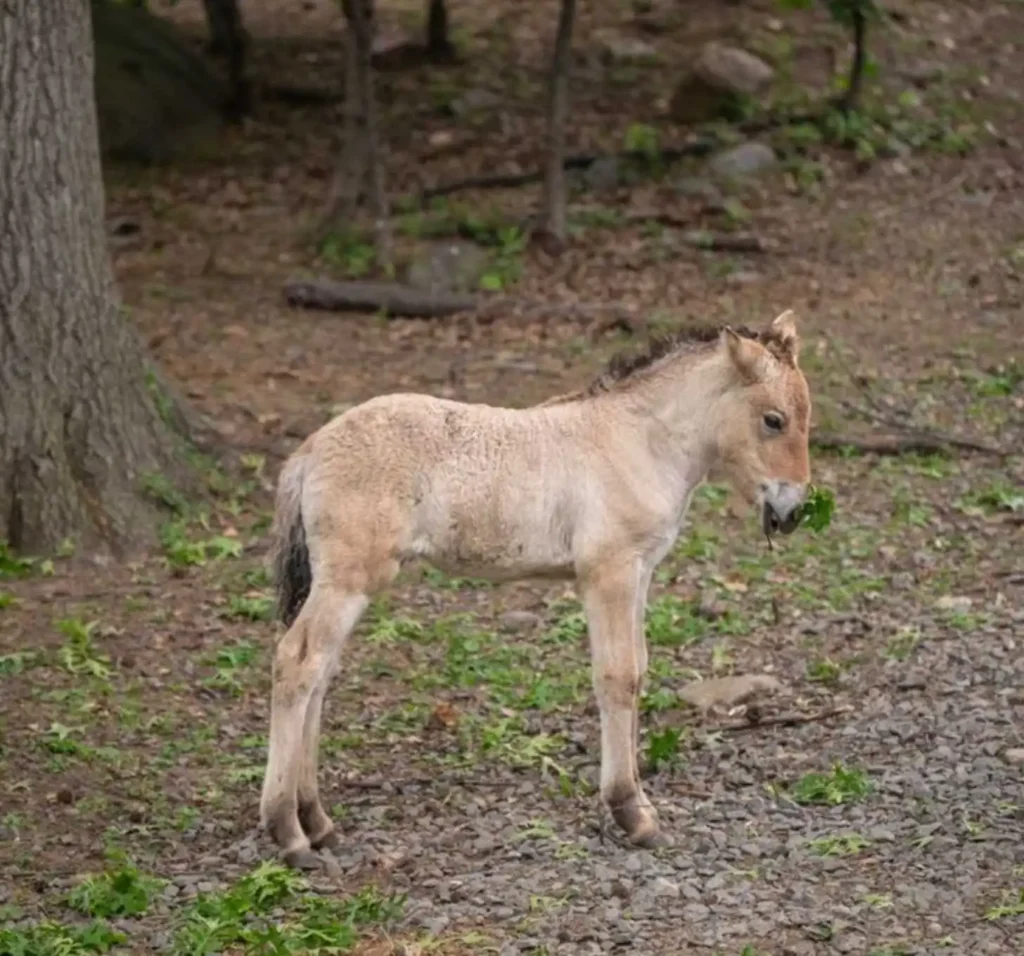
The Bronx Zoo has played an important role in protecting the species and has raised Przewalski’s horses for many years. Captive breeding remains a key part of the recovery plan, but conservationists also continue working to return the animals to parts of their historic range.
In 2024, three Przewalski’s horses named Zorro, Zeta II and Ypsilon traveled from Prague Zoo in Czechia to the Altyn Dala reserve in Kazakhstan. Their journey covered about 3,000 miles by truck and plane, and they were the first of 40 horses planned for the reserve.
Conservationists hope these reintroductions will help restore not only the horse population, but also the grassland ecosystem. As they graze, move through the landscape and spread seeds, the horses help maintain biodiversity across the steppe.
For now, reintroduced horses live in protected areas where researchers and veterinarians can monitor their health and behavior. Over time, experts hope they will thrive more independently in the wild.
The Bronx Zoo’s new foal is another hopeful sign for a species that once seemed lost. Thanks to decades of conservation work, Przewalski’s horses are still here — and slowly returning to the landscapes where they belong.