

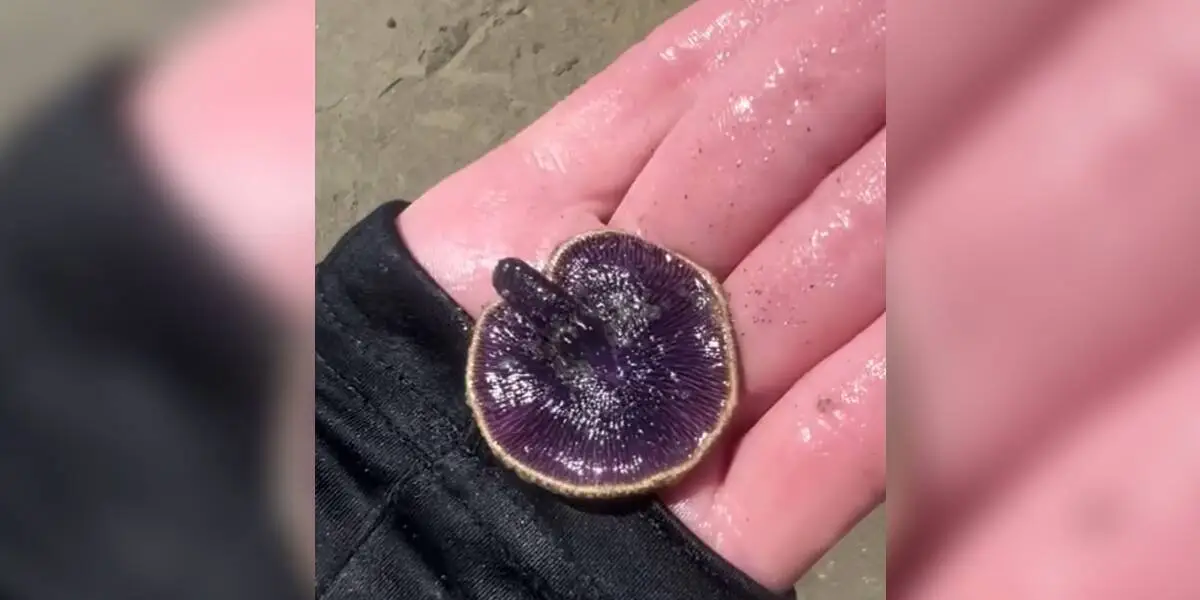
“We were calling it an ‘alien mushroom from the sea.’”
Recently, Southern California beachgoer Greta Eskridge noticed something unusual drifting in the surf — a strange purple shape that looked a bit like a mushroom. For a moment, she was unsure what she was seeing. Then she realized it was not a plant at all, but a fascinating marine creature known as a sea pansy.
Sea pansies are a type of soft coral and are related to jellyfish and sea anemones. Though they appear to be a single organism, they are actually made up of many tiny animals called polyps living together as one colony.
Eskridge explained that these little polyps cluster together to create the sea pansy’s distinctive form.
These unusual creatures are found in coastal waters across much of the Western Hemisphere, and they are known to wash ashore in California from time to time. Aloha Tours, a kayaking and snorkeling company based in San Diego, has also encountered them on local beaches and jokingly described them as looking like alien mushrooms from the ocean.
The colony is made up of different kinds of polyps, each with its own role. Some are responsible for feeding, extending above the sand and producing a mucus net that helps trap tiny prey such as plankton. Using tentacles and stinging cells, they capture and consume what gets caught, while sharing one digestive system with the rest of the colony.
One of the most remarkable things about sea pansies is that they can glow. When disturbed or threatened, they produce a green bioluminescent light, especially at night when waves or rough water agitate them.
Normally, sea pansies stay anchored to the sandy seafloor by a stem-like structure called a peduncle. But strong surf or shifting currents can sometimes tear them loose and carry them onto shore.
People who come across one on the beach are encouraged to gently return it to the water.
So the next time you spot something purple and mushroom-shaped near the shoreline, you may be looking at one of the ocean’s strangest and most beautiful living colonies.