

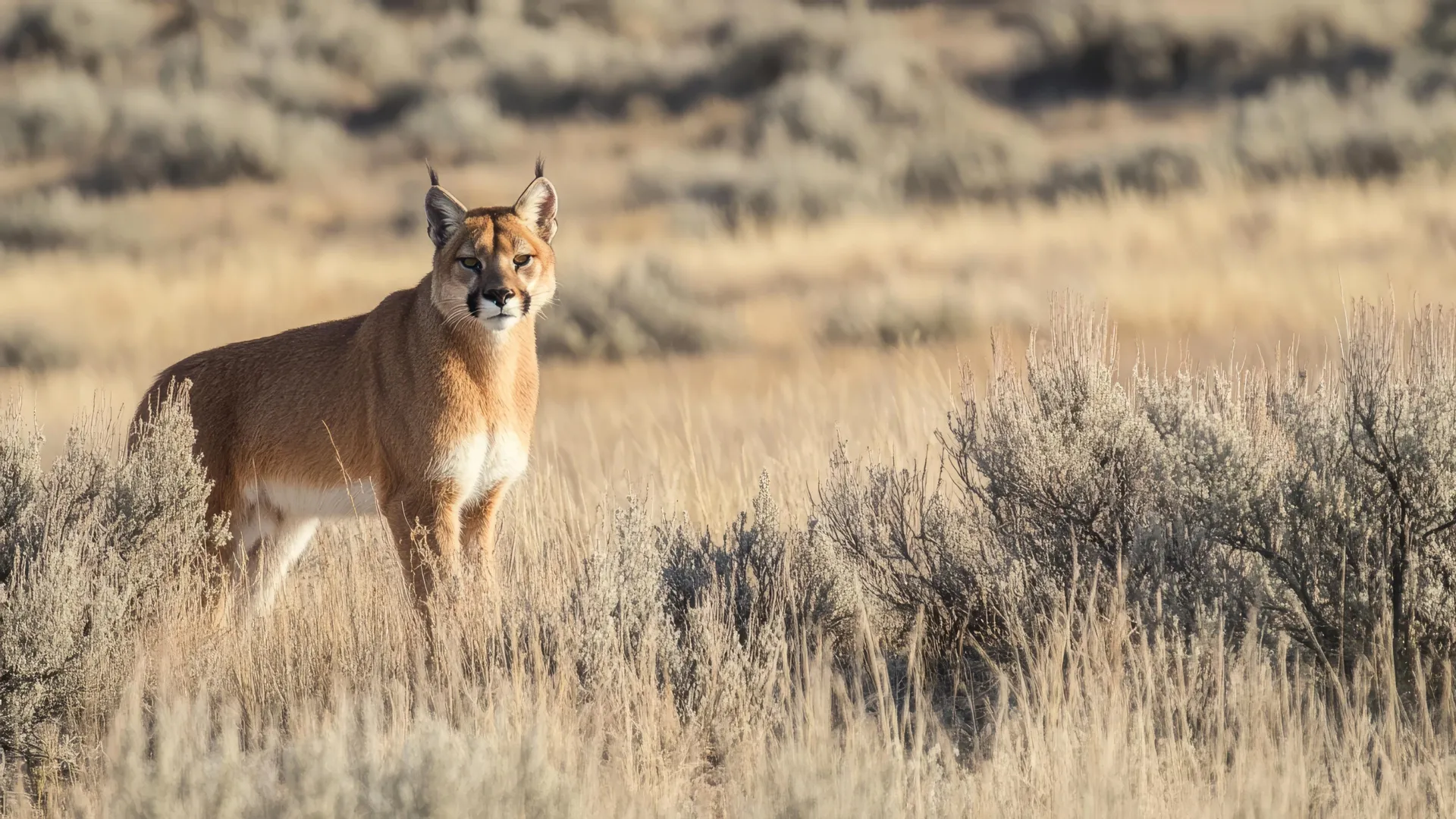
A new study reveals how two of North America’s top predators — wolves and cougars — interact inside Yellowstone National Park. Researchers found that many encounters between the species begin when wolves take over prey already killed by cougars.
Because wolves hunt in packs and cougars hunt alone, these confrontations can be dangerous. To reduce the risk, cougars appear to have adapted their hunting strategies, choosing prey that helps them avoid conflicts with wolf packs.
The findings offer new insight into how these apex predators share space in the wild.
How Cougars Avoid Trouble
Researchers discovered that cougars actively try to avoid wolves whenever possible.
They often:
- Avoid areas where wolves recently made kills
- Stay close to escape terrain, such as trees or steep slopes
- Shift to hunting smaller prey that can be eaten quickly
As elk numbers declined in Yellowstone, cougars began targeting more deer instead. Deer are smaller and easier to consume rapidly, meaning cougars spend less time at a carcass — reducing the chance that wolves will arrive and steal the meal.
Nine Years of Tracking Predators
The study, published in the journal PNAS, used nine years of GPS tracking data from collared wolves and cougars. Researchers also visited nearly 4,000 suspected kill sites across the park to investigate feeding events.
The results showed a clear imbalance between the two predators.
- Wolves:
- 716 confirmed kills
- 136 scavenging events
- Main prey: elk, bison and deer
- Cougars:
- 513 kills
- Only 7 scavenging events
- Main prey: elk and deer
Cougars rarely scavenge from other predators, preferring to hunt their own food — even if it means risking losing their kill to wolves.
A One-Sided Conflict
Machine learning models helped researchers identify when and where wolf–cougar encounters occurred.
The data showed that about 42% of encounters happened at cougar kill sites, where wolves arrived and took over the prey. Only one recorded encounter occurred at a wolf kill site.
Between 2016 and 2024:
- 12 adult cougars died in Yellowstone
- Wolves were responsible for two of those deaths
- In both cases, the cougars lacked nearby escape terrain
Importantly, wolves didn’t eat the cougars — they consumed the elk carcasses instead.
Meanwhile, researchers recorded 90 wolf deaths, none caused by cougars.
A Changing Ecosystem
For much of the 20th century, both wolves and cougars were nearly eliminated from many parts of the United States due to hunting and government policies.
Cougars began recovering during the 1960s and 1970s under legal protections. Wolves were later reintroduced to Yellowstone starting in 1995.
Today, both species are expanding across the western United States, creating new areas where their territories overlap.
What It Means for the Future
Scientists say coexistence between these predators depends less on the total number of prey animals and more on diversity of prey and access to safe terrain.
When cougars can switch between prey species and escape quickly if needed, they are more likely to survive alongside wolves.
The study highlights how wildlife adapts as ecosystems recover and change — offering a glimpse into what predator communities may look like as large carnivores continue returning to the American West.