

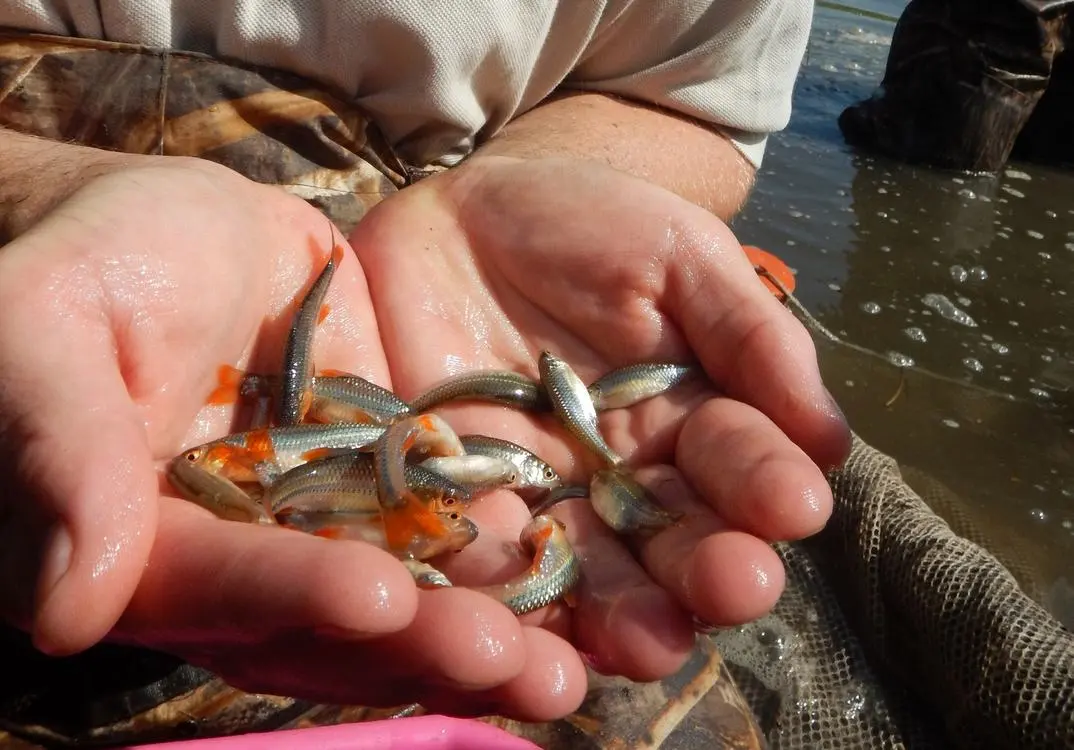
Across Iowa, a small fish has sparked one of the state’s most successful conservation efforts.
What began as an attempt to save a federally endangered minnow has grown into a large-scale restoration program that benefits wildlife, water quality, and landowners alike.
Meet the Topeka Shiner
The Topeka shiner, a small silver-and-orange fish from the minnow family, once lived throughout Iowa. Although the state now appears dominated by farmland, it was once rich in wetlands.
Back then, heavy rainfall frequently reshaped rivers. As waterways shifted, they carved out wide bends and left behind U-shaped ponds known as oxbow lakes.
These oxbows created small but vital wetland ecosystems. At one time, they covered about 11% of Iowa’s landscape.
Losing the Wetlands
Over time, widespread agricultural development erased more than 10,000 of these oxbow lakes.
As each wetland disappeared, the Topeka shiner lost its habitat. Eventually, the species vanished from much of the state.
In 1998, officials added the shiner to the Endangered Species List.
A Plan to Bring It Back
Soon after, conservationists took action.
In 2000, the U.S. Fish and Wildlife Service partnered with conservation groups in Iowa to locate and restore former oxbow lakes. Using river scars and historical maps, teams began rebuilding these forgotten wetlands.
At first, the goal focused entirely on saving the shiner.
An Unexpected Benefit
However, as restoration continued, scientists noticed something surprising.
Pollutants from agricultural runoff began washing out of nearby streams and settling harmlessly into the mud of the oxbows. As a result, water quality improved downstream.
That discovery changed everything.
Now, conservationists restore oxbows not only for fish, but also to reduce nutrient pollution throughout Iowa’s waterways.
Wildlife Quickly Returns
Most importantly, the shiner came back.
As oxbow lakes returned to the landscape, so did dozens of other species. Researchers have documented more than 57 fish species and 81 bird species living in restored wetlands.
Beyond that, turtles, mussels, amphibians, beavers, and even river otters have reclaimed the habitat.
Clearly, wildlife had been waiting for the water to return.
Support From Landowners
Although each restoration project costs tens of thousands of dollars, funding comes from a mix of private investment, state programs, and federal grants.
Because of this structure, landowners gain environmental benefits without financial risk. As a result, participation has steadily increased.
In 2011, agricultural organizations joined the effort, expanding restoration work across additional river watersheds and giving the project new momentum.
A Conservation Success Story
Today, scientists have documented Topeka shiners in about 60% of the more than 200 restored oxbow lakes across Iowa.
Nearly all of those wetlands sit on privately owned land.
In 2021, a formal review recommended changing the shiner’s status from “endangered” to “threatened.” If approved, the move would mark another major success for species recovery efforts.
Small Fish, Lasting Change
Ultimately, the Topeka shiner proved that even the smallest species can drive meaningful environmental change.
By restoring what nature once provided, Iowa has improved water quality, revived ecosystems, and shown how conservation can work at scale — one oxbow at a time.