

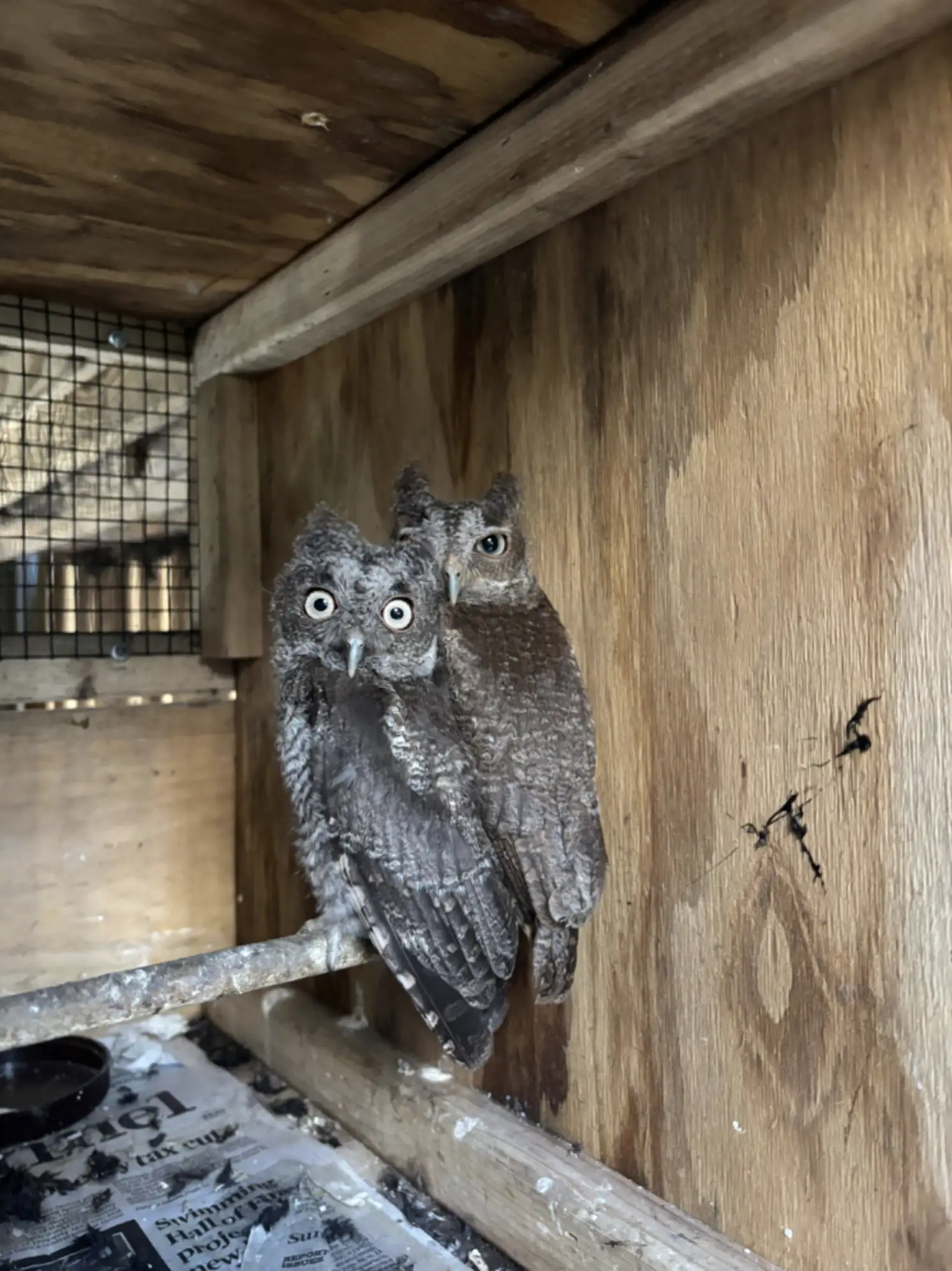
They were just a few days old 🥺
When a South Florida tree removal crew cut down a dead tree in a homeowner’s backyard this past April, they expected to find nothing but rotting wood. Instead, they uncovered two tiny, fluffy baby eastern screech owls nestled inside the hollowed-out stump — and what followed was a remarkable rescue story.
Two Fuzz Balls Inside a Dead Tree
After cutting down the top portion of the trunk, workers spotted two small, fuzzy shapes inside the stump. A closer look confirmed they were baby eastern screech owls — far too young and vulnerable to be left behind.
The homeowners and workers acted quickly, carefully transporting the entire tree stump — owlets still inside — to the South Florida Wildlife Center (SFWC).
Miraculously Unharmed
Despite the chaos of the tree removal, the nestlings had escaped without injury. Staff at SFWC examined them thoroughly and found them to be in good health.
“The nestlings were so young, small and fluffy that their eyes were still closed, and they had likely hatched only a few days prior,” said Haillie Mesics, development associate and marketing specialist at SFWC.
A Chance at Reunion With Their Mother
Because the owlets didn’t require immediate medical attention, SFWC staff decided to attempt a reunion with their mother before bringing them into full-time care. They attached a wooden nesting box to another tree in the homeowners’ backyard and placed the babies inside.
To help the mother locate her young, staff played eastern screech owl calls from their phones at the base of the tree.
“To alert the mom that her babies were back, we played eastern screech owl calls from our phones at the base of the new tree to entice her back into the area,” Mesics said.
The Mother Never Returned
The next morning, SFWC release coordinator Melanie Lemieux checked on the owlets and weighed them to see if they had been fed overnight. They hadn’t gained any weight — a clear sign their mother had not returned.
“The removal of the nesting tree could have caused too much of a disturbance for Mom to feel safe returning,” Mesics explained.
Around-the-Clock Care at the Rescue Center
With reunification no longer an option, SFWC brought the owlets back to their facility for intensive care. The tiny birds required round-the-clock attention — but they responded well.
“They quickly began eating on their own, and once deemed ready, they graduated to an outdoor enclosure for continued rehabilitation,” Mesics said.
How to Prevent This From Happening Again
SFWC notes that situations like this are far from rare. Wild animals frequently nest inside trees, and cutting them down during spring and summer can leave babies stranded or injured.
To avoid disturbing nesting wildlife, SFWC recommends waiting until late fall to trim or remove trees, when most young animals have already left their nests.
From Tiny Fuzz Balls to Teenage Owls
The two owlets that arrived at SFWC in April have come a long way. Now lanky and growing fast, they are becoming more independent every day. The next step is a flight enclosure, where they will build strength, sharpen their instincts, and learn to feed themselves — before eventually being released into the wild to begin their lives.