

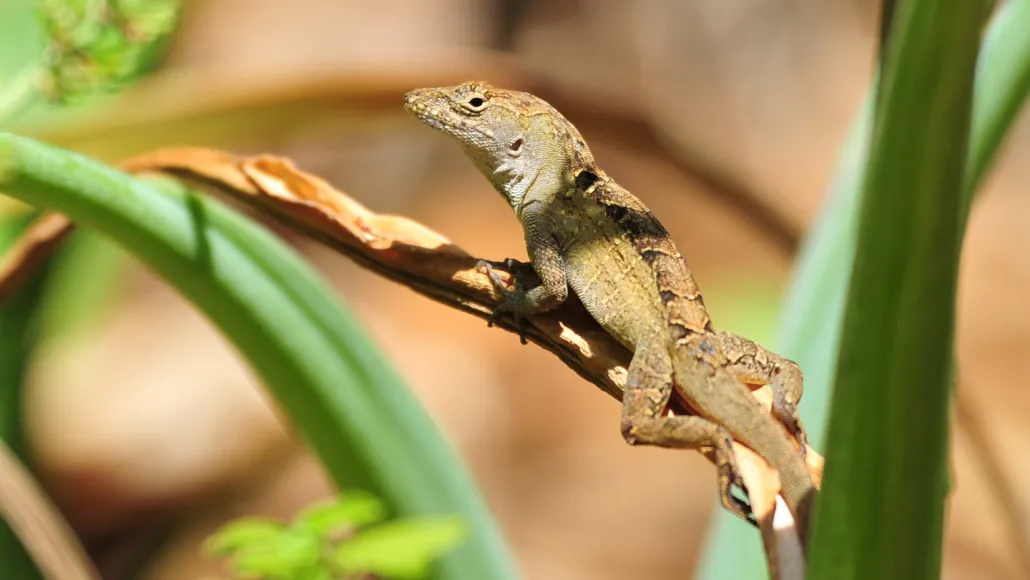
Cuban brown anoles have the highest blood lead levels of any vertebrate known
Tiny brown anoles (Anolis sagrei) in New Orleans are living among some of the highest lead concentrations ever recorded in vertebrates—and remarkably, they show little to no ill effects. A recent study, published in Environmental Research, highlights these lizards’ incredible ability to tolerate environmental contamination and may help scientists track urban lead exposure hotspots.
Unprecedented Lead Levels in Urban Lizards
Ph.D. researcher Annelise Blanchette, formerly at Tulane University, measured lead in brown anoles collected from two distinct neighborhoods: an older urban area near Tulane University and a more suburban neighborhood near Lake Pontchartrain.
- Uptown area lizards: Averaged 955 µg/dL of lead in the blood, with one individual reaching a staggering 3,192 µg/dL.
- Lake Shore lizards: Lower average levels, due to younger buildings, remediated soil, and less environmental contamination.
“If you were anywhere near 10 µg/dL, doctors would be concerned. These levels would be fatal to humans,” Blanchette explains.
The uptake likely comes from old lead paint, contaminated soil, and industrial sources along the Mississippi River. Tropical storms can further distribute lead flakes into surrounding habitats. Lizards ingest the metal directly from the environment or indirectly by eating arthropods exposed to lead.
How Lead Affects—or Doesn’t Affect—Brown Anoles
Surprisingly, lizards with the highest lead levels performed as well as less-contaminated lizards in tests of balance, sprint speed, and endurance. This suggests a remarkable tolerance to heavy metal exposure.
The team further tested lead limits in controlled dosing experiments:
- Lizards receiving 1–10 mg/kg/day showed no observable negative effects over 60 days.
- Higher doses caused ulcers, appetite loss, and physical decline.
- One lizard in the 10 mg/day group reached a blood lead level of 10,600 µg/dL with no obvious symptoms.
While some experts caution that subtle effects may not have been measured, these results put brown anoles in a league of their own. For comparison, the previous record-holder was a Nile crocodile in South Africa with 1,310 µg/dL.
“Reptiles appear to possess a remarkable capacity to tolerate high levels of contaminant exposure with minimal apparent physiological effects,” says chemist Marc Humphries.
Genetic Insights into Lead Tolerance
To understand how these lizards survive such toxic conditions, researchers analyzed gene expression in high- and low-lead individuals. They found differences in genes associated with oxygen transport, suggesting an adaptation that allows cells to cope with lead interference.
“If we can understand what’s happening at the cellular level in these animals, we may be able to apply that knowledge to human health,” Blanchette notes.
Lizards as Urban Sentinels
Beyond their biological curiosity, brown anoles could serve as environmental indicators. By monitoring lead levels in urban wildlife, public health officials can identify neighborhoods at higher risk of contamination and better protect human populations.
“Animals are sentinels that show what is present in the environment,” says Jesse Berman, an environmental epidemiologist at the University of Minnesota.