

Southern California is home to an impressive mix of wildlife, from mule deer, foxes and coyotes to bobcats, mountain lions, black bears and desert bighorn sheep. These animals live across the region’s woodlands, deserts and mountains.
But their habitats have been divided by roads, highways and freeways that cut through the landscape, making it harder and more dangerous for wildlife to move safely.
One of the biggest barriers is U.S. Route 101, a major highway that runs about 808 miles from Oregon to downtown Los Angeles. Although the speed limit is generally capped at 65 miles per hour, vehicles often move much faster, sometimes reaching 75 to 80 miles per hour.
For animals trying to migrate, search for food or find mates, crossing such busy roads can be deadly. It also creates serious risks for drivers. Wildlife-vehicle collisions are a major problem across the United States, with the Pew Research Center estimating that 1 million to 2 million occur each year. These crashes cause around 200 deaths, 26,000 injuries and more than $8 billion in damages and related costs annually.
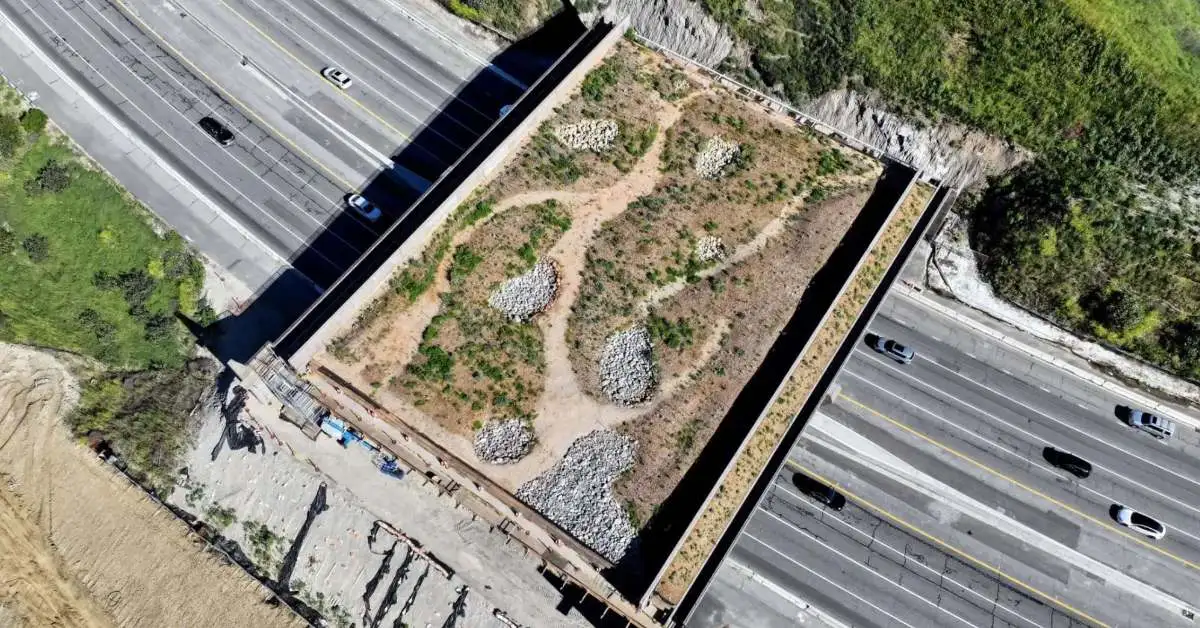
To help solve this problem, California began construction in 2022 on the Wallis Annenberg Wildlife Crossing in Agoura Hills. The crossing will span 10 lanes of Route 101 and give animals a safe path over one of the busiest freeways in the country.
After decades of planning and several years of construction, the project is expected to be completed in early December 2026. Once finished, it will be the largest wildlife crossing in the world.
The crossing is especially important for mountain lions in the Santa Monica Mountains and the greater Los Angeles area. According to Dr. Seth Riley of the National Park Service’s Santa Monica Mountains National Recreation Area, the project provides a crucial route through one of the last undeveloped stretches along the 101, helping protect the future of local mountain lion populations.
Rather than looking like an ordinary bridge, the structure is being designed to blend into the surrounding environment. It will be covered with native plants and landscaped to feel like natural habitat, encouraging animals to use it as part of their regular movement patterns.
The project gained public attention partly because of well-known mountain lions such as P-22, the famous Los Angeles cougar whose life and death highlighted the dangers that fragmented habitats pose to wildlife.
Beth Pratt, California regional executive director for the National Wildlife Federation, has described the crossing as a hopeful example of what is possible when communities choose to reconnect nature. She said the project shows that even a freeway can be transformed into something that helps wildlife survive.
On Earth Day, April 22, Pratt announced that the Wallis Annenberg Wildlife Crossing is expected to officially open for animals on December 2, 2026.
Signs of life are already appearing. On May 31, the project’s Facebook page reported its first animal visitor: a hummingbird spotted on the habitat section of the 101 structure as crews continued work on the overpass.
The Wallis Annenberg project is not the only wildlife crossing in California attracting early visitors. In Siskiyou County, three mule deer were recently seen using a wildlife overpass over Route 97 while construction was still underway.
Caltrans District 2 said it was encouraging to see animals already accepting the new structure, even before final work was complete. The overpass was designed to help animals cross the highway more safely while also reducing the risk of collisions for drivers.
Together, these projects show how wildlife crossings can help reconnect divided habitats, protect animals and make roads safer for everyone.