

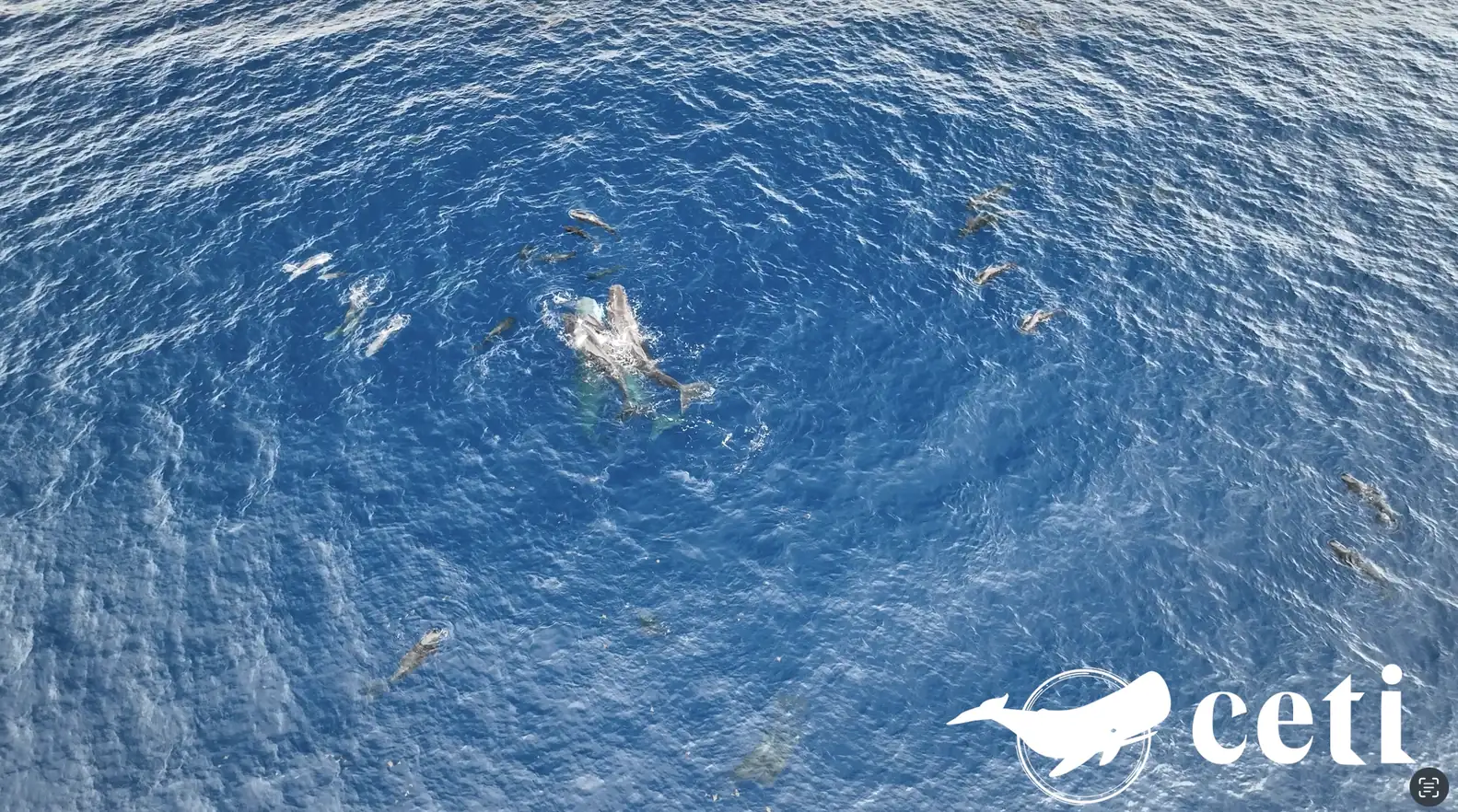
And they were all female ❤️💪
The mother whale, known as Rounder, wasn’t by herself.
By her side were:
- Her mother (Lady Oracle)
- Her daughter (Accra)
- Other female whales in her group
They stayed with her through the entire labor and birth.
🤍 A Powerful Display Of Support
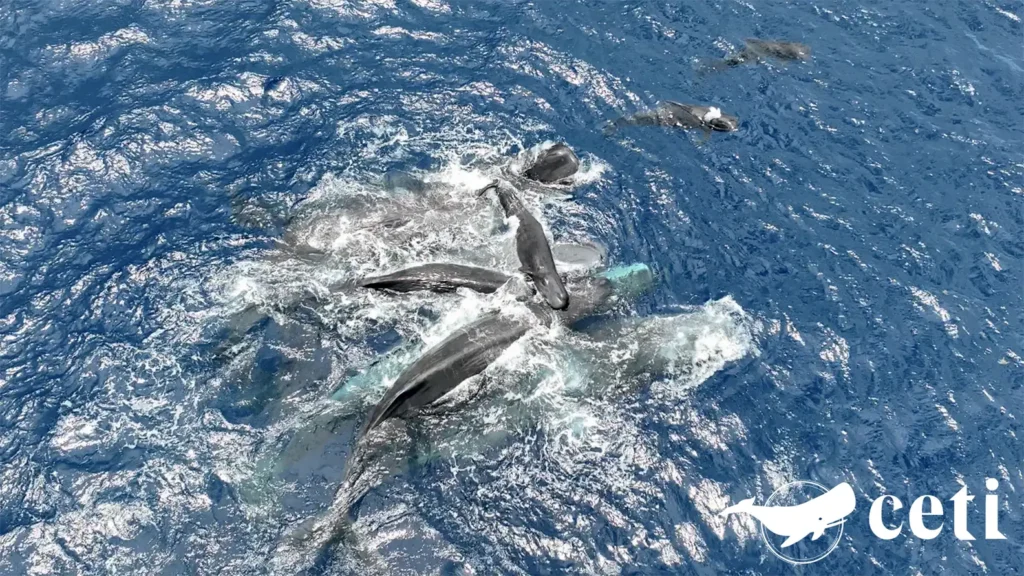
What stunned researchers most wasn’t just the birth — it was what the other whales did:
- Stayed close and coordinated around her
- Helped guide and support her during labor
- Immediately cared for the newborn calf
At one point, the group even lifted the baby toward the surface, helping her take her first breaths.
🧬 A Scientific First
This moment, captured by Project CETI, is groundbreaking.
It’s the first strong evidence of:
👉 Cooperative birth assistance in non-primates
In other words — whales actively helping one another give birth.
👩👧👧 Three Generations Together
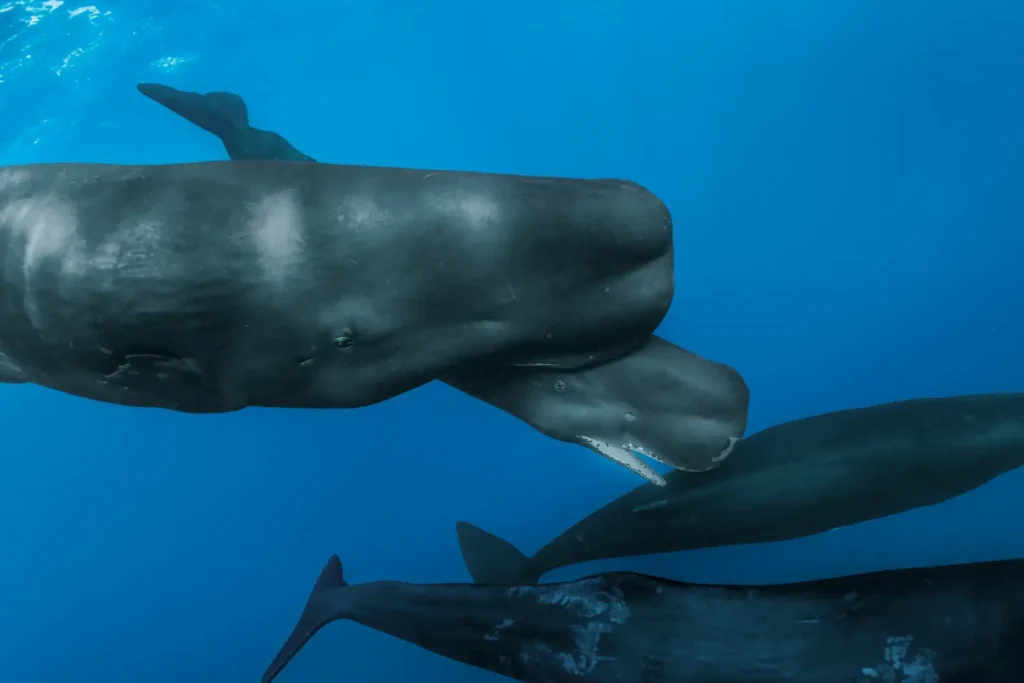
Because researchers have followed this group for decades, they knew exactly who was involved.
This wasn’t just a random gathering — it was:
- A grandmother
- A mother
- A daughter
All participating in one of life’s most important moments.
🐋 What This Changes
Scientists now believe whale society is even more complex than we thought.
“What we’re seeing is deeply coordinated social care,” researchers said.
This suggests:
- Strong family bonds
- Emotional intelligence
- Cooperative behavior similar to humans
💙 A Shared Experience Across Species
For a long time, humans were thought to be unique in surrounding birth with support and care.
But this moment shows something profound:
👉 Whales do it too.
They come together.
They help.
They protect the vulnerable.
🌟 Why It Matters
This discovery doesn’t just add knowledge — it changes perspective.
It reminds us that:
- Animals have rich social lives
- Family and community matter beyond humans
- There’s still so much we don’t understand about the natural world
Sometimes, the most extraordinary moments happen quietly beneath the surface…
Where even whales gather, just like us, to welcome new life into the world.