

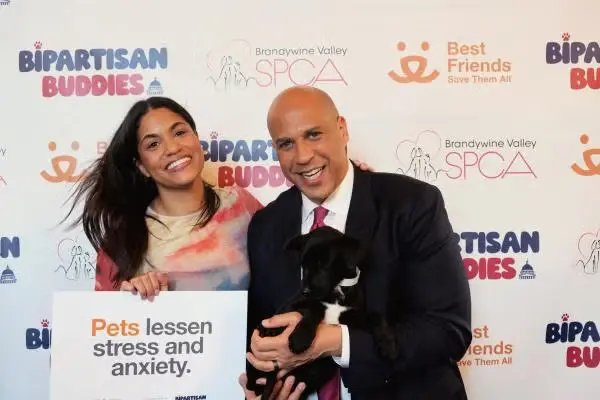
There are few causes that can bring senators from both political parties into the same room with big smiles.
Puppies are one of them.
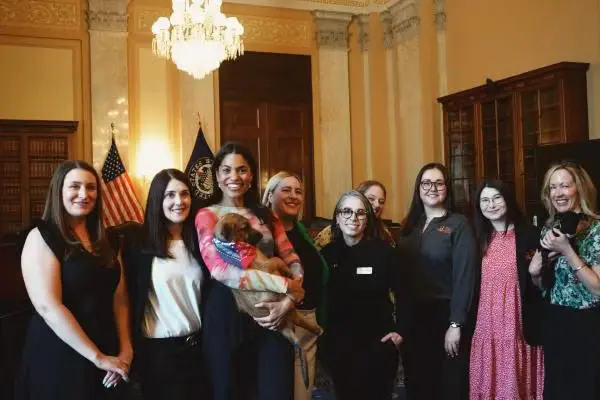
Earlier this month, the Bipartisan Buddies event gathered Sens. Alan Armstrong, John Boozman, Cory Booker, Tina Smith and Mark Warner on Capitol Hill for an afternoon with adoptable dogs from Brandywine Valley SPCA.
The event was co-hosted by Alexis Booker, wife of Sen. Booker, and Shelly Armstrong, wife of Sen. Armstrong, in partnership with Best Friends Animal Society. While the puppies naturally stole plenty of attention, the main focus was an important part of animal welfare that often goes overlooked: fostering.
Foster homes can make a major difference for shelters. When shelters have foster programs, their adoption rates are, on average, about 30% higher than shelters without them. Fostering gives animals a calm, temporary home while they wait for adoption. It also frees up shelter space so another animal in need can be helped.
It is a simple act, but it can have a life-saving impact.
This spring, animal welfare has also brought people together beyond Capitol Hill.
In March, Utah Gov. Spencer Cox signed Senate Bill 201 into law. The legislation requires shelters to explore all reasonable alternatives before euthanizing a dog or cat. It also creates consistent standards for shelters and rescue organizations across the state.
The bill passed with strong bipartisan support and came at an important time for Utah. Currently, 57 of the state’s 59 animal shelters are no-kill. Utah is close to joining Idaho and Montana as one of the no-kill states in the West, and SB 201 may help close the final gap.
The law does more than express hope. It establishes a framework that makes sure shelters consider every reasonable option before an animal’s life is lost.
The state is incredibly close to reaching its goal. If just one out of every 1,000 Utah residents looking for a pet chose adoption instead of buying, Utah could end the killing of dogs and cats in shelters entirely.
That kind of progress shows what can happen when people from different backgrounds and political beliefs recognize the same truth: shelter animals deserve a chance.
Across the country, the number of animals killed in U.S. shelters has fallen dramatically. Since 2016, that number has dropped from more than 1 million to around 400,000 — a decrease of about 60%. Today, more than two-thirds of shelters in the United States are no-kill, and many more are close to reaching that point.
This progress did not happen because of one law, one organization or one person. It happened because thousands of people chose to act. Foster families opened their homes. Shelter leaders tried new approaches. Communities supported adoption. Lawmakers looked at the data and voted to protect animals.
The Bipartisan Buddies event was a reminder that the love people have for pets can cross political lines. Red and blue states alike have achieved no-kill status, including Delaware, Idaho, Montana, New Hampshire, Rhode Island and Vermont. Many more states are moving in the same direction.
At the heart of it all is something simple: people care about animals, and they want to save the ones still waiting in shelters.
Puppy cuddles may have helped bring lawmakers together for the day, but the message was much bigger. When communities come together for homeless pets, animals win — and so do the people who help them.