

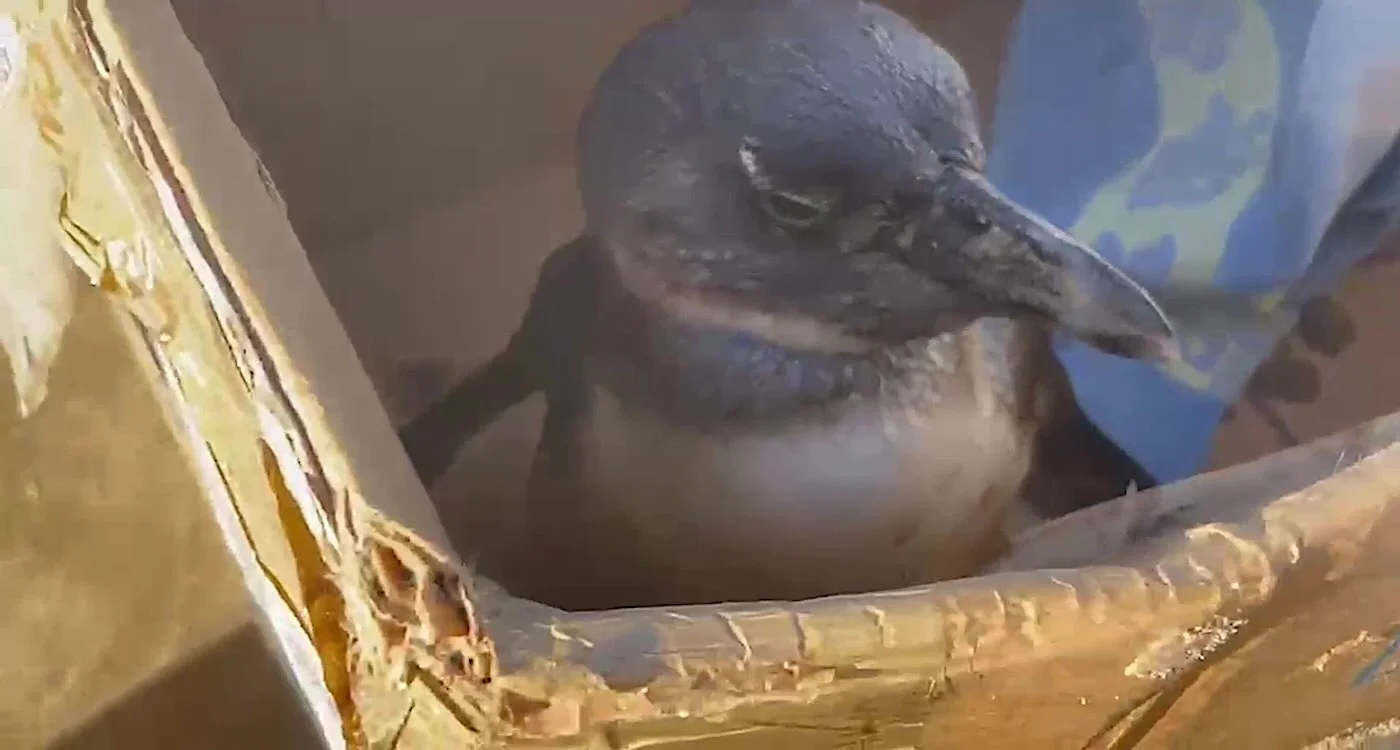
Wildlife veterinarian Catherine Hauw arrived with a medical assistant, not knowing what they would find. The bird was weak, still, and barely responsive. For a moment, the worst seemed possible.
“We were quite concerned when we first arrived,” said Hauw. “We had no idea how long the penguin had been lying there — we just really wanted to make sure it was alive.”
Then, slowly, the penguin lifted its head.
“Once it lifted its head, we knew that was a good sign. But it still needed our help.”
Using a towel and a box, the team carefully lifted the bird and transported it to a nearby veterinary clinic.
A lucky escape
At the clinic, the penguin was found to have a small wound on its abdomen — likely from a predator attack. The injury had weakened it enough to slow it down and separate it from its colony. Despite the ordeal, it was not malnourished, and treatment began right away.
All things considered, it had gotten off lightly.
A species that needs every chance it gets
The rescued bird is an African penguin — the only penguin native to the African continent, recognized by its tuxedo-like markings and distinctive chest dot patterns. Sometimes called the “jackass penguin” for its donkey-like call, it is critically endangered. Wild populations have collapsed due to habitat destruction, overfishing, and warming ocean currents that force these birds to swim farther and farther just to find food.
Every single individual matters.
A message to all of us
Hauw was quick to remind the public of something important: when you come across a wild animal in distress, don’t hesitate — call a professional.
“It’s really important that if a member of the public discovers the animal, they contact professionals,” she said. “We were able to assess the penguin’s health on the beach and safely take it to a clinic nearby.”
That one phone call made all the difference.