

People searching for honey in Mozambique work with birds via a shared language in a rare case of cooperation between humans and wild animals. This language also comes with regional dialects — that appear to be driven by the birds.
In northern Mozambique, honey hunters use distinct dialects when communicating with greater honeyguides (Indicator indicator) to locate bee nests — an interaction that benefits both species, according to new research published in People and Nature.
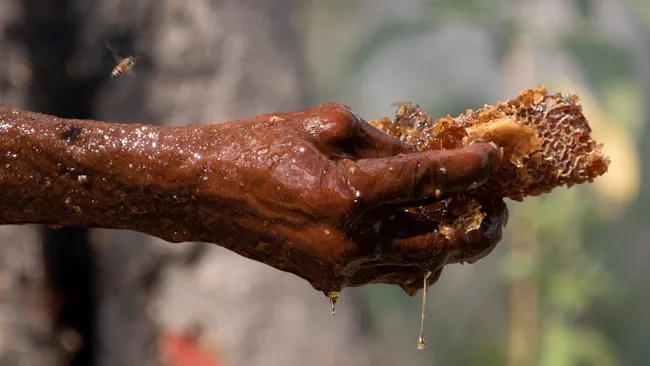
The birds guide humans to honey, humans subdue the bees and harvest the honey, and in turn, the honeyguides feed on the leftover wax and larvae — all without risking stings.
“There is active coordination to mutually benefit humans and a wild animal,” said lead author Jessica van der Wal, a behavioral ecologist at the University of Cape Town.
Distinct Dialects Across Villages
Honey hunters in different villages employ trills, grunts, whoops, and whistles that vary across the region. The international research team recorded calls from 131 hunters in 13 villages in Mozambique’s Niassa Special Reserve.
Interestingly, hunters who moved into a new village adopted the local dialect. Van der Wal explained, “It’s like a different pronunciation. There is one language that they use with the birds, but there are different dialects.”
Behavioral ecologist Diego Gil noted that the calls did not vary by habitat, highlighting the strong role of culture in human-bird communication.
Cultural Feedback Between Humans and Birds
The birds themselves may reinforce the local dialects. According to Philipp Heeb, senior researcher at the French National Centre for Scientific Research, honeyguides tend to respond preferentially to local signals. This reciprocal preference maintains the stability of human dialects across regions.
Van der Wal noted that honeyguides do not learn this behavior from their parents since they are brood parasites, laying their eggs in other birds’ nests. Instead, they likely learn from observing other honeyguides interacting with humans.
A Cooperation Spanning Centuries
The relationship between humans and honeyguides likely stretches back hundreds, if not thousands, of years. By discriminating against unfamiliar calls, honeyguides reinforce regional human dialects, limiting drift and maintaining consistency across generations.
Van der Wal is expanding her research through the Pan-African Honeyguide Research Network, studying how human and honeyguide cultures influence one another in different countries.
“There’s so much variation in human culture, not only in the signals or the calls being used, but in their practices and interactions with honeyguides,” she said.