

Scientists have discovered an impressive hidden world of marine life deep beneath the waters off Western Australia’s Nyinggulu, or Ningaloo, coast. The findings include evidence of giant squid, rare deep-diving whales and several species that may never have been recorded by science before.
The discovery came from a Curtin University-led study focused on the Cape Range and Cloates submarine canyons, located about 1,200 kilometers north of Perth. The expedition was led by the Western Australian Museum aboard the Schmidt Ocean Institute’s research vessel, R/V Falkor.
During the trip, researchers collected more than 1,000 samples from the ocean, reaching depths of up to 4,510 meters.
Instead of depending only on underwater cameras or physically captured animals, the team used environmental DNA, also known as eDNA. This method looks for tiny genetic traces that animals naturally leave behind in seawater, such as skin cells, waste or other biological material.
By studying these DNA fragments, scientists can detect which species are present in an area — even if they never see the animals directly.
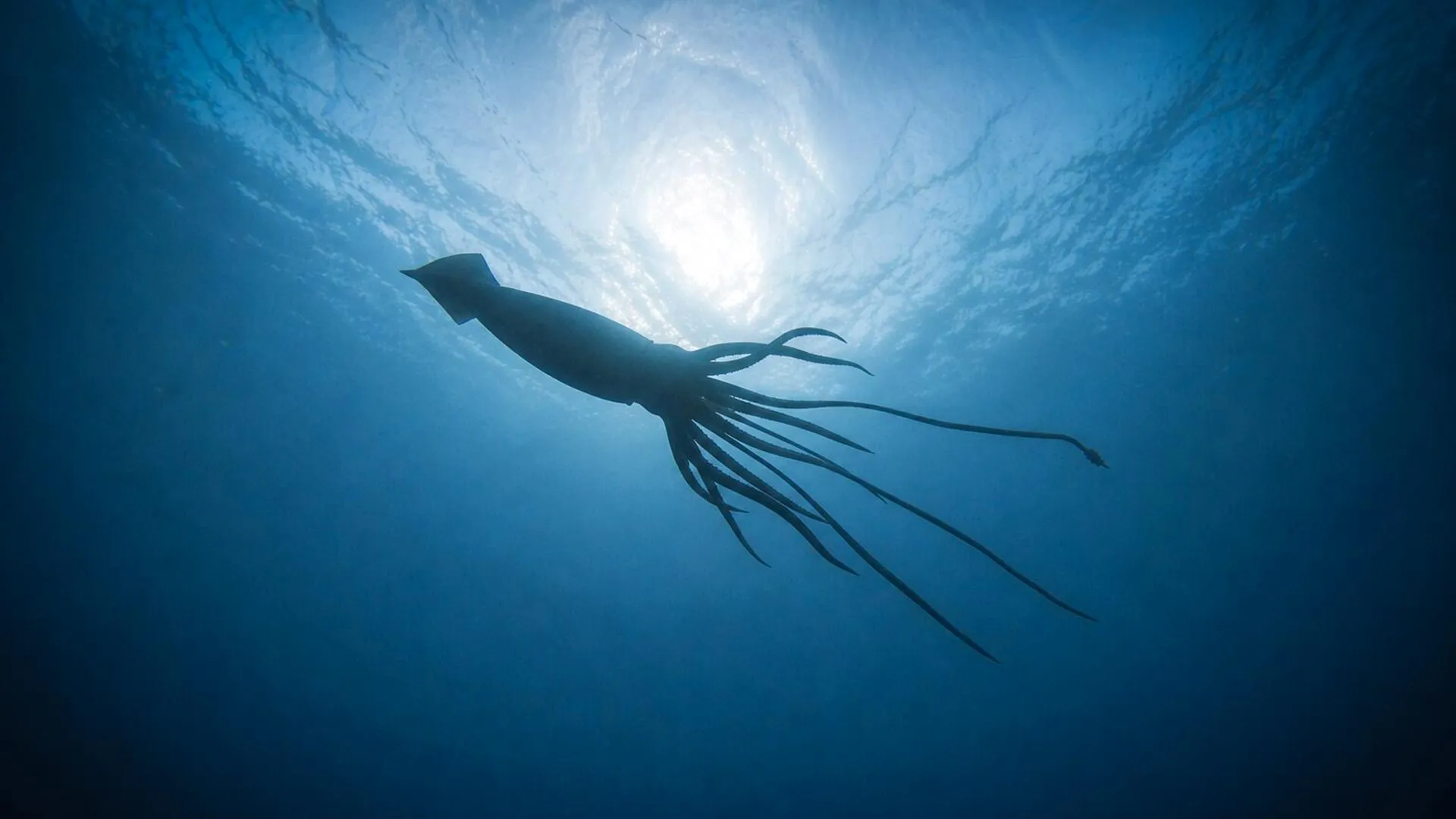
One of the most exciting findings was evidence of the giant squid, Architeuthis dux. The species was detected in six different water samples taken from both submarine canyons.
Giant squid are among the most mysterious animals in the ocean. They can grow longer than a school bus, reaching around 10 to 13 meters in length, and may weigh between 150 and 275 kilograms. They also have the largest eyes in the animal kingdom, measuring up to 30 centimeters across.
Researchers also detected DNA from deep-diving marine mammals, including the pygmy sperm whale and Cuvier’s beaked whale.
Altogether, the study identified 226 species across 11 major animal groups. These included squid, marine mammals, cnidarians, echinoderms and unusual deep-sea fish.
The team also found dozens of species that had never before been recorded in Western Australian waters. Among them were a sleeper shark, the faceless cusk eel and the slender snaggletooth.
Lead author Dr. Georgia Nester said the discovery of giant squid DNA is exciting, but it is only one part of a much larger story. The results suggest that Australia’s deep-sea environments contain far more biodiversity than scientists currently understand.
Some of the species detected did not clearly match anything already recorded. That does not automatically mean they are new to science, but it does show that the deep ocean still holds many mysteries.
The giant squid finding was especially important because there had only been two previous records of giant squid in Western Australia, and no confirmed sightings or collected specimens for more than 25 years. This study marks the first time giant squid has been detected off Western Australia’s coast using eDNA, and it is also the northernmost record of the species in the eastern Indian Ocean.
To strengthen the research, scientists combined eDNA analysis with physical specimens collected by the remotely operated vehicle SuBastian. Taxonomists identified those specimens, which are now stored in the Western Australian Museum’s Collection and Research Facility.
This helps build a better genetic reference library for future studies, making it easier to identify species from DNA samples.
Researchers say eDNA is especially useful in the deep sea because many animals are difficult to observe. Some are fragile, fast-moving or extremely elusive, making them hard to catch with nets or film with cameras. A single water sample can reveal signs of hundreds of species at once.
The study also showed that marine life changes greatly depending on depth. Even nearby submarine canyons supported different biological communities, showing how complex these deep-sea ecosystems are.
Scientists say this information is important because deep-sea environments are remote, expensive to study and increasingly threatened by climate change, fishing and resource extraction.
Environmental DNA offers a non-invasive way to learn what lives in these habitats before they are damaged. That knowledge can help guide marine park planning, conservation and long-term environmental monitoring.
The research makes one thing clear: the deep waters of the Indian Ocean are still full of life scientists are only beginning to understand. By combining eDNA with traditional deep-sea exploration, researchers can uncover hidden species, map ecosystems more accurately and better protect the marine life living far below the surface.