

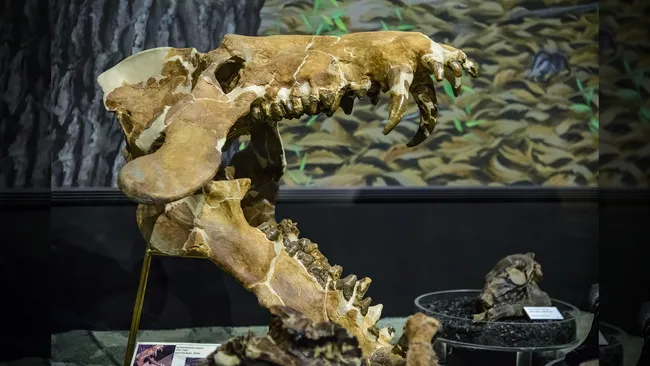
New research suggests that the massive North American creatures known as Archaeotherium—often nicknamed “hell pigs”—didn’t all feed the same way. Their dietary habits appear to have differed depending on their body size, according to preliminary findings shared at the 2025 Society of Vertebrate Paleontology meeting.
These imposing, pig-like animals lived roughly 30 million years ago, some reaching human height on all fours and weighing over 2,000 pounds (about 1,000 kilograms). Although they resembled oversized hogs, they were actually more closely related to hippos and whales. Their skulls, which made up nearly a third of their total body length, housed surprisingly small brains—giving them a reptile-like brain-to-body ratio.
Archaeotherium fossils have been known since the mid-19th century, but the new analysis hints at a wider range of feeding strategies than previously recognized. By looking at microscopic wear patterns on teeth from several U.S. states—including Nebraska, South Dakota, Oregon, and Colorado—researchers discovered that large individuals showed damage consistent with crushing hard materials such as bone. In contrast, smaller members of the group displayed wear typical of animals that slice through softer foods like flesh or tender vegetation.
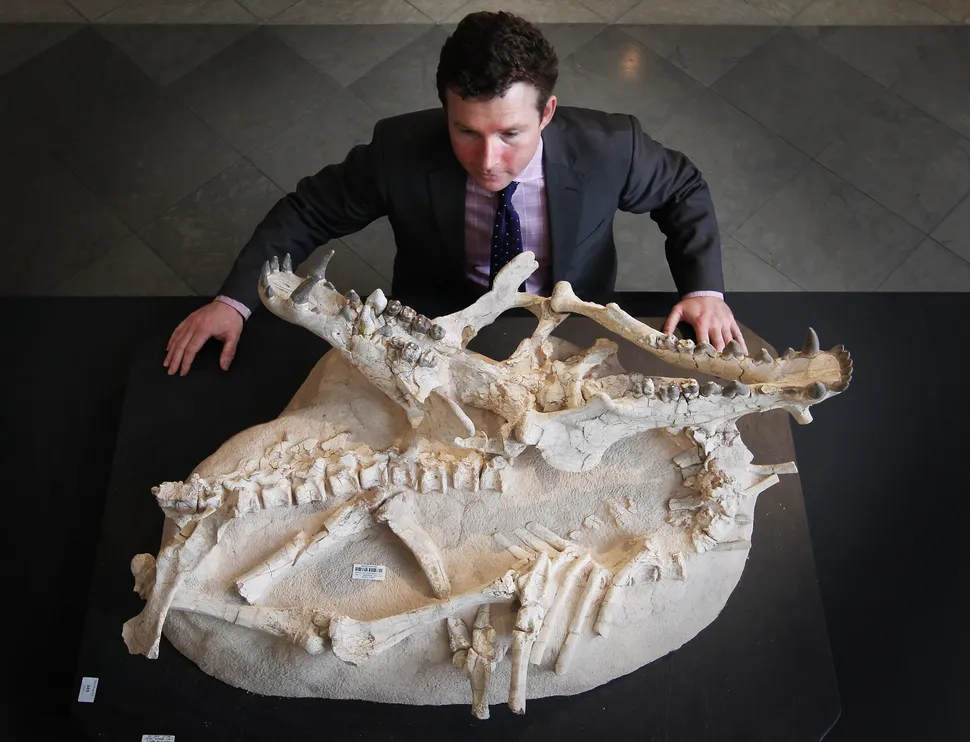
“We really can’t treat all Archaeotherium as having the same lifestyle,” said Brynn Wooten, a PhD candidate at Vanderbilt University who presented the work. The research has not yet undergone peer review, as the team is still completing the study before journal submission.
These animals lived across North America between 37 and 23 million years ago. Previous hypotheses suggested they may have hunted, scavenged, or fed heavily on vegetation. Bite marks on fossils of Poebrotherium, a small camel relative, indicate that Archaeotherium may even have preyed on them and stashed leftovers.
Using dental microwear texture analysis—a technique that produces detailed 3D images of tooth surfaces—Wooten and her colleague, Vanderbilt University biologist Larisa DeSantis, compared wear patterns across a range of Archaeotherium sizes. They found that the smaller species resembled modern peccaries, which primarily shear their food. Larger species, however, showed wear patterns nearly identical to lions and hyenas, suggesting they crushed hard objects while feeding.
“The big ones clearly had the ability to break bones,” DeSantis said. “The smaller ones didn’t.”
This difference could mean that the largest Archaeotherium species regularly scavenged carcasses, using their size to drive away other predators. Alternatively, the bone-crushing signals might reflect consumption of tough plant material like woody stems or underground tubers. Smaller species may have relied on leaves or softer plant matter.
The current findings reveal only the physical texture of the foods these creatures processed—not the exact species or materials they consumed. Wooten plans to use additional methods, such as calcium isotope analysis, to determine whether bone truly made up part of the diet of these prehistoric giants.