

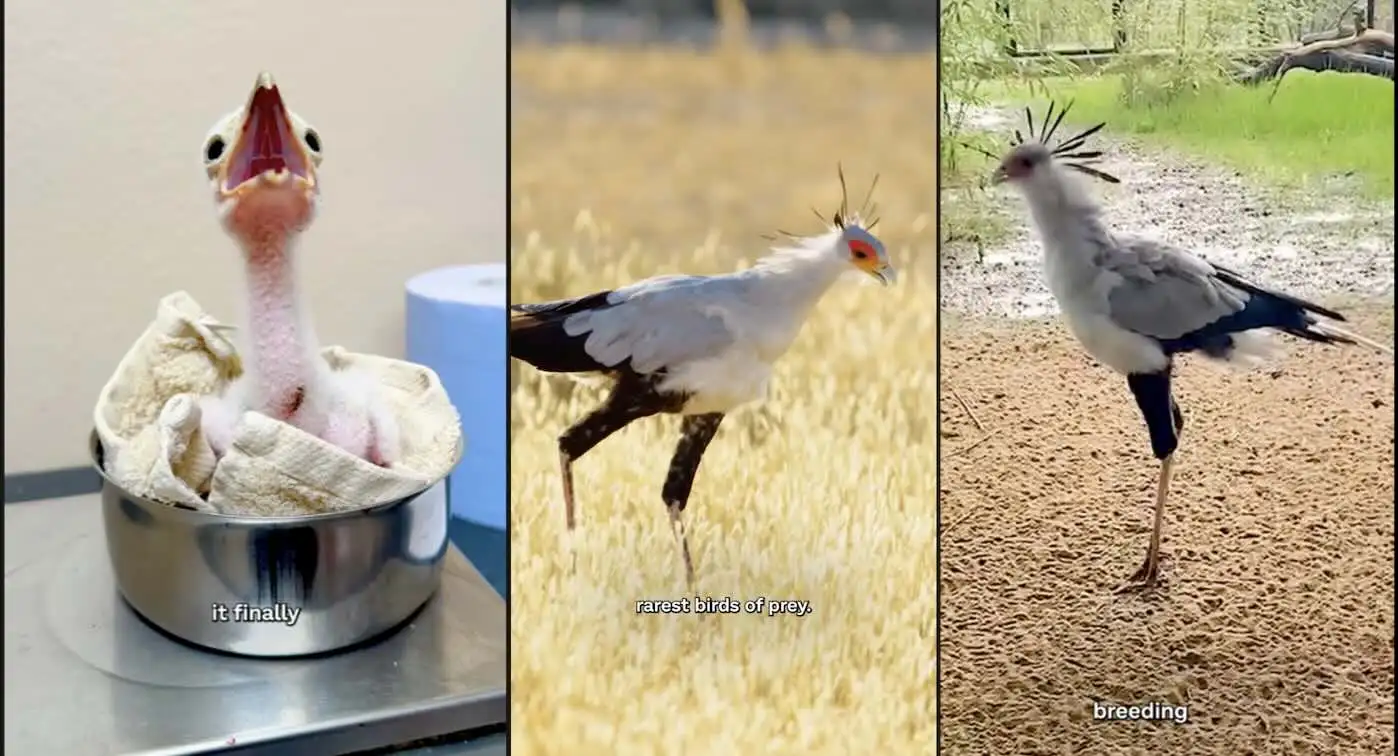
Chester Zoo has achieved a major conservation milestone after successfully breeding secretarybirds for the first time in its 95-year history.
Five chicks have hatched at the English zoo, marking what staff have described as an important breakthrough for a species facing serious decline in the wild.
The birds are part of an international conservation breeding programme designed to maintain a healthy backup population and improve the long-term outlook for one of Africa’s most distinctive birds of prey.
A First in Chester Zoo’s History
The five chicks were born to a pair named John and Jolene, who arrived at Chester Zoo as part of coordinated breeding efforts involving conservation institutions across Europe.
Until now, the species had never successfully bred at the zoo.
That makes the arrival of five healthy chicks particularly significant, especially because secretarybirds remain relatively uncommon within European zoo populations.
Across the wider breeding programme, there are only 79 secretarybirds, and just three chicks had hatched elsewhere during the previous year.
Five Chicks Represent a Major Breakthrough
Producing five chicks in such a short period has given Chester Zoo’s bird team valuable new insight into how the species can be successfully bred under human care.
Zoo staff hope the methods developed during the process can now be shared with other conservation centres.
If those techniques improve breeding success elsewhere, the impact of Chester’s achievement could extend far beyond the five chicks themselves.
Birdkeeper Jamie Cartwright-Stock described seeing so many healthy chicks hatch as an extraordinary result for everyone involved.
One of the World’s Most Unusual Birds of Prey
Secretarybirds stand apart from many other raptors because they spend much of their time hunting on the ground.
Rather than relying solely on aerial attacks like hawks or eagles, they stride across African grasslands on remarkably long legs while searching for prey.
Their appearance is equally distinctive, with long dark feathers extending from the back of the head and a tall, almost elegant posture.
But beneath that graceful appearance is a highly effective hunter.
Their Name Reflects Their Snake-Hunting Skills
The secretarybird’s scientific name, Sagittarius serpentarius, is linked to its reputation for hunting snakes.
The birds can attack venomous snakes using powerful, rapid kicks and stomping movements.
Their long legs allow them to strike while keeping much of their body at a safer distance from potentially dangerous prey.
This unusual hunting style has helped make secretarybirds one of Africa’s most recognizable raptors.
Wild Populations Have Declined Sharply
Despite their remarkable adaptations, secretarybirds are facing growing pressure in the wild.
Their population has fallen significantly in recent decades, with estimates suggesting that only around 6,700 individuals may remain.
Loss of open grassland is considered a major threat as land is converted for agriculture, expanding settlements and other forms of development.
The International Union for Conservation of Nature currently lists the species as Endangered.
Captive Breeding Could Provide a Safety Net
That decline makes carefully managed zoo populations increasingly important.
Conservation breeding programmes are designed to preserve genetic diversity while researchers learn more about reproduction, behavior and chick development.
Chester Zoo hopes information gathered from John, Jolene and their offspring will help improve breeding results throughout the wider European population.
Sharing Knowledge Could Help Other Zoos
Andrew Owen, Chester Zoo’s head of birds, said the new chicks give the zoo an opportunity to play a leading role in efforts to protect the species.
By closely monitoring their growth and sharing what the team learns with other institutions, conservationists hope to make future breeding attempts more successful.
That knowledge could help strengthen the entire managed population rather than benefiting only one zoo.
A Small Flock With Big Conservation Importance
For visitors, the five chicks represent an exciting addition to Chester Zoo.
For conservationists, however, they mean much more.
Each successful hatch adds to a limited population and provides new information that could help secure the species’ future.
After 95 years without a secretarybird breeding success, Chester Zoo has now welcomed five at once — turning a long-awaited first into a potentially important step for the conservation of one of Africa’s most extraordinary birds.