

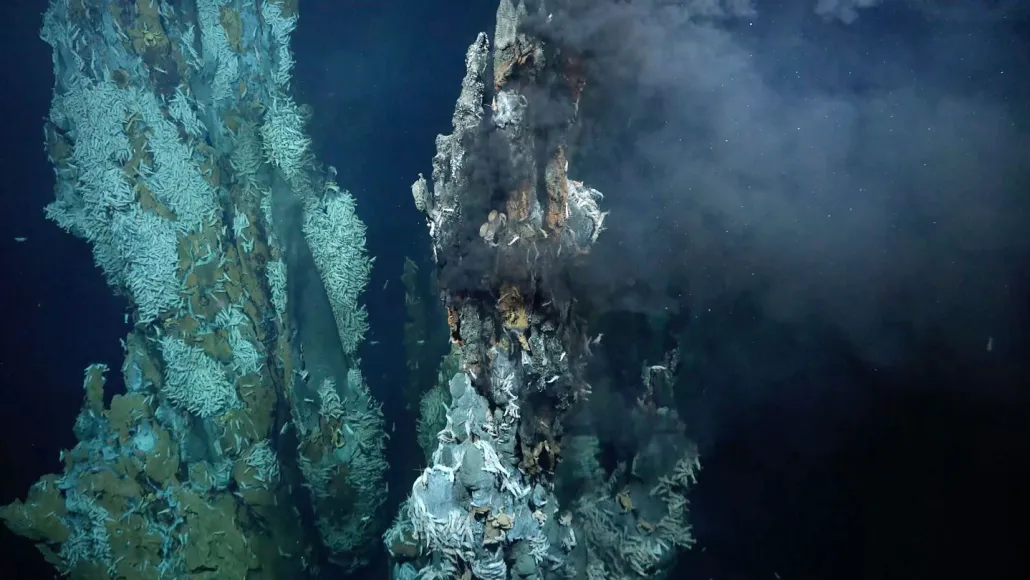
Scientists have uncovered a surprising clue about how some deep-sea creatures reach hydrothermal vents scattered across the ocean floor. The answer may involve an extraordinary journey that begins near the surface, where young limpets appear to spend the early part of their lives before descending into the deep.
Researchers at the University of Tokyo studied three species of limpets that live only around hydrothermal vents, extreme environments where superheated, mineral-rich water escapes from the seafloor. These remote habitats are home to unusual animals adapted to crushing pressure, darkness, and dramatic temperature changes. For years, marine scientists suspected that vent species must somehow spread between these isolated locations, possibly by drifting as tiny larvae through the currents. Now, chemical evidence suggests that those larvae may actually rise all the way to sunlit waters before returning to the depths.
The key evidence came from tiny shells attached to adult limpets. These millimeter-sized remnants from the animals’ larval stage preserved chemical signatures that revealed where the limpets had been early in life. Instead of showing the trace elements typical of deep hydrothermal water, the shells carried signs of warmer surface waters, where phytoplankton provides food and sunlight fuels the entire ecosystem.
The researchers examined 39 limpets from two different vent sites in the Pacific, and every one of them showed the same pattern. That consistency suggests the trip to the ocean surface is not a rare accident but a normal part of the species’ life cycle. After feeding and growing near the top of the ocean, the larvae likely drift back downward, eventually settling near vents where they transform into adults and establish new colonies.
The journey is far from safe. Most larvae probably never make it. Many are likely eaten, swept away, or lost before they ever find a suitable vent. Even for those that survive the trip, landing in the right place is a challenge, since active vents are small and scattered across a vast seafloor. To improve the odds, vent animals often produce huge numbers of offspring.
Scientists say the findings may help explain how isolated vent communities remain connected across enormous distances. They also suggest that these deep-sea systems may be more closely linked to the sunlit ocean than previously understood. Rather than being closed-off worlds powered only by heat from below, hydrothermal vents may depend on a life cycle that briefly passes through the bright surface waters above before returning to the dark depths below.