

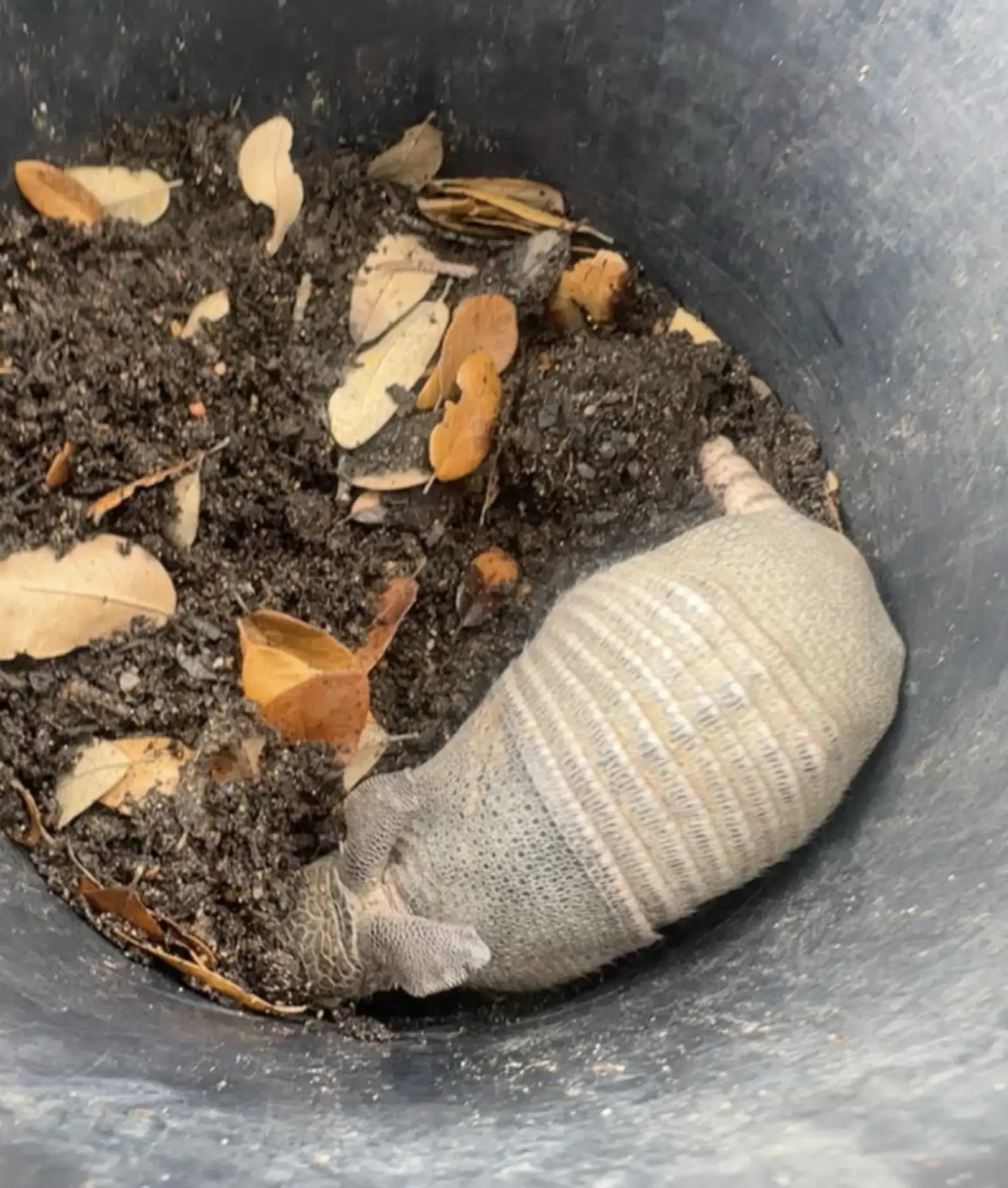
A peaceful botanical garden in Austin, Texas, became the setting for an unexpected wildlife rescue when staff discovered a seriously injured armadillo hiding among the plants. The little animal was barely moving and clearly needed urgent medical attention.
What followed was a challenging recovery that tested the patience of experienced wildlife rescuers. But despite his injuries, the determined armadillo refused to give up, eventually surprising everyone with his spirited personality and unforgettable return to freedom.
Injured Armadillo Discovered in Prehistoric Garden
The unusual discovery took place at the Hartman Prehistoric Garden, a special section of Zilker Botanical Garden in Austin.
Known for its collection of ancient plants, the garden recreates elements of a Cretaceous-era landscape, offering visitors a glimpse into the prehistoric world.
However, staff recently encountered a very different kind of ancient-looking creature among the vegetation.
An armadillo was resting in a planter, appearing unusually weak and lethargic. His lack of energy immediately raised concerns that something was seriously wrong.
Recognizing that the animal needed professional help, the garden team carefully secured him and transported him to Austin Wildlife Rescue.
The armadillo was affectionately named Hartman, a tribute to the garden where he had been discovered.
But his condition was far more serious than rescuers had hoped.
Wildlife Rescuers Fight to Save Hartman’s Life
When Hartman arrived at the wildlife rehabilitation facility, the medical team discovered several troubling injuries.
The armadillo had suffered physical trauma, puncture wounds, and bruising. His weakened condition suggested that he had experienced a serious ordeal before being found.
Rescuers immediately began treatment, hoping to stabilize him and support his recovery.
However, Hartman didn’t respond to the initial care as quickly as the team expected.
Jules Maron, executive director of Austin Wildlife Rescue, explained that his condition presented a particularly difficult challenge for the rehabilitation staff.
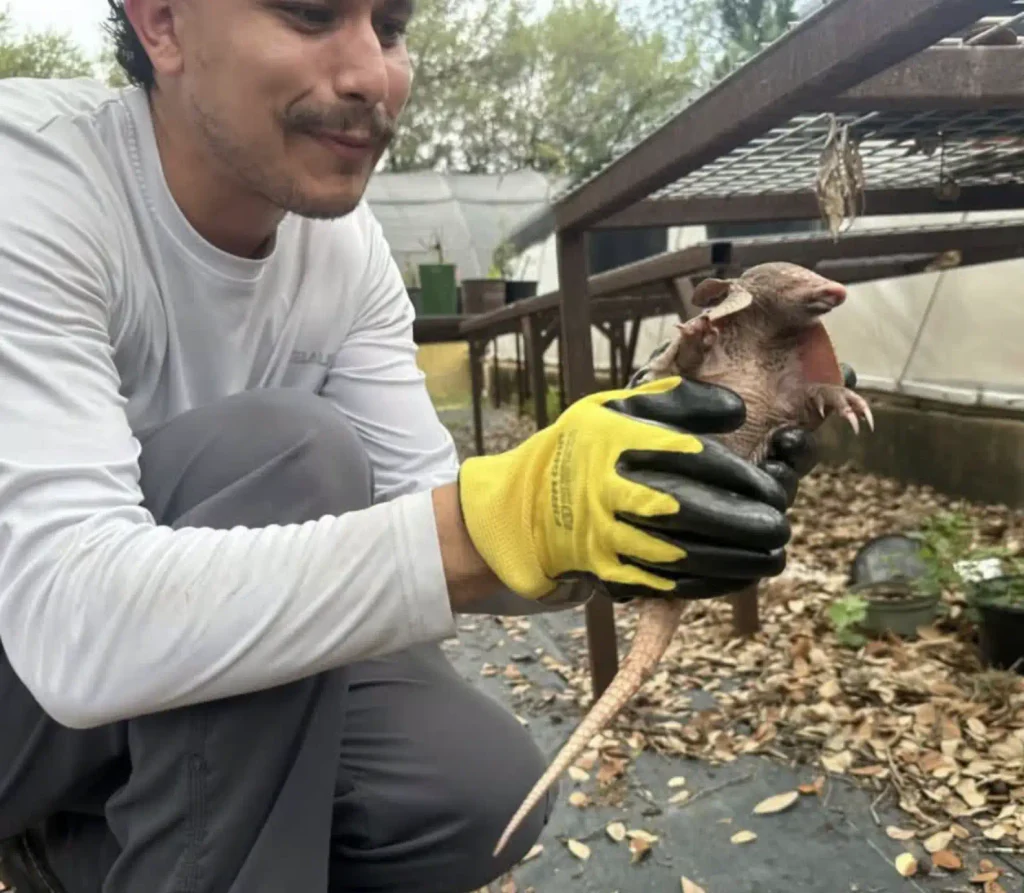
For a time, his future remained uncertain.
Then, within 24 hours, the team began noticing encouraging signs of improvement.
Hartman was becoming more responsive, and his energy slowly started returning.
The change brought enormous relief to the people working to save him.
Although the recovery process was far from over, the improvement suggested that Hartman was beginning to regain his strength.
A Feisty Personality Emerges as Hartman Gets Stronger
As Hartman’s health improved, rescuers discovered that their unusual patient had a surprisingly strong personality.
The once-lethargic armadillo became increasingly energetic and determined to do things his own way.
He wasn’t particularly interested in cooperating with his caregivers, and he had no problem expressing his displeasure when something interrupted his routine.
“Hartman had opinions, very strong opinions,” Maron recalled.
Although caring for such a stubborn patient presented challenges, the team welcomed his growing independence.
His reluctance to interact with people was actually an encouraging development.
Wild animals undergoing rehabilitation need to retain their natural instincts, including their tendency to avoid unnecessary contact with humans.
Hartman’s feisty behavior suggested that he was becoming more confident and behaving like a healthy wild armadillo again.
For his rescuers, every sign of independence represented another step toward the ultimate goal: returning him to his natural habitat.
Months Later, Hartman Is Finally Ready for Freedom
After months of dedicated treatment, careful monitoring, and rehabilitation, Hartman finally recovered enough to return to the wild.
The moment was especially meaningful for the rescue team, who remembered how fragile he had been when he first arrived.
Staff members gathered to watch as the armadillo was released into a suitable natural environment.
They expected him to quickly disappear into the surrounding vegetation.
But Hartman had one final surprise waiting for them.
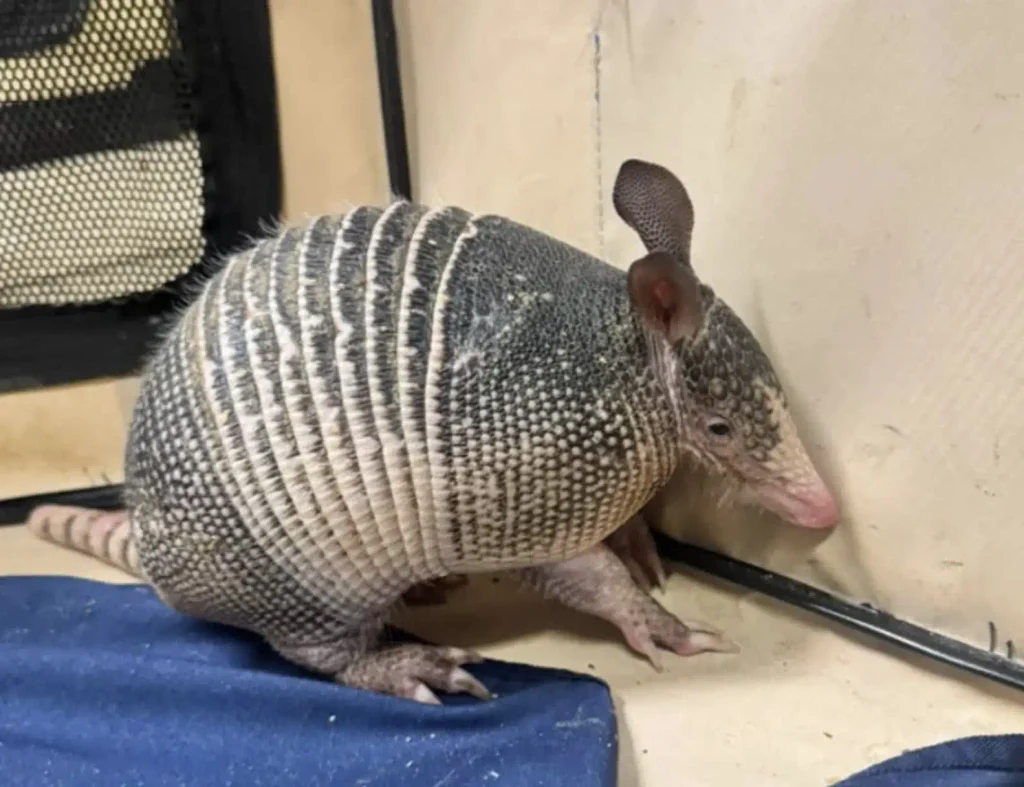
Instead of making a quiet escape, the energetic armadillo began bouncing around among the staff members who had gathered to witness his release.
His unexpected movements created a comical scene, leaving the rescuers amused by the animal they had spent months helping.
For Maron and her colleagues, watching Hartman move freely was a powerful reminder of how far he had come.
The frightened, injured animal who once depended entirely on human care was now healthy enough to explore the world on his own.
A Wildlife Rescue That Ended in the Best Possible Way
Hartman’s journey from a vulnerable animal discovered in a garden planter to a healthy armadillo returning to the wild demonstrates the importance of wildlife rehabilitation.
His recovery wasn’t immediate or easy. It required professional treatment, patience, and months of commitment from people determined to give him another chance.
The circumstances that caused his injuries remain unknown, but the quick actions of the botanical garden staff ensured he received the help he needed.
His story also highlights why injured or unusually lethargic wildlife should be assessed by trained professionals rather than handled without guidance.
For Austin Wildlife Rescue, the most rewarding part of the experience wasn’t simply seeing Hartman recover. It was watching him become completely independent again.
After months of relying on human assistance, Hartman no longer needed his caregivers.
He was finally free to return to his natural life.
And judging by his enthusiastic, slightly chaotic departure, this determined little armadillo was more than ready for his next adventure.