

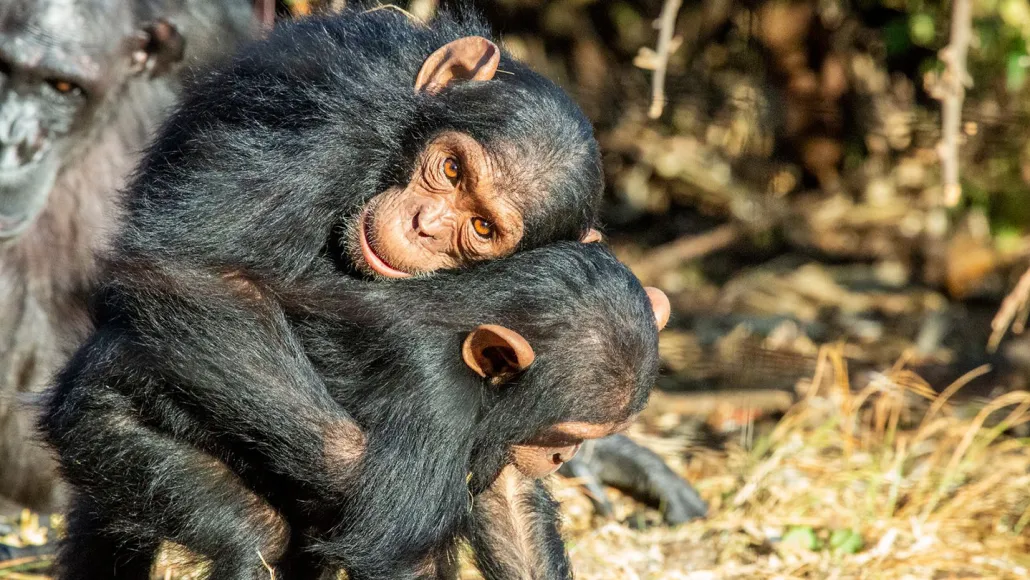
Physical affection may help primates keep group tensions under control.
Researchers report that both chimpanzees and bonobos use friendly touch to reduce stress and create a sense of calm within their groups, according to a study published July 22 in Proceedings of the Royal Society B. Behaviors such as hugging, patting, holding hands, touching feet, and even brief face-to-face gestures seem to help strengthen social bonds and keep groups functioning smoothly.
Zanna Clay, a primatologist at Durham University, says these interactions act like social glue. In her view, they help apes stay connected and manage stressful moments together. The findings may also offer a useful reminder for humans: before a competition, game, or any high-pressure situation, a little physical closeness may help people feel more relaxed and supported.
Scientists already knew that chimpanzees and bonobos use touch to comfort one another after conflict or during distress. What interested Clay’s team was the possibility that the animals were also using these behaviors before tension began, not just after problems had already started. Jake Brooker, now a primatologist at Utrecht University, noticed that the apes were often being affectionate even when no fighting had taken place, suggesting that touch might help prevent conflict rather than only repair it.
To study the idea, the researchers observed five groups of chimpanzees and bonobos living in sanctuaries in Zambia and the Democratic Republic of Congo. They filmed the animals before, during, and after offering them a limited number of peanuts. Because there were not enough peanuts for everyone to eat freely, the animals became excited and alert when they realized food was coming.
The team found that groups sharing more friendly touch before feeding were more likely to eat together peacefully. That pattern appeared in both chimpanzees and bonobos, despite the common reputation that chimps are more aggressive while bonobos are seen as more peaceful and affectionate.
Clay says the results suggest the two species may be more alike than people assume. She also notes that it is difficult to know whether physical affection helps apes tolerate one another or whether naturally more tolerant groups simply touch more often. Most likely, she says, the relationship goes both ways.