

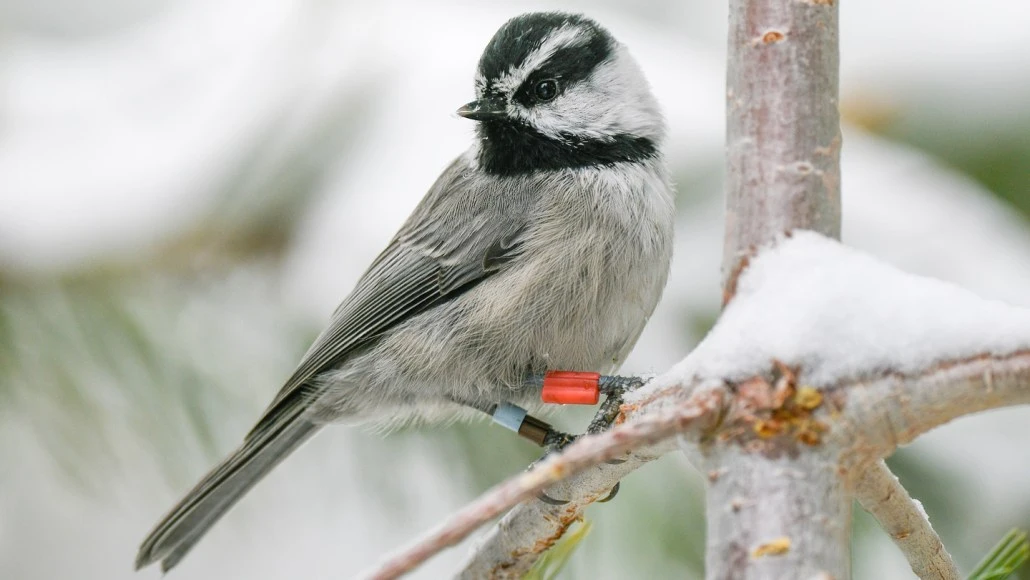
For a mountain chickadee facing winter in California’s Sierra Nevada, having a sharp memory can be a matter of life and death.
These tiny birds weigh roughly as much as a pencil, yet they are capable of remembering enormous numbers of food-storage locations. During the warmer months, chickadees hide seeds in cracks and crevices throughout the forest. When snow and freezing temperatures arrive, they must quickly relocate those hidden meals in order to survive.
Researchers from the University of Nevada, Reno have spent years studying this extraordinary ability in wild birds at the Sagehen Creek Field Station, north of Truckee, California. Unlike many experiments on animal intelligence that take place in controlled laboratories, this long-running project examines cognition under the same harsh conditions the birds experience every day.
The research program can monitor and test as many as 250 chickadees annually, providing scientists with years of information about memory, genetics, reproduction, mating behavior and survival.
A Good Memory Can Mean a Longer Life
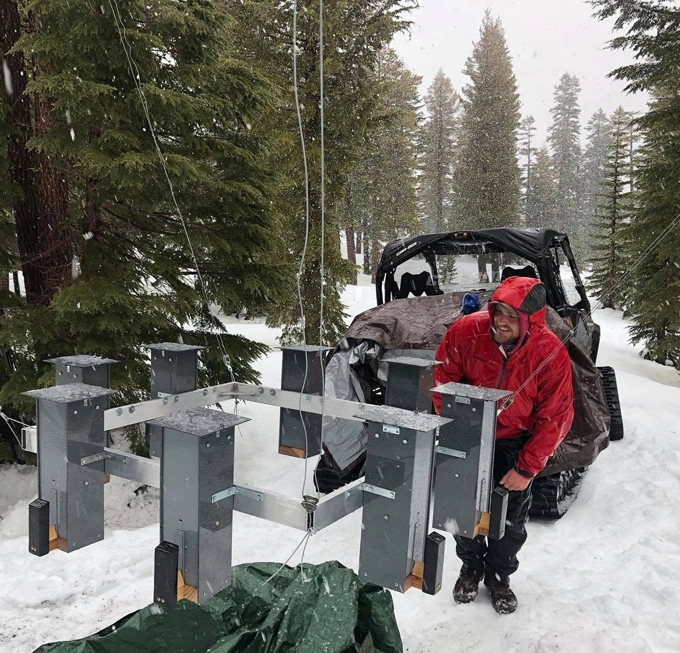
Behavioral ecologist Vladimir Pravosudov began working with mountain chickadees in 1999, building on an earlier interest in food-storing birds that began during his university years in Russia.
Mountain chickadees, known scientifically as Poecile gambeli, endure exceptionally difficult winters. They may search for individual seeds while more than four meters of snow covers the landscape.
The danger is considerable. Research from the team has found that roughly two-thirds of the birds fail to survive their first winter.
Those that make it through, however, can live for 10 years or longer.
And memory appears to make an important difference.
The researchers reported in Science in 2024 that birds with stronger cognitive abilities tended to live longer than individuals that performed less well on memory tests.